
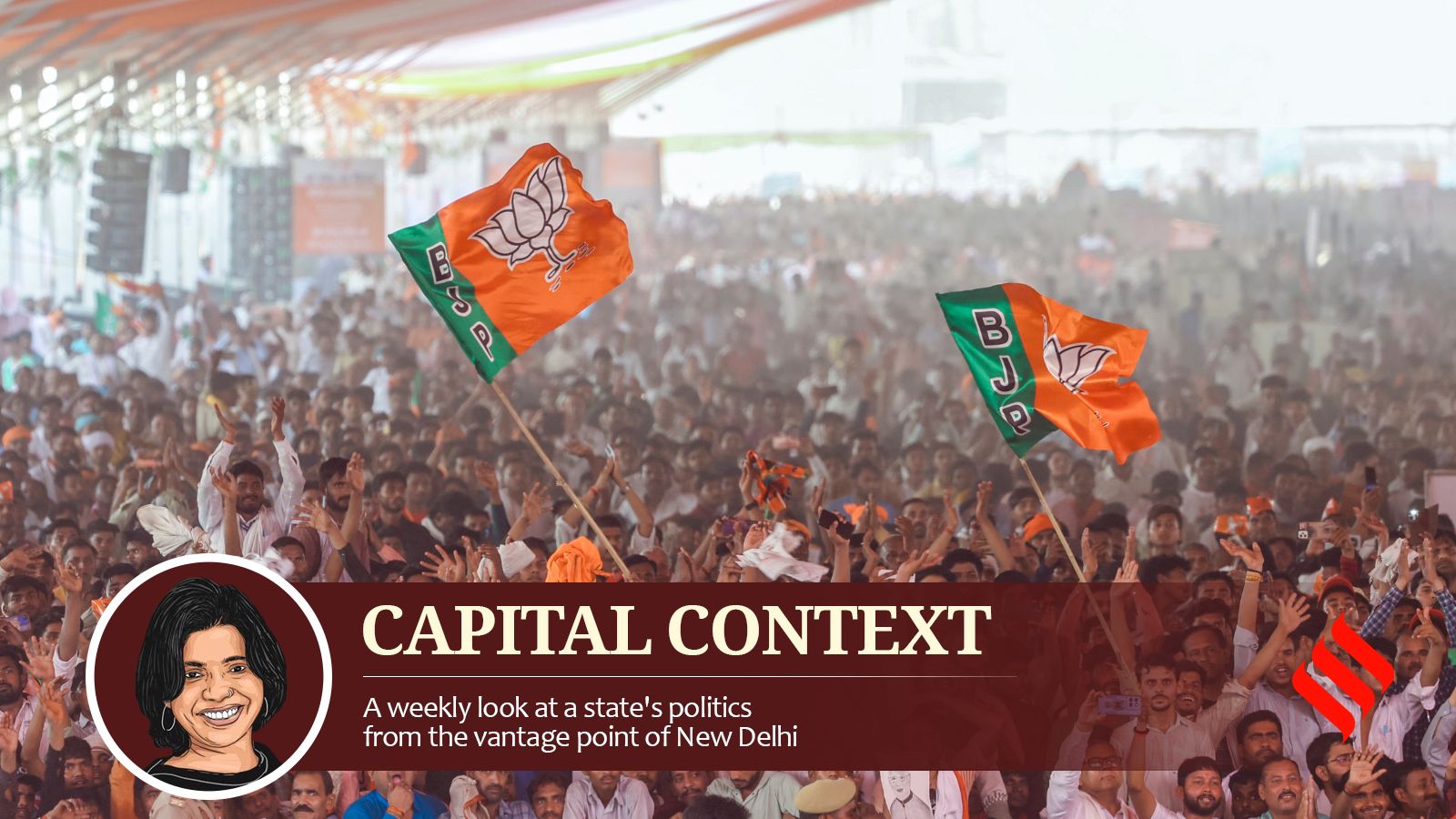
Union Home Minister Amit Shah challenged the Opposition to discuss the SIR exercise during the Uttar Pradesh BJP executive meeting on October 30. The party started an aggressive counter-offensive, using padyatras and public forums to regain control. Leaders now label the Opposition as anti-national to secure their core voter base.
At the Uttar Pradesh BJP executive meeting in Lucknow on October 30, Union Home Minister Amit Shah dared the Opposition to discuss the SIR exercise in Parliament. Having rejected a direct debate on the issue in the Monsoon Session, this was read in BJP circles as acceptance of the fact that what was once dismissed as noise needed a strong counter-punch.
The ruling party has launched an aggressive counter-offensive, deploying its heavy-hitters for padyatras and parallel public forums across the country. While Shah himself led a padyatra in Hyderabad, the pro-BJP civil society group “Citizens for Democracy” staged a high-profile mock Parliament session in Delhi to push back against the INDIA bloc’s political messaging.
From November 3 to 5, the BJP is also hosting six padyatras across poll-bound Uttar Pradesh that will be led by senior leaders, from party president Nitin Nabin to Union Ministers J P Nadda and Shivraj Singh Chouhan to Chief Minister Yogi Adityanath.
A section of the BJP is apprehensive that the campaign against the Special Intensive Revision (SIR) of electoral rolls may have moved beyond being just urban discourse. The shift in tone reveals how the ruling alliance has been pushed out of its comfort zone and is searching for a convincing counter-narrative.
To win the perception battle and secure its core voter base, the party has sharpened its ideological offensive, routinely branding the Opposition as both “anti-national” and “anti-Hindu”. The Opposition, it alleges, is pushing for “regime change” and acting on the behest of “foreign forces” to destabilise the country.
On October 31, Prime Minister Narendra Modi alleged that the Opposition had turned into an “obstructionist force” and asked, “Whom are anti-India forces supporting? Who is speaking the language of India’s enemies?”
After Leader of Opposition Rahul Gandhi challenged Modi to a debate on this, senior Cabinet ministers, including Parliamentary Affairs Minister Kiren Rijiju, hit back. Rijiju accused Gandhi of advancing the agenda of “India’s enemies” under the garb of democratic dissent.
The BJP on Tuesday also tried to capitalise on Left student leader Neha Bora’s criticism of Brahminism and remark that “priests commit rapes inside temples,” referring to the 2018 Kathua case, to argue that religious structures shield perpetrators of sexual crimes. The BJP jumped on the comments, which were allegedly made months earlier, to label Bora, who has emerged as one of the faces of the anti-government protests, the “poster girl” of the Opposition’s anti-Hindu agenda.
Will poll wins be enough?
Some BJP leaders say that a decisive win in the state elections early next year, including the all-important battle for Uttar Pradesh, would be enough to take the wind out of the Opposition’s sails and regain its upper-hand as far as the political narrative is concerned.
However, another group believes that the need of the hour is the aggressive counter-campaign that has been launched, as letting the Opposition’s campaign go unchecked could adversely affect the country’s institutional framework.
“The BJP is conscious of the fact that in the 2024 (Lok Sabha) elections, the NDA suffered a setback due to the Opposition’s campaign that the Constitution is under attack. That worked in Uttar Pradesh. The BJP is aware of the dangers of such a narrative growing unchecked. That is why the ‘vote chori’ narrative Rahul Gandhi is pushing, questioning the legitimacy of the elections and seeding doubts in the minds of the voters and his own supporters, has to be countered well in advance of the 2029 elections,” said a senior leader.
Several senior functionaries said the Opposition’s social media narrative appears to be setting the agenda. “It has won a round with event management. Mock Parliament and Ramlila rally were trending ahead of that of the BJP. Back in 2014, it was the BJP that was ahead in political narrative-setting and on social media. In the area of communications and narrative setting, even if using a falsehood, the Congress is significantly ahead now. The BJP has to introspect on the differences between 2014 and 2026,” said a leader.
A senior leader familiar with organisational activities said the party had been “reacting or responding” instead of “setting the narrative” since the NEET controversy, which ended with Dharmendra Pradhan’s resignation as Union Education Minister in July. In its aftermath, the party’s ambitious plans to celebrate Prime Minister Narendra Modi’s birthday and 25 years in public life got overshadowed, the leader said.