
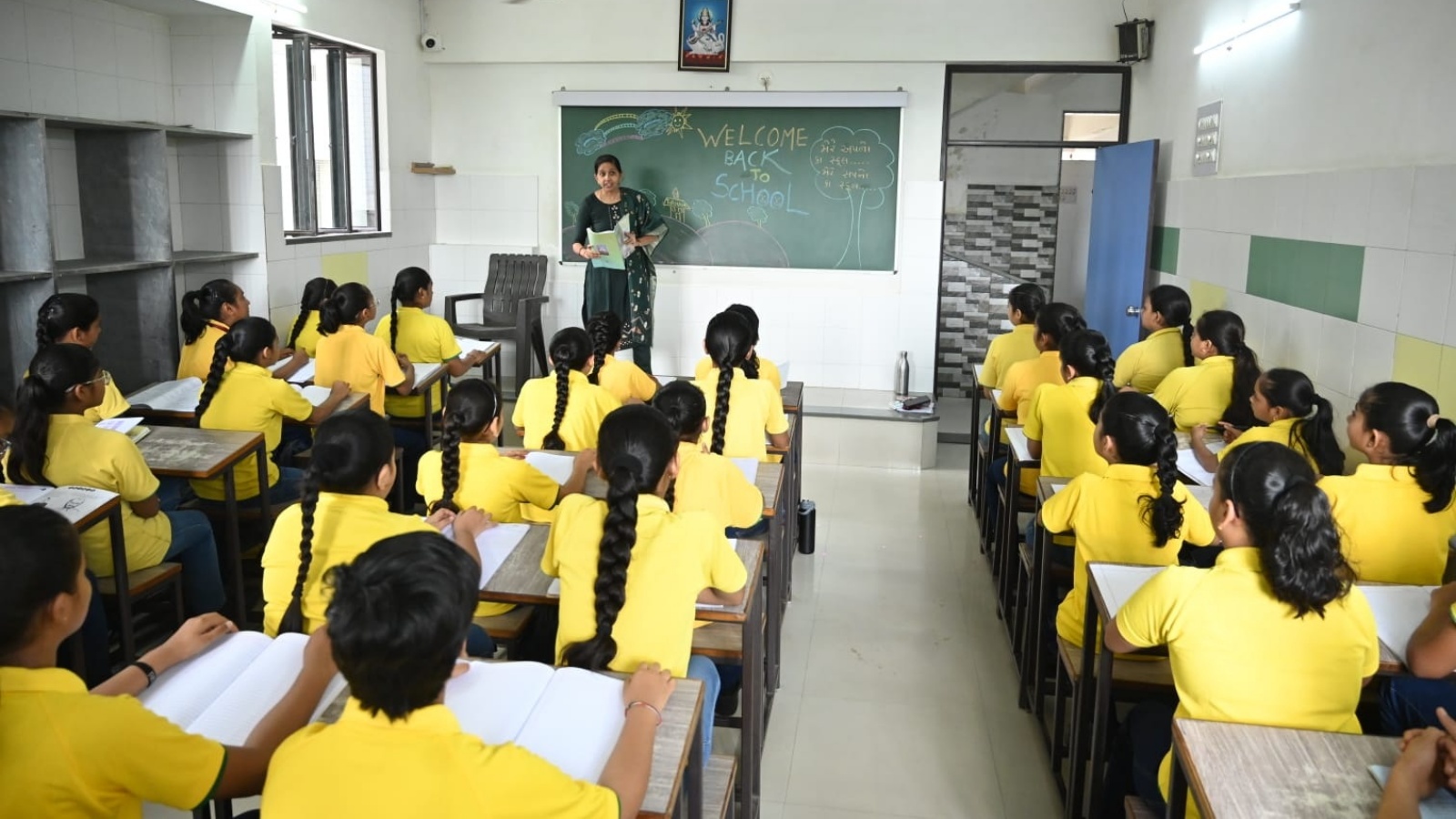
The Gujarat government appointed 34,000 officers to monitor primary schools and fix infrastructure gaps by September 2027. This move follows opposition campaigns exposing poor school conditions. Officials now use a 78-point checklist to track facilities and teaching quality. Some staff questioned this extra surveillance, asking if the government trusts them.
Wary of being 'exposed' by AAP, Congress and Cockroach Janta Party campaigns, Gujarat government has appointed one officer for each of the 34,000 primary schools in the state
Do schools serve healthy food in the midday meals, and do they have proper toilets, enough teachers and a well-kept building? What kind of books are the teachers and the students reading? The Gujarat government has assigned an army of 34,000 education officials, one for each primary school, to keep a record of these and fix the gaps by September 2027, months before the state goes to polls to elect a new government. Assembly elections in Gujarat are due in December next year.
These officials who have a 78-point checklist will also track visits by the co-ordinators of the block and cluster resource centres who are supposed to ensure education does not suffer because of these shortfalls.
The initiative that began in September, is reportedly the consequence of campaigns launched by opposition parties like the Aam Aadmi Party and the Congress exposing education infrastructure in states where BJP governments are in power. The Cockroach Janta Party has also launched a 'School Theek karo' campaign where their members conduct 'social audit' of schools, having recently put out reports on Delhi and Uttar Pradesh schools.
In March last year, some students had embarrassed the government when they took a video of cracks in a newly constructed government primary school building in Khajuri Hadmatiya village of Junagadh district and sent it to then State Education Minister Praful Pansheriya. Pansheriya, ordering the school to be demolished and rebuilt, had told The Indian Express, "If this is the condition on the next day of construction, imagine what will happen if the roof collapses on a student a month or two later? I would not be able to pardon myself.
The new monitoring decision, however, has had its challenges. Education department officials are questioning the need for this additional layer of surveillance especially because the Block and Cluster resource co-ordinators follow the same brief as has been given to the new assignees.
"Besides ministers, bureaucrats and senior officials visit the school twice in a year-during shala praveshotsav and gunotsav. Does this mean that officials are not doing their job or that the government does not trust their own officials," one of the education department officials told this newspaper.
The Shala Praveshotsav is an annual enrolment exercise that Narendra Modi launched in 2003 as chief minister where each minister and bureaucrat visits government and municipal schools to encourage enrolment especially of girls. Gunotsav is an annual evaluation exercise where government officials visit schools in the middle of the term to assess their performance.
Sources told The Indian Express that the government was forced to add this layer of monitoring and make each officer accountable for the assigned school, because of the news reports and allegations by the opposition parties of poor infrastructure and facilities in government schools and missing teacher.
The 2025-26 Unified District Information System for Education Plus (UDISE+) report by the Ministry of Education that has pointed out to a large number of Gujarat schools lacking infrastructure and staff.
The UDISE+ is one of the largest management information systems for credible information collection mechanisms and serves as the official statistics for the Ministry of Education.
Recording deficits
The district and taluka level officials assigned to the schools have to upload photographs after every school visit and monitor progress throughout the year.
According to Director, Primary Education, Prakash Trivedi, the department prepared the visit form after which the officials registered online for the exercise with the respective District Primary Education Officer (DPEO)
Each official allotted the school has to inspect and monitor it till September 2027.
A visiting official needs to inspect school on several counts including the learning resources in school, school playground, working library, computer lab and internet, books that teachers and students read, community mobilisation and participation of School Management Committee (SMC) and School Management and Development Committee (SMDC), civil and Infrastructure an mid day meal among others.
Checklist for inspectors
The key aspects on which the new officials have to keep a record of are:
-How many teachers were actually present when they visited?
-How many teachers were absent without permission?
-Were there enough toilets for boys and girls and handwashing facilities?
-Is the school providing clean drinking water?
-How many classrooms were in a dilapidated condition and what alternative did they provide?
-Did the school serve lunch as was on the menu? Did the food meet the quality standards?