
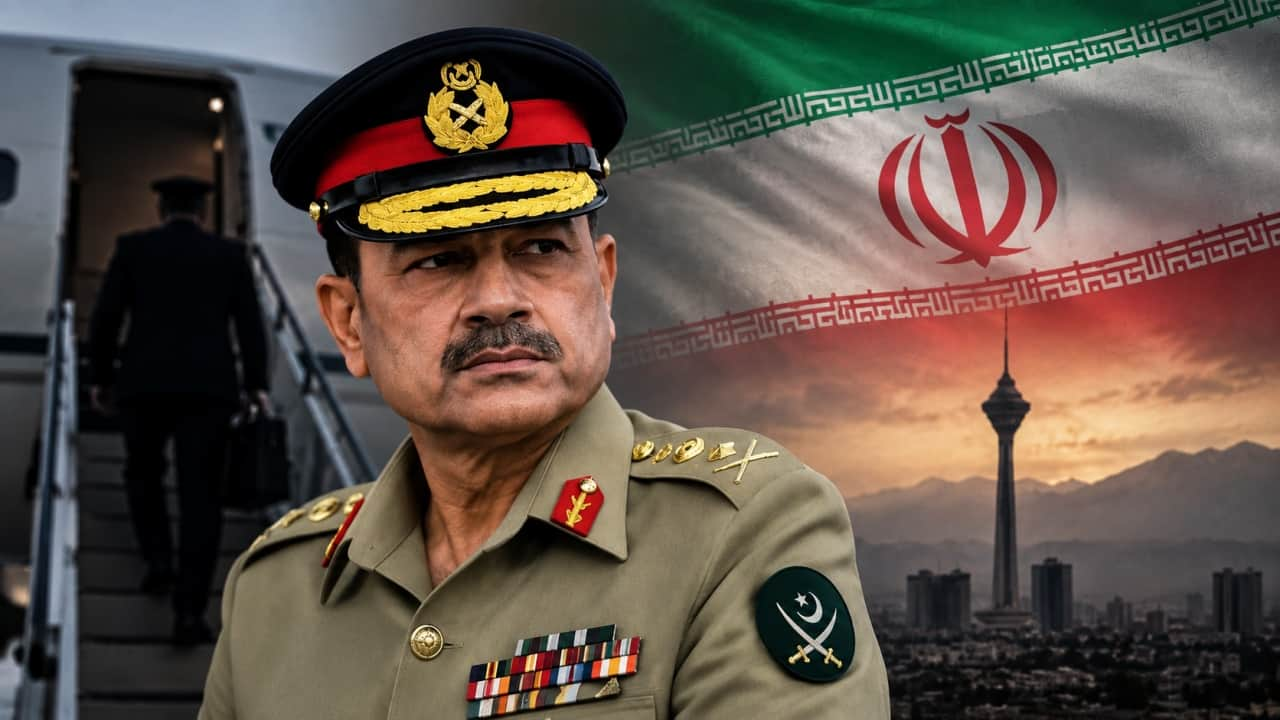
Pakistan Army Chief Asim Munir visited Tehran to deliver a warning from Donald Trump regarding Iran’s nuclear programme. Iranian officials rejected the US demands for concessions. Mohsen Rezaei said, "Not even a tiny bit of enriched nuclear material will leave Iran." The meeting showed how hard mediation has become.
Pakistan Army Chief Asim Munir's latest visit to Tehran appears to have yielded little movement on Washington's demands over Iran's nuclear programme, with senior Iranian leaders publicly rejecting negotiations under US threats and insisting that Tehran's conditions must be met first. According to Lebanese newspaper Al-Akhbar, Munir conveyed a warning from US President Donald Trump to Iran's security leadership, demanding concessions over its nuclear programme. The report said Washington had warned that failure to comply could trigger a large-scale attack on Iranian nuclear facilities. Iranian officials, however, responded with a firm rejection of the approach. State television reported that Mohsen Rezaei, secretary of Iran's Supreme National Security Council, told Munir that Tehran would not allow its enriched nuclear material to leave the country. "Not even a tiny bit of enriched nuclear material will leave Iran; such materials constitute a major asset and national wealth for the Iranian people, intended for use within the country," Rezaei said. He added that negotiations would not resume until Washington took steps to build trust and fulfilled Iran's conditions. The exchanges underline the difficulty facing Pakistan as it attempts to mediate between Washington and Tehran, with Iranian leaders showing little willingness to accept negotiations conducted under military pressure. 'Get back on your plane': Reports point to a tense reception for Munir Munir's reported encounter with Rezaei also drew attention after media reports described the interaction as notably restrained. According to Al-Akhbar, Munir delivered an ultimatum from Trump demanding that Iran concede its "entire nuclear program". Iran International reported that Munir had urged Tehran to show greater flexibility in negotiations over the nuclear issue. Al-Akhbar further reported that Munir carried a "last warning" from Washington, with the United States threatening a "wide-scale attack" on Iran's nuclear facilities, including the Pickaxe Mountain site, if its demands were rejected. A separate report by CNN-News18 analysed footage of Munir's meeting with Rezaei, describing the interaction as brief and formal. Rezaei appeared reserved, while Munir leaned towards him during the exchange. The footage showed no prolonged handshake or embrace. Reports describing the reception as a cold one also circulated, including claims that Munir was effectively told to "get back on his plane". However, the available accounts do not independently establish that Rezaei or another Iranian official used those exact words. The reported exchange presents a difficult picture for Pakistan's mediation effort. Munir arrived in Tehran seeking to facilitate an understanding between Washington and Iran, but the public statements from Iranian officials indicated that Tehran was unwilling to make concessions simply in response to American pressure. Rezaei rejects any transfer of Iran's nuclear material Rezaei made Tehran's position clear during his meeting with Munir, according to Iranian state television. "There will be no negotiations until America takes steps to build trust -- a process that must begin with the fulfilment of Iran's conditions," he said. Iran has long maintained that it will not hand over its enriched nuclear material to another country. Its stockpile includes uranium enriched to 60%, a level close to the 90% enrichment generally associated with weapons-grade uranium. Tehran has previously indicated that it could consider diluting the material within Iran, but it has resisted proposals that would require transferring it abroad. The issue remains central to the dispute with Washington, which has accused Iran of seeking to develop nuclear weapons. Tehran has repeatedly denied pursuing a nuclear weapon. The Iranian position leaves little room for a deal based on the immediate removal of enriched material from the country, particularly if Washington expects such a concession before negotiations can advance. Pezeshkian rejects talks under US threats Iranian President Masoud Pezeshkian also rejected negotiations conducted under American threats during his meeting with Munir. "The Americans must first remove the threats and sanctions; only then can we engage in dialogue," Pezeshkian said. "Today, our nation does not trust America. It believes that if we enter the negotiations, they (the Americans) will attack us again." Pezeshkian's remarks reflect Tehran's insistence that Washington must first change its approach before meaningful negotiations can resume. Iran has demanded sanctions relief, the unfreezing of its overseas assets and a ceasefire across the Middle East, among other conditions. The Iranian president's statement also highlights the central problem for Pakistan's mediation effort: Tehran is demanding changes to the conditions surrounding negotiations before it agrees to engage, while Washington has pressed Iran to make concessions over its nuclear programme. Ghalibaf tells Munir Iran has 'nothing new to say' Iran's chief negotiator and Parliament Speaker Mohammad Bagher Ghalibaf delivered a similar message during his meeting with Munir. "We have nothing new to say; America cannot gain Iran's trust unless it fulfils the seven conditions," Ghalibaf said. He also warned that "threats and military manoeuvres cannot influence Iran's strategic decisions". Ghalibaf's remarks indicate that Tehran is maintaining its existing conditions rather than signalling a fresh opening through Pakistan's intervention. Iran's demands include a regional ceasefire, the release of frozen assets abroad and the lifting of sanctions on its oil sector. Iranian officials have also insisted that Washington must address the issue of trust before negotiations can proceed. The public statements from Rezaei, Pezeshkian and Ghalibaf suggest that Munir's meetings have not produced any publicly announced breakthrough on the main points of disagreement. Why Pakistan's mediation effort faces an uphill task Pakistan has sought to play a mediating role between the United States and Iran, with Munir's visit to Tehran forming part of renewed efforts to bring the two sides back to negotiations. However, the dispute is rooted in a conflict that began in late February, when the United States and Israel launched surprise attacks on Iran while Washington and Tehran were negotiating over the nuclear programme. The two sides agreed to a memorandum of understanding in June that was expected to provide a framework for a permanent resolution. The arrangement did not last, and negotiations have effectively remained stalled since then. Recent indirect discussions between Washington and Tehran on the sidelines of the United Nations General Assembly also failed to produce a breakthrough. The nuclear stockpile, sanctions, military threats and the wider regional conflict remain major obstacles. Iran has refused to transfer its enriched nuclear material abroad, while the United States and its allies continue to accuse Tehran of pursuing nuclear weapons ambitions. Against this backdrop, Pakistan's role depends on whether it can persuade the two sides to reconsider positions they have repeatedly described as essential to any agreement. The public remarks made during Munir's Tehran visit suggest that Iran is not prepared to abandon its stated conditions in response to Washington's warnings. For Pakistan, that leaves the immediate challenge of keeping diplomatic channels open without a clear sign that either side is ready to compromise on the central issues.