
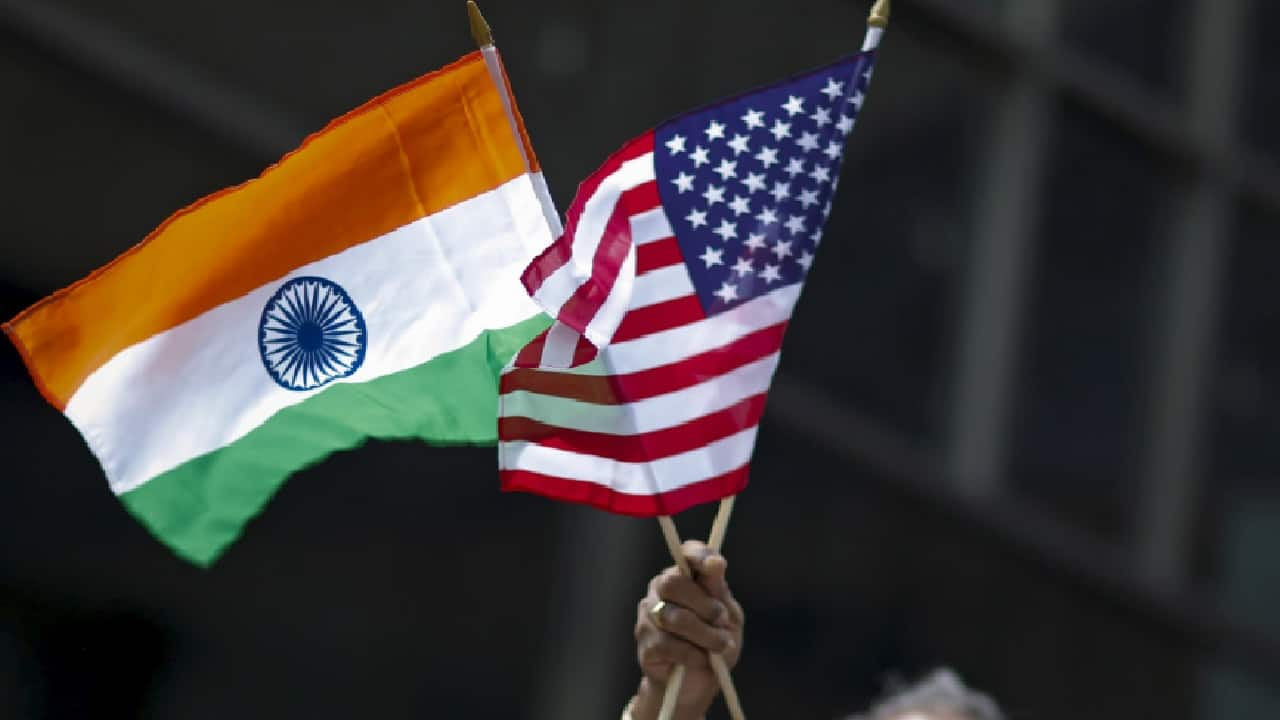
Americans vote in the November 3 midterm elections, and New Delhi is watching closely. The results will show if President Donald Trump keeps control of Congress. These polls matter for India because they impact trade, defence, and H-1B visas. A shift in power could change how Washington handles bilateral ties.
As Americans vote in the November 3 midterm elections, the political battle in Washington is being closely watched in New Delhi. While the results will determine whether US President Donald Trump retains Republican control of Congress or faces a Democratic-led legislature, their implications could extend well beyond American domestic politics, particularly for India's trade negotiations, tariffs, technology partnerships, defence cooperation and immigration policies. For India, the central question is not simply which party wins control of the House of Representatives or the Senate. It is how a change in congressional arithmetic could influence the Trump administration's decisions on issues that directly affect bilateral ties.
The stakes are considerable. The US is one of India's most important economic and strategic partners, but relations have also faced challenges over tariffs, Russian oil purchases, immigration restrictions and market access. A shift in congressional control could introduce greater scrutiny of the administration's policies, although it would not automatically reverse decisions taken by Trump. Why do the US midterm elections matter? Unlike India, where governments are elected through parliamentary elections, the US follows a presidential system in which the executive and legislature are elected separately.
The president serves a four-year term, while midterm elections are held halfway through that tenure to elect members of Congress, state governors and other representatives. The US Congress has two chambers: the House of Representatives, comprising 435 members, and the Senate, with 100 members. All House seats are being contested on Tuesday, along with 35 Senate seats and governorships in 36 states. Republicans currently hold narrow majorities in both chambers. Democrats need a net gain of three seats in the House and four in the Senate to take control, according to the election arithmetic outlined in the supplied campaign reports.
The consequences could be significant for Trump. A Democratic-controlled House would give the opposition control of committees, investigative powers and greater authority to scrutinise the administration. Control of the Senate would also give Democrats greater influence over presidential appointments, including senior government officials and judicial nominees. However, a change in congressional control would not remove Trump from office or automatically end his policies. The president would continue to exercise considerable executive authority over diplomacy, military operations, immigration and trade.
Congress could make it more difficult for him to secure legislation, funding and political support. India-US trade deal and tariffs: The biggest economic concern Trade is likely to be among the most immediate areas of interest for New Delhi. India and the US have been negotiating a broader bilateral trade agreement amid disagreements over tariffs, market access, agricultural products and India's purchases of Russian crude oil. The February 2026 framework reduced the punitive US tariff on most Indian goods from 50% to 18%, but subsequent legal and policy developments have added uncertainty to the final trade arrangement, according to The Economic Times.
The US Supreme Court's decision to invalidate Trump's use of emergency powers for sweeping global tariffs, followed by the introduction of a 10% baseline tariff, has further complicated the trade environment. An ongoing Section 301 investigation into alleged excess industrial capacity among trading partners could also influence the eventual treatment of Indian exports. A Democratic takeover of the House could increase congressional scrutiny of Trump's tariff strategy. Opposition lawmakers could question whether import duties are increasing costs for American consumers and businesses, hold hearings on the economic impact and push legislation seeking changes to selected tariffs.
For Indian exporters, however, a change in Congress should not be mistaken for an immediate reduction in duties. Trump retains executive powers to pursue tariffs through alternative legal provisions, while any legislative attempt to reverse his policies could face a presidential veto. The economic stakes are substantial. Indian goods exports to the US reached $42.79 billion during April-August 2026, compared with $40.39 billion in the corresponding period a year earlier. India also recorded a trade surplus of nearly $34 billion with the US in FY26. Pharmaceuticals and smartphones are among India's major export categories, with important exemptions under the existing baseline tariff framework.
Any further changes in duties could nevertheless affect exporters, supply chains and business confidence. The larger bilateral trade agreement will therefore remain important regardless of which party controls Congress. Issues such as market access, industrial competition and India's trade surplus are not confined to one political party and could continue to feature in Washington's discussions with New Delhi. Russian oil purchases and sanctions: Another point of concern India's energy relationship with Russia has been a recurring source of friction with the Trump administration. Washington has objected to India's purchases of Russian crude, with the issue at various points linked to threats of additional tariffs and sanctions-related measures.
A Democratic-controlled Congress could increase scrutiny of the administration's approach towards Russia, including its decisions on sanctions and energy exports. Lawmakers could seek greater oversight of how Washington balances pressure on Moscow with its broader strategic interests. For India, this could have implications beyond energy imports. New Delhi has maintained defence and energy links with Moscow while expanding its strategic partnership with Washington. Any new congressional push for tougher measures against Russia could complicate that balancing exercise. However, a change in congressional leadership would not automatically translate into a different US position on India's Russian oil purchases.
The administration would continue to have considerable influence over sanctions and foreign policy decisions. Defence and technology cooperation: Why Congress matters Defence and advanced technology are central pillars of the India-US relationship. Cooperation has expanded across areas such as military equipment, intelligence sharing, semiconductors, artificial intelligence and critical technologies. Congress has an important role in determining defence budgets, approving government spending and shaping legislation governing sensitive technology transfers and exports. The Senate also confirms senior administration appointments, including officials involved in foreign policy and defence.
A change in congressional control could therefore influence the level of scrutiny applied to defence spending, technology partnerships and the administration's wider Indo-Pacific strategy. Technology, trade and defence are three major areas in which the midterm results could matter for India. A report by The Indian Express has also pointed to the TRUST initiative, aimed at strengthening cooperation in strategic technologies, including efforts to address China's dominance in critical technology supply chains. For New Delhi, continuity in these partnerships will remain important, particularly as both countries seek to deepen cooperation in areas such as semiconductors, defence manufacturing and emerging technologies.
H-1B visas and immigration: What Indian professionals should watch Immigration policy is another important area for India because of the large number of Indian professionals working in the US, particularly in the technology sector. The Trump administration has introduced changes to the H-1B visa programme and other immigration rules, drawing attention from Indian technology companies, professionals and students. Indian nationals account for a significant proportion of H-1B visa approvals, making any changes to the programme consequential for India's IT services sector. A Democratic-controlled Congress could increase oversight of immigration restrictions and examine their impact on American businesses, universities and employers dependent on skilled foreign workers.
Lawmakers could also debate changes to visa rules and the broader immigration framework. However, major changes to immigration law would require legislative action. Congressional hearings or criticism of the administration would not, by themselves, reverse existing visa restrictions. What should New Delhi watch after the results? The outcome of the midterms will determine how much legislative and political room Trump has during the remaining two years of his presidency. If Republicans retain control of Congress, the administration could continue pursuing its agenda with relatively less resistance from lawmakers.
If Democrats take control of the House, or both chambers, Trump could face more investigations, hearings and legislative obstacles. That could affect the political environment surrounding trade, sanctions, defence spending and immigration, even if the president retains significant executive powers. For India, the immediate priority will remain engagement with both the White House and Congress. The results may change the balance of power in Washington, but the core issues shaping India-US relations will not disappear with the election. Trade negotiations, tariffs, Russian energy purchases, technology transfers and immigration will continue to require attention from both sides.
The midterms could alter the political setting in which these discussions take place, making the composition of the next US Congress an important factor in the trajectory of the bilateral relationship.