
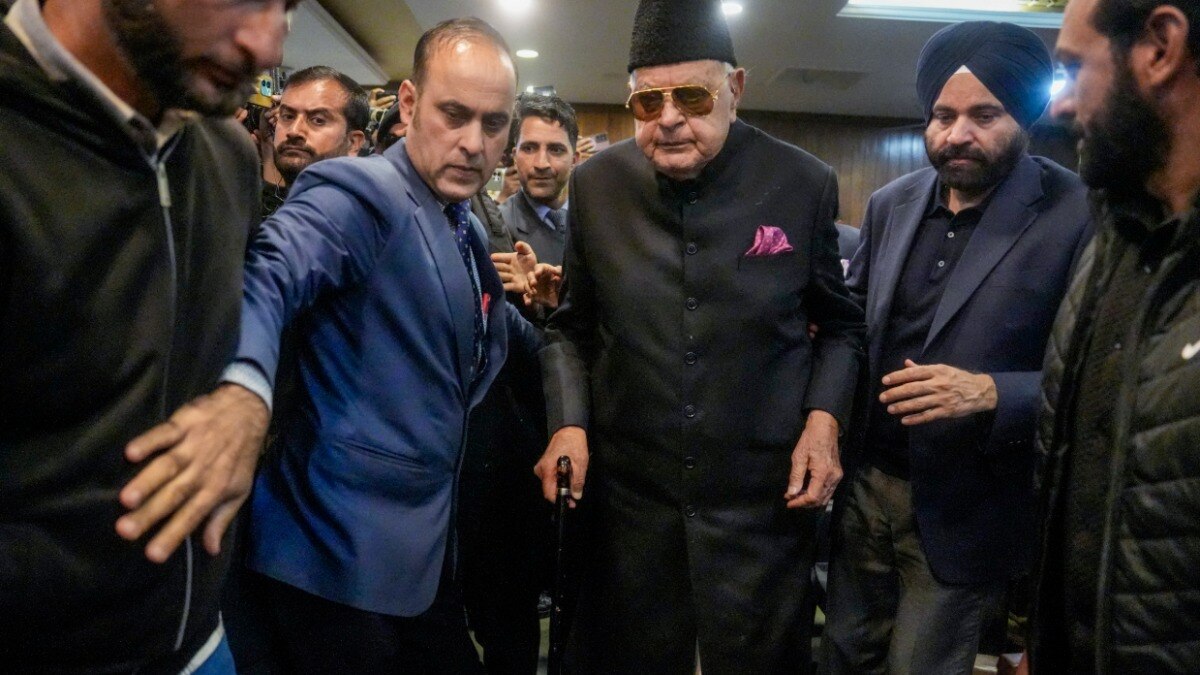
National Conference patron Farooq Abdullah sent a letter to 16 dissenting MLAs after their November 6 meeting. He proposed informal advisory groups to bridge the gap between ministers and legislators. However, the letter fell short as it showed no immediate action on key demands like a cabinet reshuffle or committee.
National Conference patron Farooq Abdullah's letter to 16 dissenting MLAs has left them wanting, sources said. While he has proposed informal advisory groups to monitor ministers, the letter makes no immediate commitment on key demands, including a manifesto committee and a cabinet reshuffle, despite assurances of swift action after the November 6 meeting.
The letter issued by National Conference (NC) patron Farooq Abdullah to party MLAs, outlining steps to address concerns raised by a group of 16 dissenting legislators, has fallen short of their expectations, sources in the rebel camp told India Today.
The legislators had submitted their demands in writing to the party leadership and were assured that some of their concerns would be addressed immediately. However, sources said the latest communication from Abdullah did not meet what they had expected after the three-hour-long meeting on November 6.
India Today has accessed an exclusive copy of the letter sent by Abdullah to the MLAs, in which the NC patron announced the formation of informal advisory groups of legislators to be attached to each member of the Council of Ministers.
The groups are intended to act as a bridge between the legislators and the government, with ministers expected to hold regular meetings with them and keep them informed about major policy initiatives and the progress of their respective departments.
In the letter, Abdullah has asked each legislator to submit, in writing, the names of three ministers in order of preference within 14 days. Each MLA can be part of two advisory groups. The lists will be prepared and notified once all legislators submit their preferences.
"At a recent meeting I had with some of the party legislators it was decided to set up informal advisory groups of MLAs to be attached with each member of the council of ministers," Abdullah wrote.
"These legislators will act as a bridge between the party and the government. Ministers will be asked to hold regular meetings with their advisory groups and keep them informed of major policy initiatives and progress being made in their respective departments," he added.
The letter, however, does not spell out any immediate action on several key demands raised by the dissenting legislators, including the formation of a manifesto committee to oversee the implementation of the party's 2024 election promises and a cabinet reshuffle.
The advisory groups appear to be part of the leadership's effort to address the legislators' concerns over the functioning of the government by giving them a role in monitoring the work of ministers. However, the move falls short of the immediate steps that some legislators had expected following the November 6 meeting, sources said.
WHAT DID THE DISSENTING MLAs SEEK?
The group of 16 legislators had submitted a memorandum to the party leadership, including Chief Minister Omar Abdullah, detailing their concerns over the recent cabinet reshuffle and the functioning of both the government and the party.
A senior NC MLA who attended the meeting had told India Today that it was agreed that a manifesto committee would be formed immediately to oversee the implementation of the party's 2024 election manifesto. It was also decided that MLAs would be attached to cabinet ministers to assess their work, effectively functioning as shadow ministers.
The cabinet reshuffle was another major demand. While the party leadership indicated that it would be considered after a year, the legislators pressed for it to be undertaken within the next six months, the MLA had said.
The group had also sought the removal or change in portfolio of Deputy Chief Minister Surinder Choudhary and the removal of Chief Minister Omar Abdullah's adviser Nasir Aslam Wani, the legislator had claimed.
The dissenting MLAs had been given assurances that some confidence-building measures would be visible soon. Another senior legislator from south Kashmir had described the situation as one of wait and watch, saying the group expected the first steps within a couple of days.
FAROOQ HAD ACKNOWLEDGED CONCERNS WERE GENUINE
Emerging from the three-hour-long meeting on November 6, Farooq Abdullah had dismissed speculation of a split in the party, insisting that the National Conference remained united. However, he acknowledged that the concerns raised by the legislators were genuine and had been discussed carefully.
"The baseless news spreading that the National Conference is fragmented is completely incorrect," he had said, standing alongside the dissenting MLAs.
"We have spoken to them. Their issues were genuine, and these were deliberated upon very carefully," Abdullah had said, referring to the meeting.
He had also indicated that some steps would be taken quickly, while others would be implemented gradually.
"Everyone was heard, and Insha'Allah, as he (MLA Nazir Ahmad Gurezi) said, some steps will be taken quickly and some will be taken gradually," he had said, without specifying the measures.
During the meeting, Omar Abdullah had also reportedly offered to step down as chief minister and focus on party affairs. However, the legislators rejected the suggestion, insisting that he remain their leader while maintaining that their concerns were aimed at improving the party and the government.
Despite the conciliatory note after the meeting, the latest letter has left questions over when and how the leadership will act on the wider set of demands raised by the dissenting legislators.