
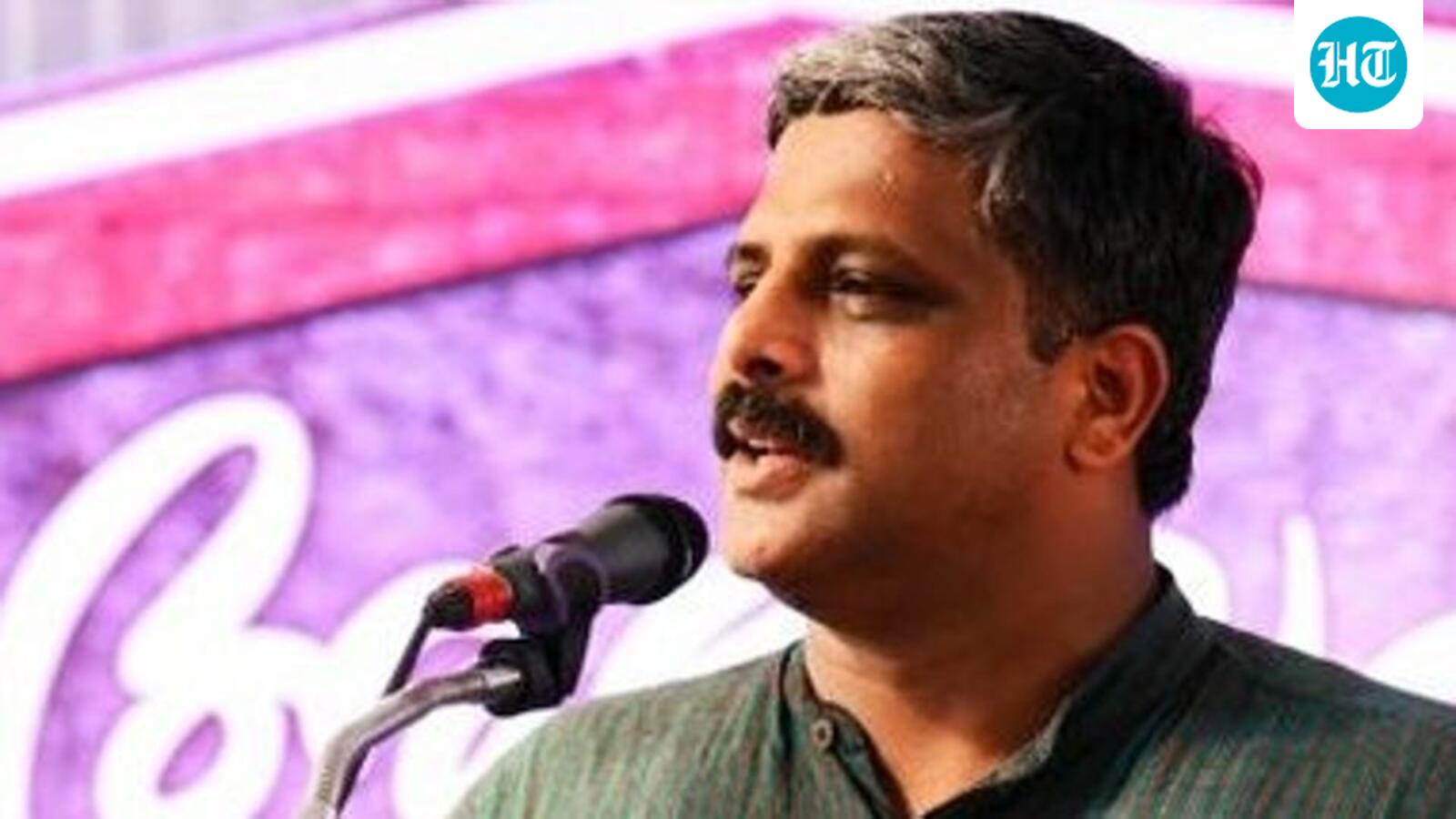
All India Kisan Sabha general secretary Vijoo Krishnan said farmers plan a sustained protest over voter rights. The Samyukt Kisan Morcha scheduled a mobilisation for November 26. Krishnan said, "We believe this will be a long-drawn struggle to protect democratic rights and our right to vote." Farmers also seek legal MSP.
The farmers' movement is preparing for a sustained agitation over voter rights, with protests planned across the country and larger mobilisation scheduled for November 26, All India Kisan Sabha (AIKS) general secretary Vijoo Krishnan said.
"We believe this will be a long-drawn struggle to protect democratic rights and our right to vote," Krishnan told HT in an interview adding that farmer organisations would seek to build the movement at the grassroots rather than concentrate their efforts in Delhi.
The Samyukt Kisan Morcha (SKM) has called for an action on October 23, followed by a mobilisation in Delhi and state capitals on November 26, the sixth anniversary of the farmers' Delhi Chalo march against the now-repealed farm laws.
Krishnan said the farmers' movement was not formally joining the Cockroach Janta Party (CJP) protest but would seek coordinated action with different organisations on the issue.
He said the movement will continue to pursue its own demands, including a legal guarantee for minimum support prices (MSP) and opposition to free-trade agreements. Edited excerpts:
Why have you decided to join CJP's protest, and why now? What is the larger political or democratic concern that has brought the farmers' movement into this agitation?
We are not joining the CJP's protest as such. Different farmers' and workers' organisations have been raising this issue. The Indian National Developmental Inclusive Alliance (INDIA) bloc parties are also taking it up through their own platforms.
A large number of people have allegedly been deleted from electoral rolls. Even if some deletions are justified because people have died or changed addresses, we believe a large number of genuine voters are being denied their right to vote. Many of them belong to the working classes and rural areas.
This is an issue for every Indian citizen. The right to vote is being compromised, and that is why different organisations are taking it up.
How long do you intend to stay with the protest? Is this a symbolic show of solidarity, or are farmer organisations prepared to sustain the agitation?
This will be a long-drawn struggle to protect democratic rights and our right to vote. At the same time, we will continue to take up our own issues.
These include a legal guarantee for minimum support prices (MSP), free-trade agreements and the India-US trade deal. If these agreements lead to cheaper imports of heavily subsidised agricultural products, Indian farmers could face a crash in prices. This concern extends to milk as well. The Samyukt Kisan Morcha (SKM) has called for an action on October 23. Organisations opposed to the Special Intensive Revision (SIR) of electoral rolls have also decided to coordinate protests across the country. Such coordinated but independent actions are important. The platforms may be different, but the objective is similar.
The farmers' movement sustained a year-long agitation against the farm laws. CJP, meanwhile, has faced arrests and restrictions. What lessons can it draw from the farmers' movement?
CJP has been playing a significant role. It is a relatively new movement, having emerged during the NEET protests, and what it has done in such a short period is significant.
There is a need for organisations to join hands, but that does not necessarily mean coming together on a single platform. Different organisations can coordinate their actions so that people take to the streets at the same time, even if they are mobilising under different banners. The impact would be much greater.
What is the farmers' movement planning between October 23 and November 26? Will there be sustained mobilisation towards Delhi?
We want to take the issue to the grassroots. October 23 will be an important action, but we are not treating it as a massive mobilisation in Delhi. We are more interested in decentralising the protest rather than concentrating everything in the capital. November 26 marks six years since the farmers' Delhi Chalo movement. The SKM will mobilise in Delhi and state capitals on that day. We held an SKM convention on July 28, followed by a convention of the SKM and central trade unions on July 29. These meetings were part of the preparations for a bigger, united struggle.
The aim is to build an effective campaign, mobilise people and sustain the struggle until we achieve our objectives.
The AIKS has a presence in 27 states. Our state-level conferences are discussing these issues. Our 36th All India Conference, scheduled to be held in Nalgonda, Telangana, from November 15 to 18, will also discuss the direction of future struggles. The conference is significant because the organisation is completing 90 years. The SKM has also been discussing state-level conventions to highlight the issues facing farmers and prepare for future action.
There appears to be some distance between CJP and the political Opposition. The INDIA bloc held a march that CJP did not join. Should they come together if they share the same objectives?
These things evolve over time. As someone associated with the Left, I can say that we have had no issues with CJP. We were part of the October 10 protest, and there have also been overtures from INDIA bloc leaders towards CJP. The common objective is what unites us, and I believe things will move in that direction.
I would not say there is distance between CJP and the entire Opposition. For instance, the Aam Aadmi Party participated in the protest, even though it was not part of the INDIA bloc march. It does not necessarily have to be one single platform.
There are processes for coordinating action, and I would leave it at that for now. The Congress has also reached out to CJP, while coordination with the Left has been good.
I believe this coordination will evolve over time.