
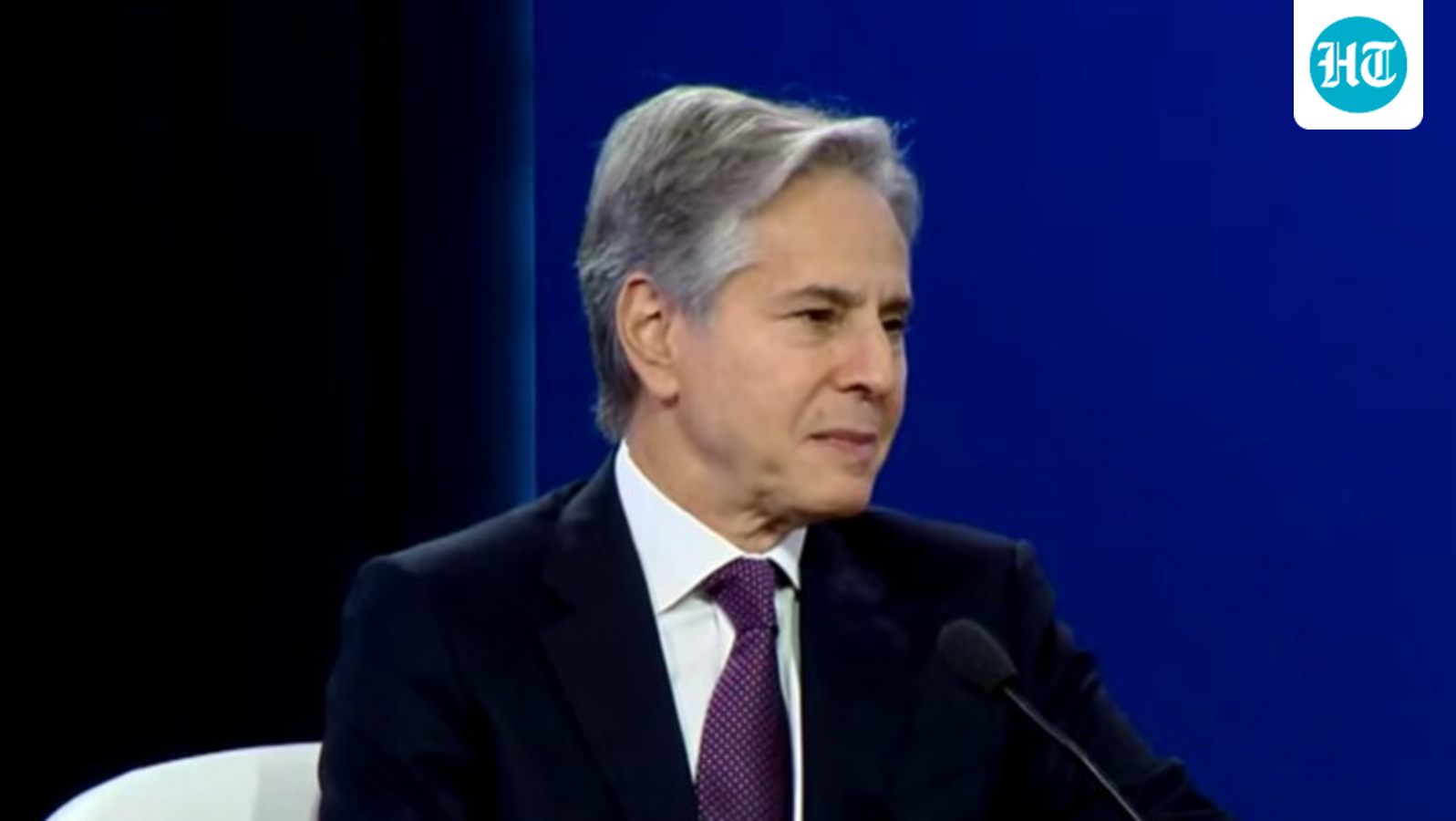
Former US Secretary of State Antony J Blinken said he did not anticipate the scale of Republican losses in the November 3 midterm elections. He noted that voters showed frustration with the Donald Trump administration over rising prices and broken promises. These results showed a major shift in US politics.
Former US Secretary of State Antony J Blinken has said he did not anticipate the scale of the Republican Party's losses in the November 3 midterm elections. The shift in voter support was far more significant than the usual setback faced by the party in power, he said on Saturday.
Speaking at the HT Leadership Summit, Blinken said the results showed frustration with the Donald Trump administration over its failure to fulfil key campaign promises, rising prices and perceptions of corruption. Track the HTLS 2026 session live here
Acknowledging a significant shift in American public opinion toward Israel, Blinken said the issue did not appear to have played a decisive role in the overall electoral outcome, though it may have influenced voters in certain constituencies. "If you look at the polling, that's not what was motivating people. In certain individual places, it might be. But in most places, it wasn't," he said.
Blinken, who served as US Secretary of State from 2021 to 2025, conceded he hadn't anticipated the scale of the Republican losses, and described the electoral shift as far greater than the conventional setback a party with a sitting president suffers in midterm elections.
"I was fairly optimistic coming into it as a Democrat. I sort of parked that for four years as Secretary of State. I tried to stay out of politics. Now, as a citizen, I can do more of that. I was fairly optimistic, but I have to acknowledge to all of you, I did not see this result," he said.
Blinken said the results showed a major shift in US politics, with Democrats making gains not just in the Senate and House of Representatives but also in state elections.
He noted that several voter groups that had previously supported Republicans had now shifted towards Democrats. States once considered difficult for Democrats to win have also returned to the party's electoral map.
He said this could affect future presidential elections and the Electoral College. Democrats had earlier feared that changes in the distribution of electoral votes would make it harder for them to win the presidency. However, the latest results have changed that picture, at least for now.
Blinken said voters were unhappy with the Trump administration for failing to keep its campaign promises, especially its pledge to bring down prices.
"President Trump came in, he made some very concrete promises, and he hasn't delivered on them. And people got very frustrated with that. He said he was going to bring prices down. They continue to go up," he said.
He said the rising cost of living was one of the main reasons behind voter dissatisfaction. He also pointed out that even when inflation slows, prices do not necessarily fall, leaving people struggling with everyday expenses.
Blinken further said Trump's policies, including tariffs and the war with Iran, had added to inflationary pressure.
Blinken said anger over corruption was another major reason voters turned away from Republicans.
He said polling showed that concerns about corruption had played an important role in the election. Citing examples from around the world, he referred to the Arab Spring protests in Tunisia and Egypt, Ukraine's Maidan movement and Brazil's Car Wash corruption investigation.
He said opposition to corruption had been a major reason behind several public movements.
"Every single time there was a movement of significance of this kind, corruption, the revulsion of corruption was either the or a significant driver," he said.
Blinken added that the US was no different, with public anger over perceived corruption also influencing voters.
While the results offered Democrats a significant political opportunity, Blinken warned that the party would now have to demonstrate its ability to address the concerns that shaped the election.
He said the incoming Democratic Congress, which will take office in January, would face pressure to deliver on economic issues, particularly affordability.
"If a Democratic Congress, which will take office in January, doesn't deliver, that won't be good for Democrats," he said.
Blinken maintained that Trump would continue to bear much of the responsibility for the country's economic situation over the next two years, given that he remains in the White House. He said the administration's economic performance would remain a key issue as the country approaches the 2028 presidential election.