
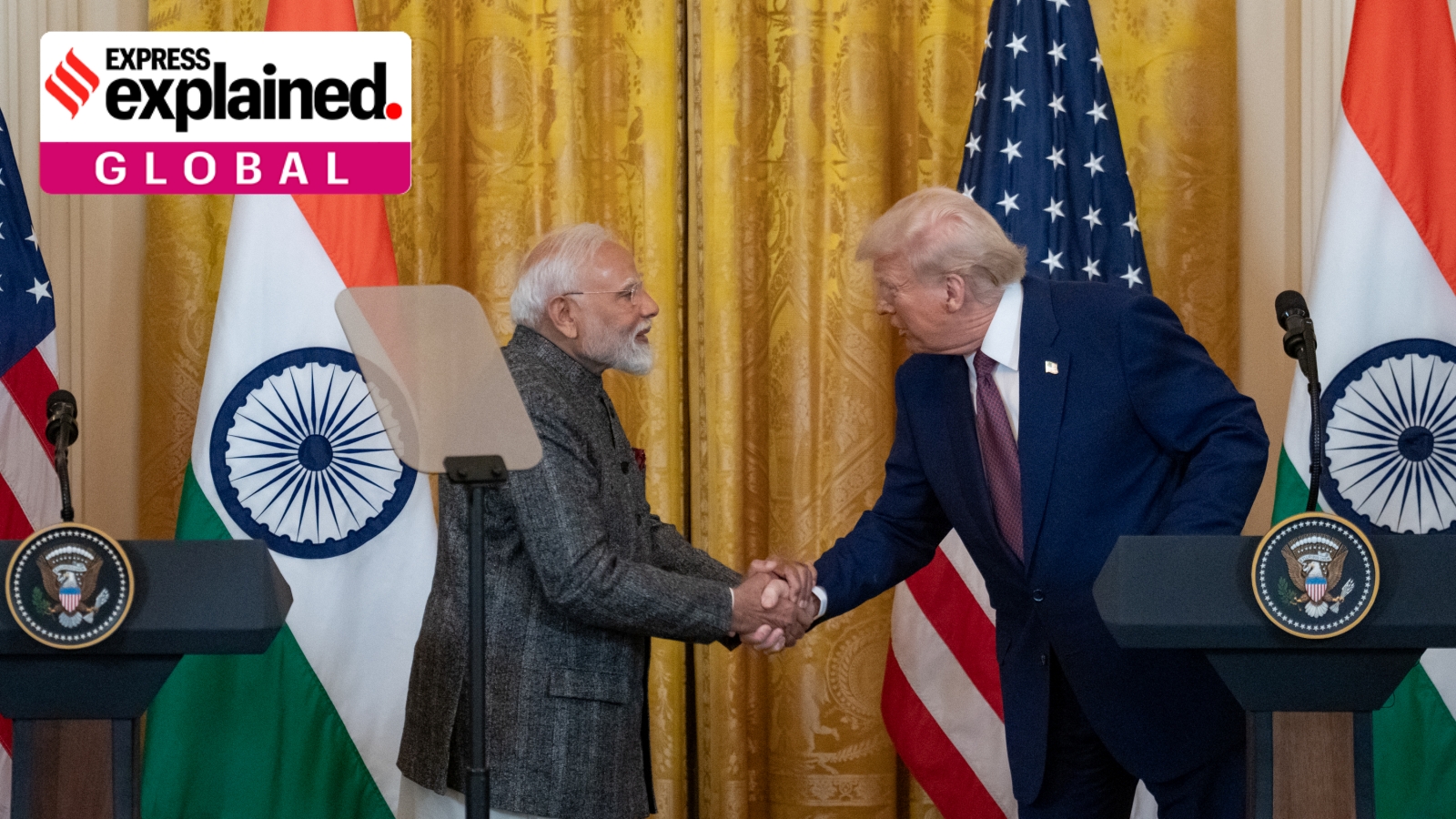
The Democratic Party’s sweeping victory in the American midterm elections gives India new goals for its partnership with the United States. Delhi must now look beyond familiar faces and engage with America’s diverse political landscape. Prime Minister Narendra Modi could meet Trump at the East Asia Summit this month.
Refresh 1990s-2000s playbook; work to seek friends across the aisle: Congress, business, campuses, beyond diaspora.
The Democratic Party's sweeping victory in the American midterm elections presents India with immediate and long-term imperatives in dealing with the United States, its most important and comprehensive partner for the foreseeable future.
The immediate task is to step up engagement with the Trump administration, wrap up the long-pending bilateral trade agreement and advance cooperation in energy, defence and technology.
The latest election is part of the enduring ebb and flow of American politics. The Democratic triumph this week does not guarantee it victory in the 2028 presidential election or continued Congressional domination in the next congressional cycle. Instead of obsessing with mood swings in the American electorate, Delhi must rediscover America's extraordinary political diversity and rebuild relationships across its rapidly changing political landscape.
It is not just Trump who will fade from the scene in the coming years. Familiar Democratic figures -- the Clintons, Obama and Biden -- are also yielding to a new generation representing a more diverse America. If India was surprised by the power of the MAGA movement on the right, it must prepare for potential shocks from the rise of progressive forces on the Democratic side.
More immediately, Prime Minister Narendra Modi could have two opportunities to meet Trump -- at the East Asia Summit in Manila this month and the G20 summit in Miami in December. These encounters offer Delhi an opportunity to consolidate the partnership after a turbulent period. Trump will remain in office for more than two years and retain considerable authority over foreign policy until his last day in the White House.
Challenges for India's political class
For the Indian political class, the long-term challenge is threefold.
First, move away from a shallow understanding of America (Republicans are "good", Democrats are "bad" or vice versa) and an emotional reaction to developments (every remark by an official in DC gets amplified into some kind of a turning point in relations). We need a better appreciation of America's deep structures, its changing internal dynamics, and their impact on US policies.
Neither the Republican nor the Democratic Party has a settled ideological identity, and divisions within them are often as sharp as those between them. Shifting coalitions across party lines increasingly shape American policies at home and abroad. Grasping the multiple strands of American politics and its changing coalitions is key to successful policy formulation in Delhi.
Second, discard the assumption that Washington needs Delhi more than India needs America. This encouraged needless complacency, which Trump's second term shattered. A more realistic appreciation of what binds and divides the two countries is essential for stable engagement.
Third, return to the diplomatic playbook that transformed bilateral relations in the 1990s and 2000s. That transformation did not emerge simply from agreements between presidents and prime ministers. It involved patient efforts to seek and win friends across Congress, business, universities, think tanks and the Indian diaspora.
The historic civil nuclear agreement of 2008 was the culmination of that effort. It required full backing from the White House, bipartisan support in Congress. It demanded the readiness to engage sceptics and overcome entrenched opposition. Delhi did not assume India's strategic importance would automatically produce favourable outcomes in Washington. It invested political and diplomatic capital in building a supportive coalition.
That lesson is especially relevant today. America's federal structure, a powerful legislature, corporations, universities, media and civic organisations create multiple centres of political influence. American politics is not merely a contest between Republicans and Democrats, but a continuing negotiation among competing economic interests, regional identities and ideological traditions.
Transformations within Republicans, Democrats
Trump's nationalist movement has transformed the Republican Party, challenging traditional commitments to free trade, immigration and international alliances. Yet the party remains divided between economic nationalists, market-oriented libertarians, religious conservatives, and those seeking an end to endless wars.
The Democrats are undergoing an equally consequential transformation. Progressives challenge traditional leaders on inequality, corporate power, defence spending, and foreign policy. Divisions over Israel, the Middle East and military intervention reflect a wider struggle over the party's international outlook. Anti-war movements on the left share some ground with isolationist sentiments on the right. The midterm results will intensify these debates as both parties prepare for the 2028 presidential contest.
Delhi cannot afford to remain confined to established networks. The task is not merely to cultivate those sympathetic to India, but also to engage critics on trade, immigration, human rights and Russia. India has lost friends among American progressives, and a special effort is needed to reconnect with them. Changing demographics, the growing influence of ethnic minorities and the revival of socialist traditions demand greater Indian attention to the American left.
This task cannot be left to the government alone. Indian political parties, civil society and business must deepen engagement with their American counterparts. The BJP and RSS are developing their own independent outreach to America. Rahul Gandhi has frequently travelled to the US, but Congress needs more structured engagement with American society. Indian parties must reach beyond the diaspora to the wider forces shaping American polity.
India will continue to need the American partnership for economic transformation, technological modernisation and regional security. But it cannot rely merely on personal chemistry between leaders or relations between governments of the moment. India needs not just strong ties with the White House, the permanent bureaucracy and Congress, but also a broad and durable constituency of friends across the many Americas.
The author is a contributing editor on international affairs for The Indian Express.