
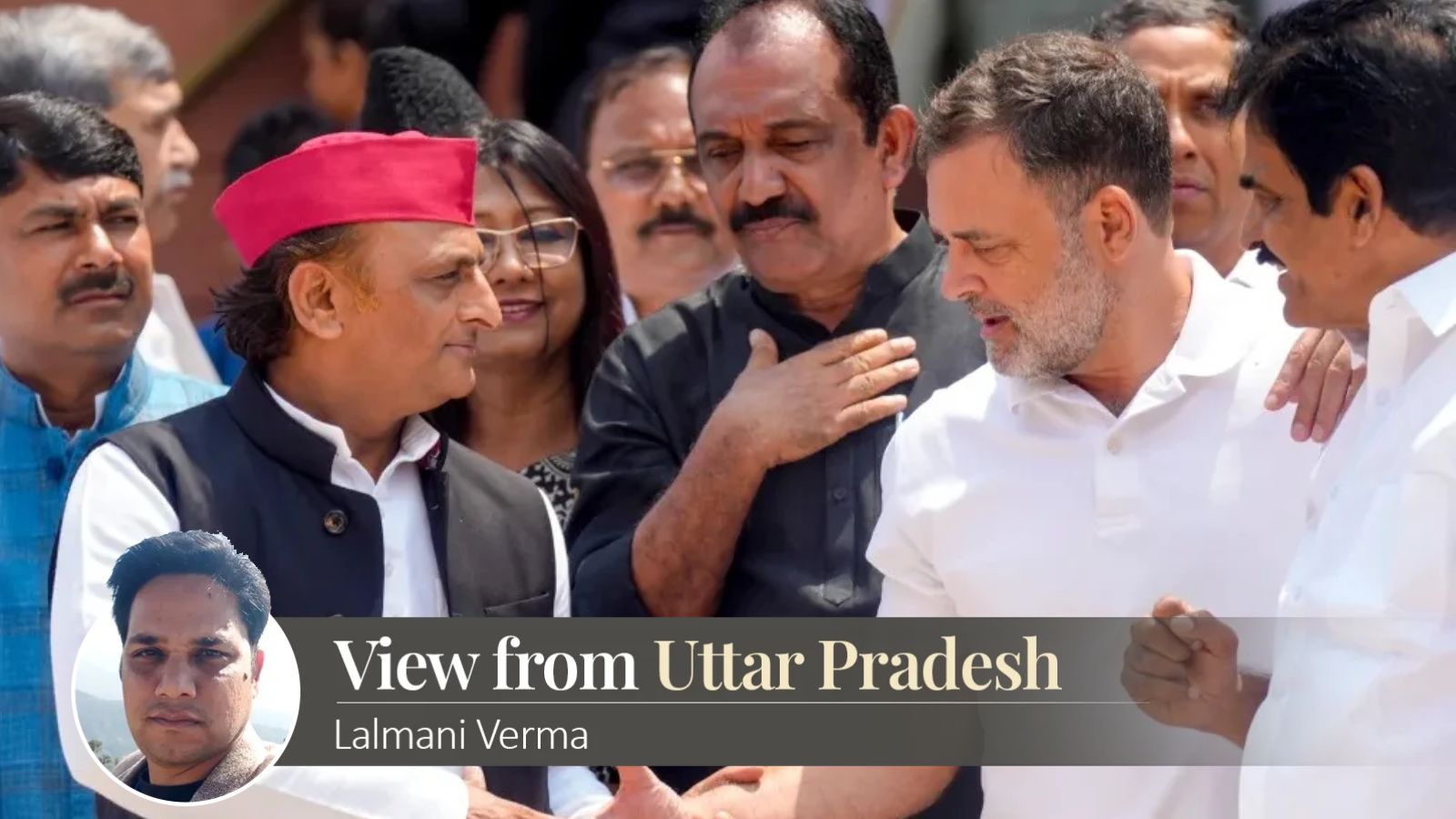
Congress wants 181 seats for the upcoming Uttar Pradesh Assembly polls, but the Samajwadi Party is reluctant. The Congress tally fell to just two seats in 2022. Both parties are set to meet on Monday in Delhi to discuss seat-sharing, as the Congress seeks 45% of the total seats.
Congress's best Assembly poll performance came in 1996, when it won 33 of the 126 seats it contested in alliance with the BSP. Its tally has since declined, falling to just two seats in 2022, when it secured 2.33% of the vote.
Even before the two parties formally sit down to discuss seat-sharing for the coming Uttar Pradesh Assembly polls, the tug-of-war between the Congress and its ally, the Samajwadi Party (SP) over the issue has seemingly begun.
The two parties are likely to have a meeting over seat-sharing for the Uttar Pradesh polls on Monday in Delhi.
While the Congress has submitted a list of 181 seats, or 45%, the SP is reluctant to concede such a large share, citing its ally's past performance in the state, The Indian Express has learnt. Uttar Pradesh has a total of 403 Assembly seats.
An analysis of the past six Assembly elections in the state shows that the Congress has contested 298 seats on average, winning 19 with an average vote share of 7.69%.
Congress's past record
The party's best performance came in 1996, when it contested with the Mayawati-led Bahujan Samaj Party (BSP) in a bid to consolidate Muslim and Dalit votes. It contested 126 seats, winning 33 while securing an 8.35% vote share. The BSP, which by then had already made inroads into the Congress's Dalit vote share, contested 296 seats, winning 67 with a 19.64% vote share.
In 2002, the Congress decided to go it alone, contesting 402 seats in the state. However, its tally fell to 25 seats despite its vote share seeing a marginal improvement to 8.96%.
Five years later, the Congress's tally further declined. Contesting the polls alone in 393 seats, it managed to win only 22 with an 8.61% vote share. The BSP, also contesting independently, won an absolute majority and formed the government under Mayawati.
The 2012 elections saw the Congress recording an improvement in its electoral performance. Contesting 355 seats in alliance with the Rashtriya Lok Dal (RLD), the party won 28 seats with a vote share of 11.65%. The RLD contested 46 seats, winning nine and securing 2.33% of the votes. The SP went on to win a majority, paving the way for Akhilesh Yadav to become Chief Minister.
Despite completing a full term, Akhilesh agreed to ally with the Congress for the 2017 polls following a bitter power struggle with his uncle. The SP-Congress alliance campaigned together with slogans like "UP ko ye saath pasand hai (UP likes this duo)" and while projecting Akhilesh and Rahul Gandhi as "UP ke ladke (UP's sons of the soil)".
The SP contested 311 seats in alliance with the Congress, which fielded candidates in 114. However, the alliance collectively won only 54 seats - SP's 47 and seven for the Congress, which saw its vote share drop to 6.25%. The BJP stormed to power, winning over 300 seats.
Following the loss, the Congress and SP parted ways for the 2022 polls. The Congress's campaign was led by AICC general secretary Priyanka Gandhi Vadra and revolved around the slogan "Ladki hoon, ladh sakti hoon (I am a woman and I can fight)". The Congress fielded 399 candidates but won only two. The party also saw its vote share plummet to its lowest ever - 2.33%.
The Lok Sabha polls of 2024, however, offered the two parties a more successful template for Uttar Pradesh. Under their seat-sharing arrangement, the SP contested 62 of the state's 80 Lok Sabha seats and the Congress 17. The SP won 37 seats and the Congress six, taking their combined tally to 43. The BJP, which had won 62 seats in the state in 2019, was reduced to 33.
The 181 calculation
Explaining the rationale behind the Congress's demand for 181 Assembly seats despite its relatively poor record in state elections, a senior party leader said the 2024 Lok Sabha results had changed the political equation.
"Past Assembly election performances are one consideration. But we are looking at the outcome of the 2024 Lok Sabha elections. The Congress won six Lok Sabha seats, but secured a substantial number of votes in the other 11 seats it contested. The party has workers in every district of Uttar Pradesh. To maintain its presence across the state, it wants to contest at least one seat in every district and keep its cadre engaged in the campaign," the leader said.
"If the Congress leaves an entire district to the SP and asks its workers to campaign for the ally's candidates, they may eventually feel it is better to join the SP. Why would they continue working for the Congress for five years only to campaign for the SP during elections?" the leader added.
The leader also cited the 2017 seat-sharing agreement. "If the SP could give the Congress 114 seats in 2017, after having run a majority government for five years, why can't it give us 181 in 2027, when it has been out of power for 10 years?" a Congress leader said.
Another Congress leader said the party was firm on contesting more than 100 seats. "There will be no compromise below 100 seats. The political atmosphere in Uttar Pradesh is favourable for the Congress-SP alliance," the leader said.
you may like
In the 2024 Lok Sabha elections, the Congress had secured a lead in 40 Assembly segments. Party sources said it was keen to contest these Assembly segments, along with constituencies where its candidates had finished runners-up by narrow margins.
"For instance, we lost the Bansgaon Lok Sabha seat to the BJP by just 3,150 votes, despite leading in three Assembly segments falling under the constituency," a party leader said.
The Congress is also seeking an "equitable distribution" of around 90 weak seats, constituencies that the BJP has won in the last two or three Assembly elections.