
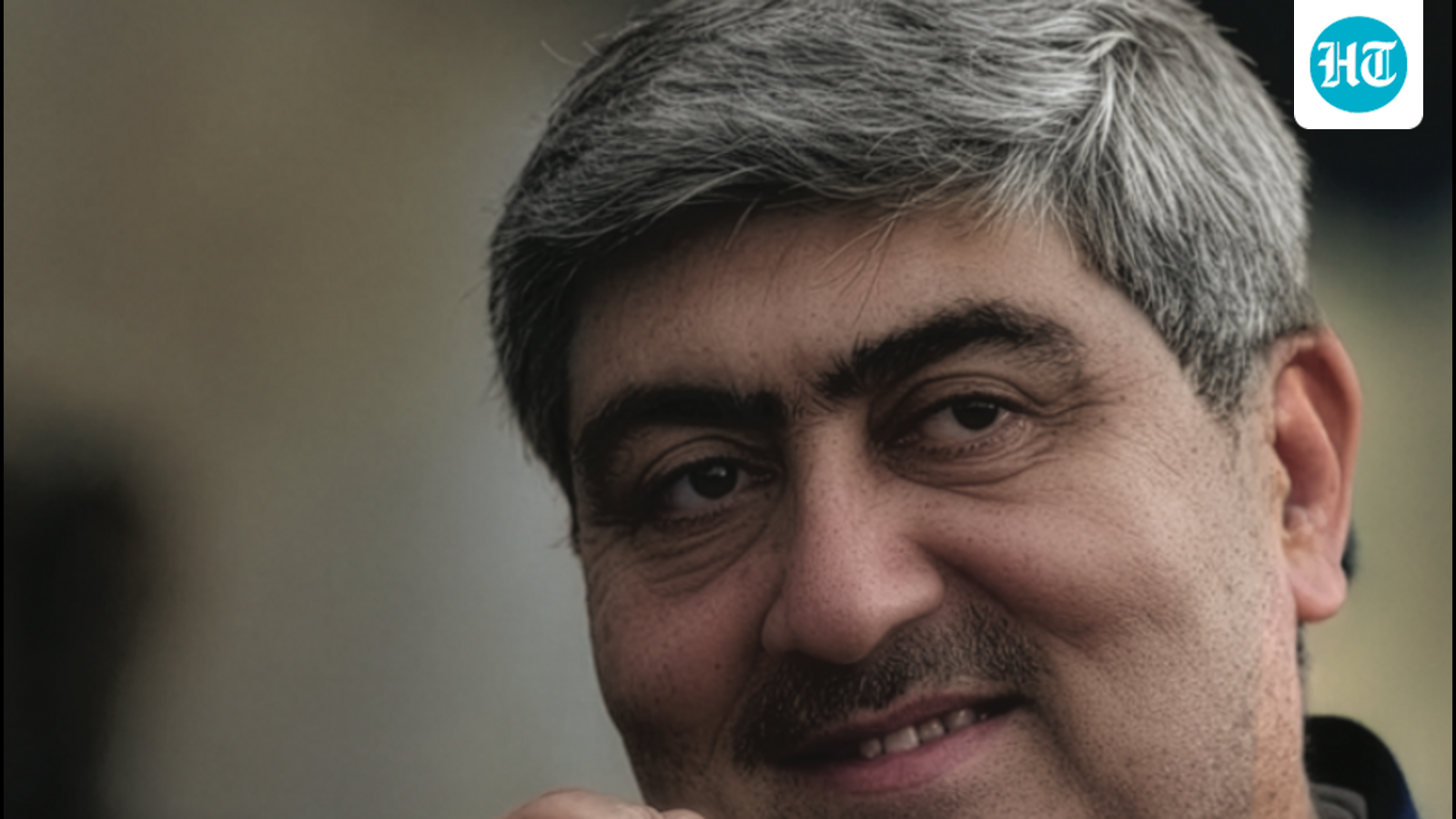
Former Supreme Court judge Sanjay Kishan Kaul writes in his memoir that the collegium faces constant political pressure. He argues the government’s resentment over the 2015 NJAC setback shapes judicial dealings. "It is fantasy to imagine that the collegium is isolated from political pressures," he said, critiquing the appointment process.
The collegium may be the Supreme Court's answer to keeping political influence out of judicial appointments, but it has never been insulated from the pressures of the political establishment, former Supreme Court judge Sanjay Kishan Kaul writes in his forthcoming memoir, arguing that the government's lingering resentment over the scrapping of the National Judicial Appointments Commission (NJAC) in 2015 has shaped its dealings with the judiciary ever since.
"It is fantasy to imagine that the collegium is isolated from political pressures," Justice Kaul writes in Without Fear or Favour, to be published by Juggernaut Books later this month, offering an account of the appointment process that is as much an indictment of its informal workings as it is a critique of former Chief Justice of India (CJI) Dhananjaya Y Chandrachud's approach to the government.
Justice Kaul underlines that the problem is not consultation between the judiciary and the executive, which he considers inevitable, but the point at which consultation becomes an attempt to secure the government's approval before judges have even deliberated on a candidate.
"There is a difference between consultation and what I came to regard as pre-approval -- seeking the government's nod before the collegium had even formally deliberated...Any political class will always assert itself if you give them a wedge in the door," he writes.
Justice Kaul traces this dynamic to the political establishment's inability to reconcile itself to the Supreme Court's decision striking down the NJAC in October 2015. The commission, created through a constitutional amendment and a companion law passed with overwhelming parliamentary support, would have included the Union law minister and two eminent persons alongside three senior judges. Any two members could have blocked a proposed appointment. A five-judge Constitution bench struck down the arrangement by a 4:1 majority, restoring the collegium system. To be sure, the collegium system resulted from Supreme Court rulings in the 1990s, giving the judiciary primacy in making recommendations for appointments to the constitutional courts.
Justice Kaul himself believes the NJAC should have been allowed to function before being rejected outright, even as he draws a distinction between disagreeing with a constitutional ruling and disregarding it.
"Once the Supreme Court has ruled on a constitutional question, that law must stand as declared, and it is incumbent upon the political branches to follow the system in letter and spirit," he writes.
His account of the friction with Justice Chandrachud is rooted in this distinction. Justice Kaul, who joined the Supreme Court collegium in June 2022 and retired in December 2023, says he repeatedly argued that the court needed to engage the government firmly but collectively. He believed the chief justice was "too deferential" on appointments and preferred to manage the relationship with the executive himself.
Yet Justice Kaul's criticism extends beyond the personalities involved. He acknowledges that the collegium itself is "deeply imperfect", with opacity, excessive concentration of power and informal channels leaving the process vulnerable to pressure.
One of his most revealing accounts concerns a candidate from a minority faith whose elevation was questioned by the government. According to Justice Kaul, the government first raised the question of whether the Supreme Court needed additional representation from that faith, despite the candidate being from a state under-represented on the court. A further query concerned the caste to which the candidate's family had belonged before converting to the faith.
The former top court judge found the question irrelevant and the reasoning troubling. He says he told Justice Chandrachud that if appointments were to be made on such considerations, the government might as well appoint judges itself. He then shut the file and walked out of the collegium meeting. The meeting was adjourned, and the government eventually relented.
"Governments assert themselves: If you give them an opening, they will grab it," he writes, adding that the challenge is to maintain institutional integrity while navigating these pressures.
Responding to Justice Kaul's account, former CJI Chandrachud said it would be difficult for him to comment on what Justice Kaul had written, as he had not yet read the book. "Unless I read his observations and understand the context in which they were made, I would not be in a position to offer a detailed response," he added.
Justice Chandrachud, however, added that the collegium's official records showed that its resolutions, along with the reasons for its recommendations, were made public on the Supreme Court's website and that the decisions were unanimous, with Justice Kaul endorsing every recommendation.
Justice Chandrachud added there was not a single instance of Justice Kaul recording a dissent when the collegium formally proposed candidates to the government for appointment as judges. He said this was an important part of the record to consider while assessing the decision-making process.
Justice Chandrachud also emphasised that collegium decisions were not arrived at abruptly in meetings. "Judges held multiple rounds of informal and formal discussions before names were officially considered and recommendations sent to the government", he said, adding that Justice Kaul had never walked out of any such meeting. According to Chandrachud, the meetings were conducted in a congenial atmosphere.
Meanwhile, Justice Kaul's proposed answer to the collegium's shortcomings was not merely to insist on a firmer line with the executive. He also wanted judges to examine the work of the candidates they were considering, according to his memoir.
When he entered the collegium under Chief Justice NV Ramana, Justice Kaul insisted that the judgments and disposal records of candidates be circulated before discussions on appointments. He argued that it was extraordinary that judges could be considered for elevation to the Supreme Court without their colleagues first examining their judicial work.
Ramana told him that this had not been the established practice and that collecting the material would take time, but Justice Kaul refused to allow the process to proceed without it.
"How could we assess a judge's suitability for the Supreme Court without reading their prominent judgments?" he asks in the memoir, arguing that both the quality of judgments and the speed with which cases were disposed of mattered.
The practice was adopted when Justice Uday U Lalit became chief justice in August 2022. Soft copies of judgments began to be circulated before collegium meetings, allowing members to scrutinise a candidate's judicial record before making up their minds. Justice Chandrachud continued the practice.
Justice Kaul describes this as a lasting reform that brought "a semblance of professionalism" to a system whose opacity and accountability deficit remain legitimate concerns.
Justice Kaul further recounts instances in which the government eventually accepted the collegium's recommendations after he intervened directly, including cases involving appointments to the Delhi High Court and the proposed chief justice of a large high court. His experience, he writes, reinforced a conviction that governments are more likely to respect a judiciary that stands its ground.
"The government respects judges who respect themselves," writes Justice Kaul, while adding: "Perhaps it is too idealistic to expect the government to not attempt to influence the process. It is unlikely that any government in independent India has risen to that standard, but at the very least, judges should be expected to stand up for their institution."
Justice Kaul retired as a judge of the Supreme Court in December 2023. He was part of the collegium and authored several important judgments after his elevation to the Supreme Court on February 17, 2017. Prior to this, he had also served as chief justice of the Punjab and Haryana High Court and the Madras High Court.