
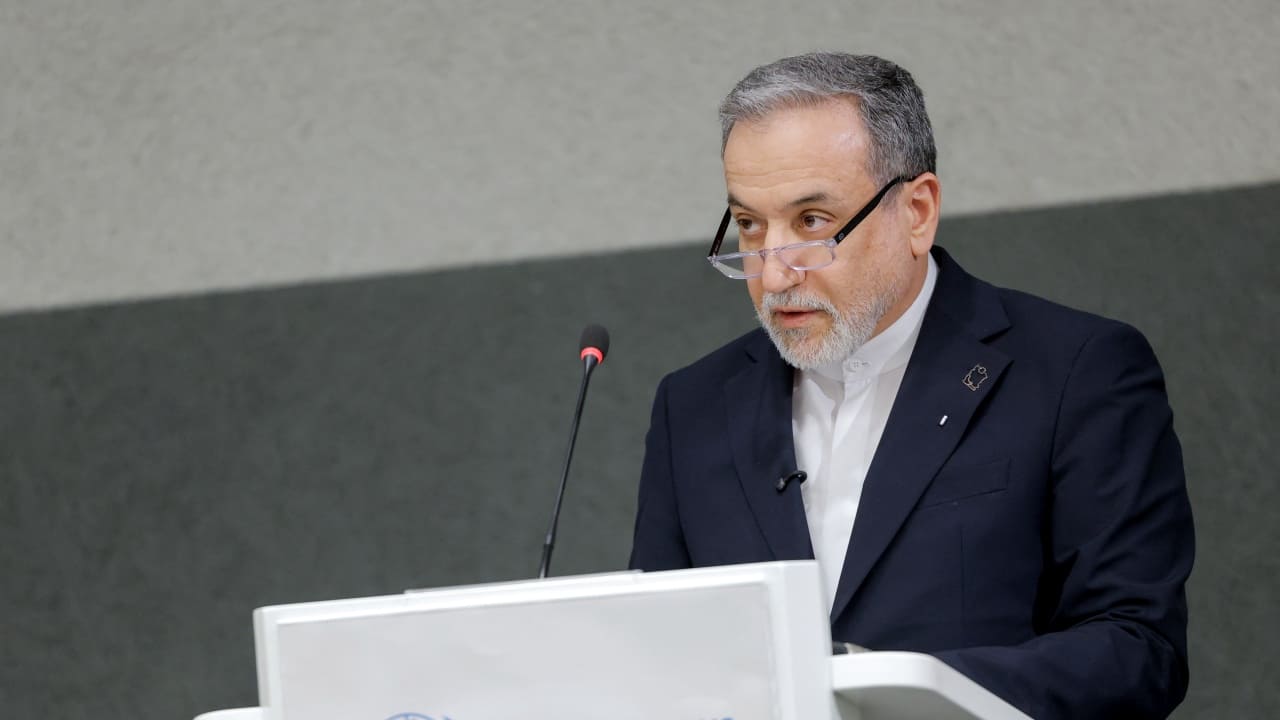
Iranian Foreign Minister Abbas Araghchi said China and Russia oppose changing Tehran’s nuclear doctrine. In an interview published Saturday, November 21, Araghchi noted that while some leaders want a new policy, the official stance remains unchanged. "What matters is that, up to this point, our doctrine has not changed," he said.
Iranian Foreign Minister Abbas Araghchi has said China and Russia are opposed to any change in Tehran's nuclear doctrine, as debate intensifies within the country over whether it should reconsider its long-standing opposition to developing nuclear weapons. According to The Hindu, in an interview with the state-run Iran Daily newspaper published on Saturday (November 21), Araghchi acknowledged that the question of changing the country's nuclear policy had become a significant subject of discussion, with supporters and opponents presenting arguments for their respective positions. He said both Russia and China, which have strategic cooperation agreements with Iran, were against a shift in Tehran's nuclear doctrine.
However, Araghchi maintained that Iran had not altered its existing policy and that its official position on nuclear weapons remained unchanged. "What matters is that, up to this point, our doctrine has not changed, and our official positions remain the same as before," he said. The remarks come amid growing calls from sections of Iran's political establishment, particularly hardline leaders, for the country to reconsider its nuclear stance following military strikes by Israel and the United States that severely damaged Iranian nuclear facilities. Those advocating a change argue that developing nuclear weapons could provide Tehran with a stronger deterrent against future military attacks.
Iran's nuclear doctrine under renewed scrutiny The debate has gained momentum following the US-Israeli military campaign against Iran, which exposed the vulnerabilities of its nuclear infrastructure despite Tehran's stated policy against developing atomic weapons. Araghchi acknowledged that the issue was a serious strategic matter, with arguments being made on both sides of the debate. "There are those who believe the country's nuclear doctrine should be maintained in its current form, and others who speak of the need to change it. Both sides have their own arguments and rationale," he said, reported The Hindu quoting the Iran Daily.
Iran has consistently maintained that its nuclear programme is intended for peaceful purposes and not for developing weapons of mass destruction. Iranian officials have also invoked a religious decree, or fatwa, issued by former Supreme Leader Ayatollah Ali Khamenei prohibiting the manufacture and use of nuclear weapons. Meanwhile, Tehran has restricted the International Atomic Energy Agency's (IAEA) access to its nuclear installations, citing security concerns and accusing the UN watchdog of failing to condemn American and Israeli attacks on its facilities. What is the US position on Iran's nuclear programme?
Washington has maintained that Iran must not be allowed to acquire nuclear weapons, with US President Donald Trump reiterating the position amid continuing tensions between the two countries. Speaking at a White House news conference on November 20, Trump said the US wanted a "real deal, not a fake deal" with Tehran, while reiterating that Iran would never be allowed to possess a nuclear weapon. He also indicated that although Iran was interested in reaching an agreement with Washington, the terms proposed by Tehran were not acceptable to him. The US administration has also pressed Iran to cooperate fully with international nuclear inspectors and meet its obligations under the Nuclear Non-Proliferation Treaty (NPT).
In a statement delivered at the IAEA Board of Governors meeting on November 18, the US, along with Britain, France and Germany, accused Tehran of failing to comply with its nuclear safeguards obligations. The four countries called for the restoration of full access for IAEA inspectors and urged Iran to provide information about its nuclear facilities and declared nuclear material. They also backed efforts to reach a negotiated settlement that would verifiably address concerns surrounding Iran's nuclear programme. IAEA raises concerns over lack of access to Iranian nuclear facilities The IAEA has expressed concern over its inability to monitor Iran's nuclear activities adequately following the military strikes and subsequent restrictions imposed by Tehran.
On November 18, IAEA Director General Rafael Grossi said the agency had received no information from Iran about the status of its declared nuclear material and facilities, apart from the Bushehr nuclear power plant. Inspectors have also been denied access to several key installations. Grossi warned that the agency had lost continuity of knowledge regarding Iran's previously verified stockpile of uranium enriched to levels of up to 60%. Without access to the relevant facilities and updated information, the agency cannot establish whether nuclear material declared for peaceful purposes has been diverted, he said.
The IAEA chief called for renewed diplomatic engagement and urged Tehran to take gradual technical steps to facilitate the return of inspectors, describing verification as essential to restoring international confidence in Iran's nuclear programme. Iran, however, has maintained that the resumption of full verification activities is linked to an end to what it describes as aggression against the country. Tehran, along with China and Russia, has argued that inspections can fully resume only after security conditions improve.