
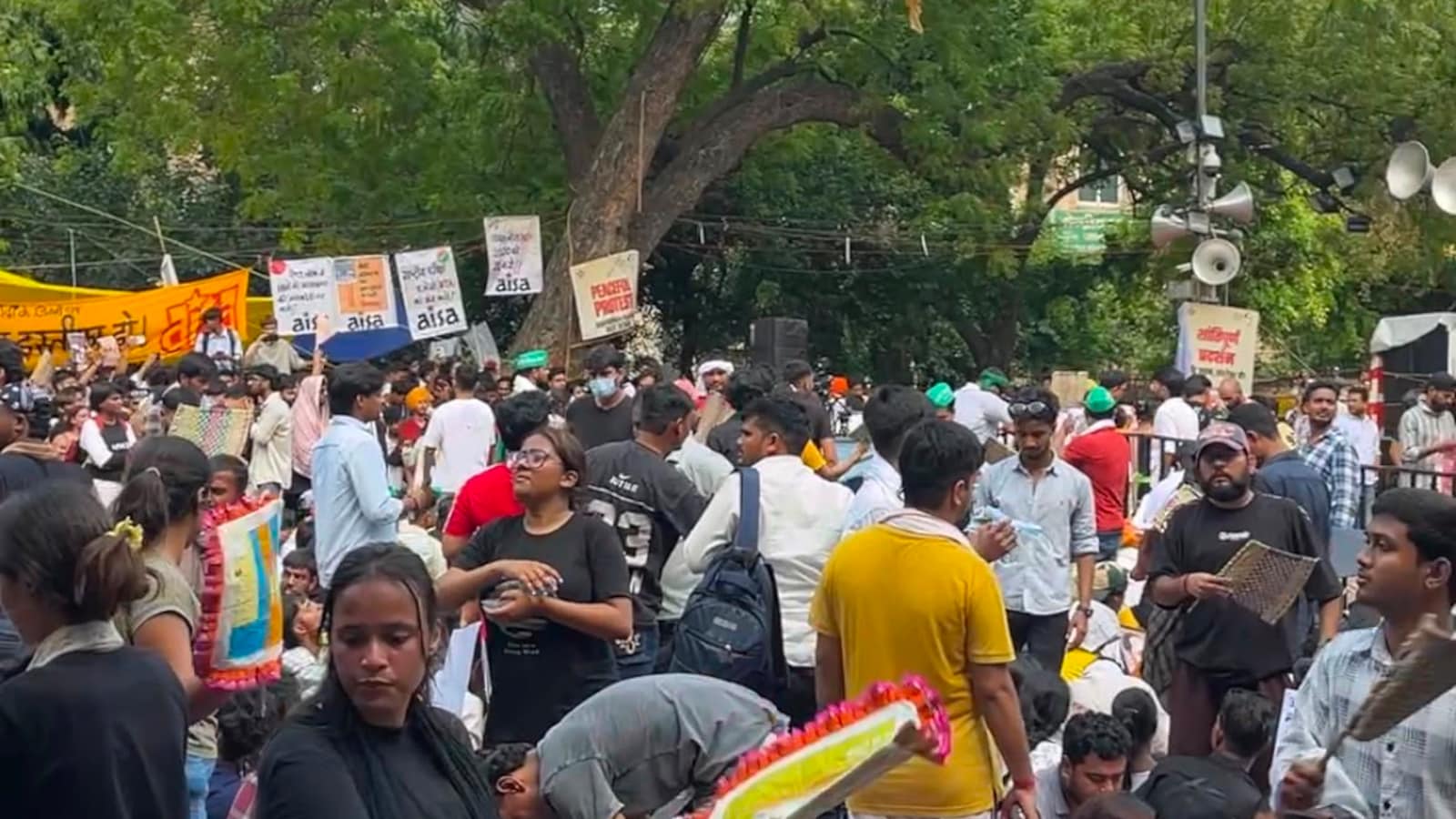
The Supreme Court said no one can occupy a site indefinitely to hold a protest. Chief Justice of India Surya Kant noted, "You cannot occupy a site for all times to come." The court discussed the July 20 protest at Jantar Mantar, where people stayed longer than the permitted one day.
New Delhi:
The Supreme Court today said no one can occupy a site indefinitely to hold a protest and even the designated sites for such activity should have a definite time period. The observations came during a hearing on the massive protest in central Delhi's Jantar Mantar last month organised by the Opposition parties and others against the Election Commission of India, before the tag of a designated protest site was removed from the location.
The government's top lawyer Tushar Mehta told the Supreme Court that whoever gives the call for a protest should take responsibility for any consequence as a result of their actions.
"You cannot occupy a site for all times to come. There are other protesters also. Where will farmers or lawyers go? Everyone has a right to protest," Chief Justice of India Surya Kant said.
The Home Ministry had given three alternative designated protest sites after denotifying Jantar Mantar.
Mehta informed the Supreme Court that permission for the July 20 protest was given only for one day, but the protesters occupied the place and even marched to parliament.
"Parliament is not just another political building. You cannot march to parliament. You cannot march to the Supreme Court," he said.