
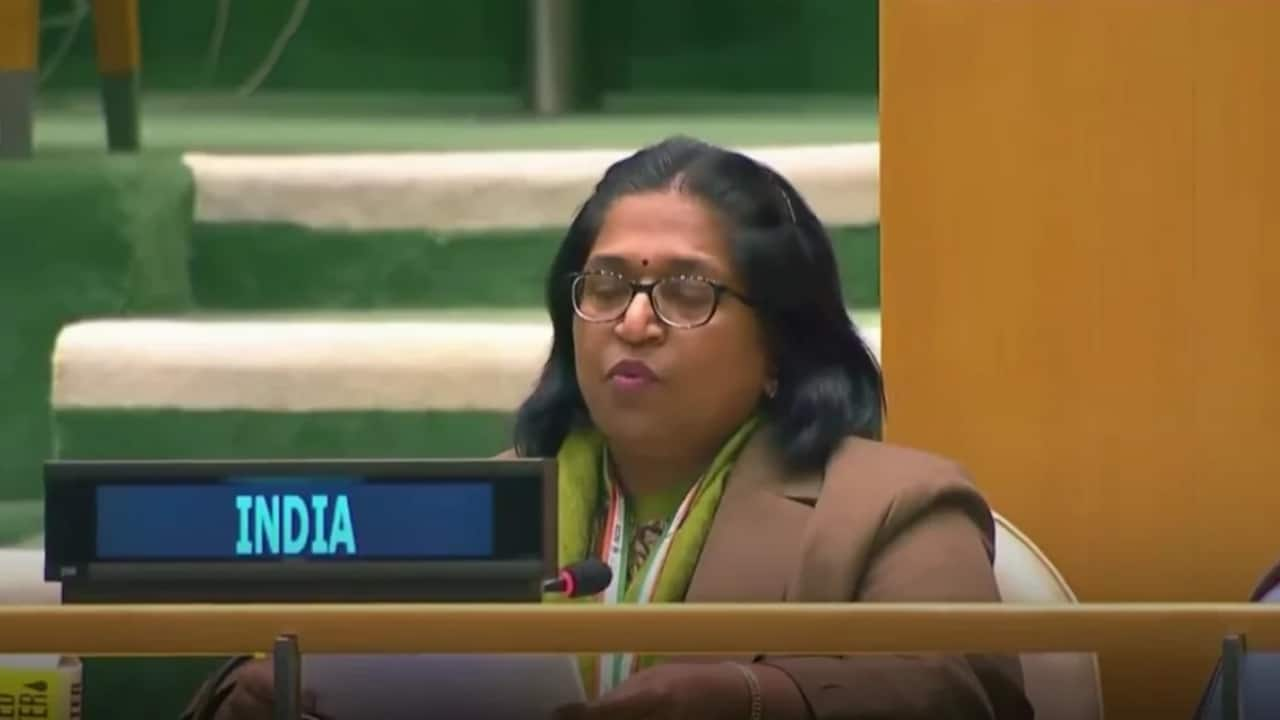
India voted against a UN resolution on Monday after Turkiye excluded New Delhi from key consultations. Ambassador Yojna Patel called the move "blatant and intentional." She said, "My delegation has voted against this resolution not only because of its substantive aspects, but also for an even more concerning matter."
India has slammed Turkiye over the "blatant and intentional" exclusion of New Delhi and several other countries from consultations on a United Nations resolution on cooperation with the Organisation of Islamic Cooperation (OIC), and voted against the draft at the General Assembly. The resolution, titled 'Cooperation between the United Nations and the Organisation of Islamic Cooperation', was introduced by Iraq and adopted by the UN General Assembly on Monday with 112 votes in favour, six against and 39 abstentions. Armenia, Cyprus, Greece, Israel and the United States also voted against it. Turkiye served as the facilitator of the negotiations.
India's Deputy Permanent Representative to the UN, Ambassador Yojna Patel, said the OIC's Permanent Observer Mission had excluded the Indian delegation and several other countries while circulating successive drafts of the resolution. Delivering India's explanation of vote, Patel criticised the working methods followed during the negotiations and called on the UN General Assembly president to investigate the process and prevent a recurrence. "My delegation has voted against this resolution not only because of its substantive aspects, but also for an even more concerning matter regarding the working methods adopted by the facilitator who convened negotiations on the same,"
Patel said. Expressing "deep dismay" over the lack of inclusive consultations, she said that even after some delegations raised objections in subsequent rounds, certain countries continued to be excluded. Basic procedures, including acknowledging inputs, were also "blatantly disregarded", indicating that the exclusion was deliberate rather than accidental. "This is not only shocking but also sets a bad precedent of delegations excluding specific member states to enable their agendas," Patel said. She added that differences among member states were inherent to multilateral diplomacy and could not justify their exclusion from consultations on matters before the General Assembly.
"My delegation strongly objects to such working methods that try to hoodwink excluded delegations into believing that this was just a technical update, which it was not," she said. #IndiaAtUN DPR @PatelYojna delivered the Explanation of Vote (EoV) on 🇮🇳's vote against the resolution on cooperation between the @UN and the OIC. She: ➡️ Highlighted 🇮🇳's objection to the exclusion of several delegations from consultations, contrary to the UNGA's principles of inclusivity and transparency. Meaningful consultations, including with delegations holding divergent views, are essential to preserving the legitimacy, credibility and consensus-based character of the Assembly's work. ➡️ Noted that the resolution's claim to foster solutions to "other conflicts" is unclear.
OIC is not a regional organization under Chapter VIII of the UN Charter and rejected unwarranted references to 🇮🇳, stressing that the OIC has no locus standi on 🇮🇳's internal affairs. ➡️ Underlined that 🇮🇳, a secular, democratic and diverse nation, does not accept that only co-religionists can protect the interests of adherents of their faith. @MEAIndia @IndianDiplomacy @airnewsalerts @DDNewslive -- India at UN, NY (@IndiaUNNewYork) November 17, 2026 India Questions OIC's Role, Raises Kashmir References Apart from the consultation process, India also questioned the substance of the resolution, particularly its attempt to extend the OIC's role in addressing other conflicts.
"The rationale for seeking to extend the role of OIC in this manner is unclear. The OIC is not a regional organisation," Patel said. New Delhi also objected to references in documents and statements associated with the ninth session of the OIC Ministerial Conference on Women, held in Islamabad in July. A declaration adopted at the conference included references to Jammu and Kashmir. Patel said India rejected the declaration and the accompanying resolution, arguing that they contained "unwarranted and factually incorrect references" to the country. "Such documents, unfortunately, reflect the continued misuse of the OIC platform for narrow political ends.
The OIC has no locus standi to comment on India's internal affairs," she said. In an apparent reference to Pakistan, India also regretted that the OIC had "once again allowed itself to be systematically misused by one Member State to weaponise OIC resolutions and declarations against India through false and baseless allegations". Pakistan is a founding and prominent member of the 57-member OIC. India called on the grouping to uphold "objectivity, constructive dialogue, and mutual respect" and ensure that its resolutions did not become vehicles for narrow political agendas. Patel also said India believed sovereign states were responsible for protecting the interests of all their citizens, regardless of faith.
She rejected the idea that only members of a particular religious community could protect the interests of people belonging to that faith. Cyprus, Greece And EU Also Flag Lack Of Transparency India was not the only country to raise concerns about the consultation process. Cyprus and Greece also criticised the lack of transparency and inclusivity under Turkiye's facilitation. Cyprus said it had been repeatedly excluded from communications and negotiations despite requesting to be included. "Inclusion of all UN Member States in this negotiation process is not a matter of political discretion of the facilitator, but a principle enshrined in the UN Charter," its delegate said.
Greece also raised "serious concerns" over the negotiations, saying comments and amendments submitted by the European Union in good faith had neither been meaningfully addressed nor accompanied by substantial explanations for their rejection. Revised drafts were also circulated without adequate consultation, the Greek delegate said. Greece further objected to the exclusion of certain delegations from the circulation of draft texts, saying such practices fell short of the transparency and good faith expected in General Assembly negotiations. The United States said it hoped future versions of the resolution would remove excessive and contentious language and focus instead on concrete areas of cooperation that could achieve consensus.
Ireland, speaking on behalf of the European Union, said the bloc and several of its member states regretted the lack of transparency and inclusivity during the negotiations. It said they had been excluded from relevant communications and consequently had not been given a meaningful opportunity to participate.