
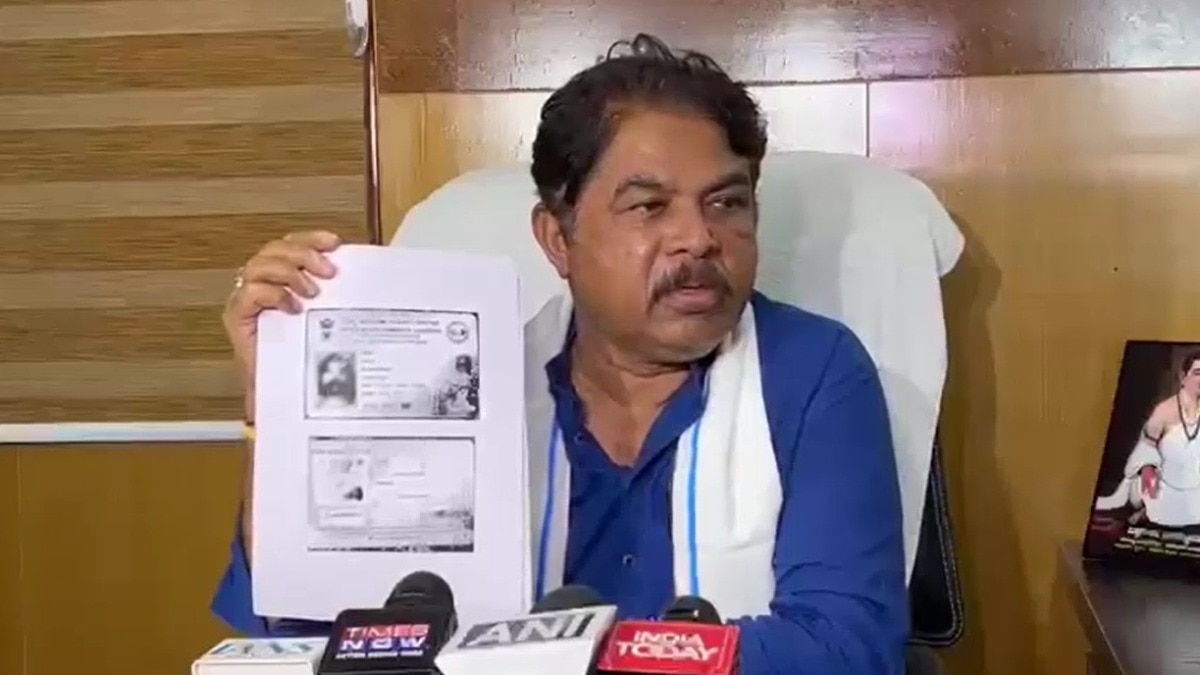
BJP leader R Ashok alleged a Rs 20-crore scam in printing voter ID cards for Bengaluru. He said 90 lakh cards were printed despite having only 59 lakh voters. Ashok demanded a CBI probe, asking, "Who are they? To whom are you going to distribute them?" regarding the excess cards.
R Ashok accused the Congress government of misusing public money and alleged that the State Election Commission had awarded the printing contract through a single tender, without following prescribed financial procedures.
Karnataka Leader of Opposition and BJP leader R Ashok has alleged a Rs 20-crore scam in the printing of voter identity cards for elections to the Greater Bengaluru Authority (GBA), claiming that 90 lakh cards were printed despite Bengaluru having only around 59 lakh voters.
During a press conference in Bengaluru on Wednesday, he alleged that nearly 31 lakh excess cards had been printed and demanded a Central Bureau of Investigation (CBI) probe into the tendering process and the role of the authorities concerned.
"The state government has printed 90 lakh cards, but there are only around 59 to 60 lakh voters now. Where are the remaining 30 to 31 lakh people for whom you printed cards? Who are they? To whom are you going to distribute them?" he asked.
Ashok accused the Congress government of misusing public money and alleged that the State Election Commission had awarded the printing contract through a single tender, without following prescribed financial procedures.
He claimed that the cards were printed using data from the previous Lok Sabha election without fresh household verification or photographs and were now lying unused at corporation offices.
Ashok said the timing of the tender raised questions, as the Election Commission of India (ECI) had announced the Special Intensive Revision (SIR) of electoral rolls on May 14, 2026.
The State Election Commission invited the tender the following day, on May 15, and issued the work order on May 29, he said.
Despite the impending revision of electoral rolls, the commission proceeded with printing 90 lakh State Voter Identity Cards (SVICs), Ashok alleged.
He questioned why the exercise was undertaken before the revised voter list was prepared and claimed that the contract violated Finance Department rules.
Citing the revised electoral rolls, Ashok said Bengaluru had around 59 lakh to 60 lakh voters after the SIR, significantly fewer than the 90 lakh cards printed.
He questioned the purpose of producing the additional cards and demanded that the government disclose their present location, the officials who authorised the tender and the basis on which the expenditure was approved.
The BJP leader accused the Congress government of attempting to influence the forthcoming GBA elections through alleged irregularities in voter identification.
He challenged the government to distribute the cards immediately if the process was legitimate and questioned why they had not been issued despite the passage of time since printing.
Ashok also questioned the need for a separate state-issued voter identity card when the ECI already provides Electors Photo Identity Cards (EPICs).
He said the State Election Commission had issued a gazette notification and framed rules for the cards but demanded clarity on the legality and necessity of the exercise.
Referring to the Congress's allegations of vote theft against the BJP, Ashok said the ruling party should answer questions about the additional cards.
He demanded a CBI investigation into the contract, the printing process and the officials involved, besides a Special Investigation Team (SIT) to verify the electoral rolls.
Ashok further alleged irregularities in a separate Rs 133-crore garbage tender and said he had written to the Chief Minister seeking its cancellation and a Lokayukta investigation.
The allegations come amid political tensions over the SIR and preparations for the GBA elections.
The state government and the State Election Commission are yet to respond to the specific allegations detailed by Ashok.
A probe, if ordered, would be expected to establish the basis for the card count, the tender's compliance with financial rules and whether any public funds were misused.