
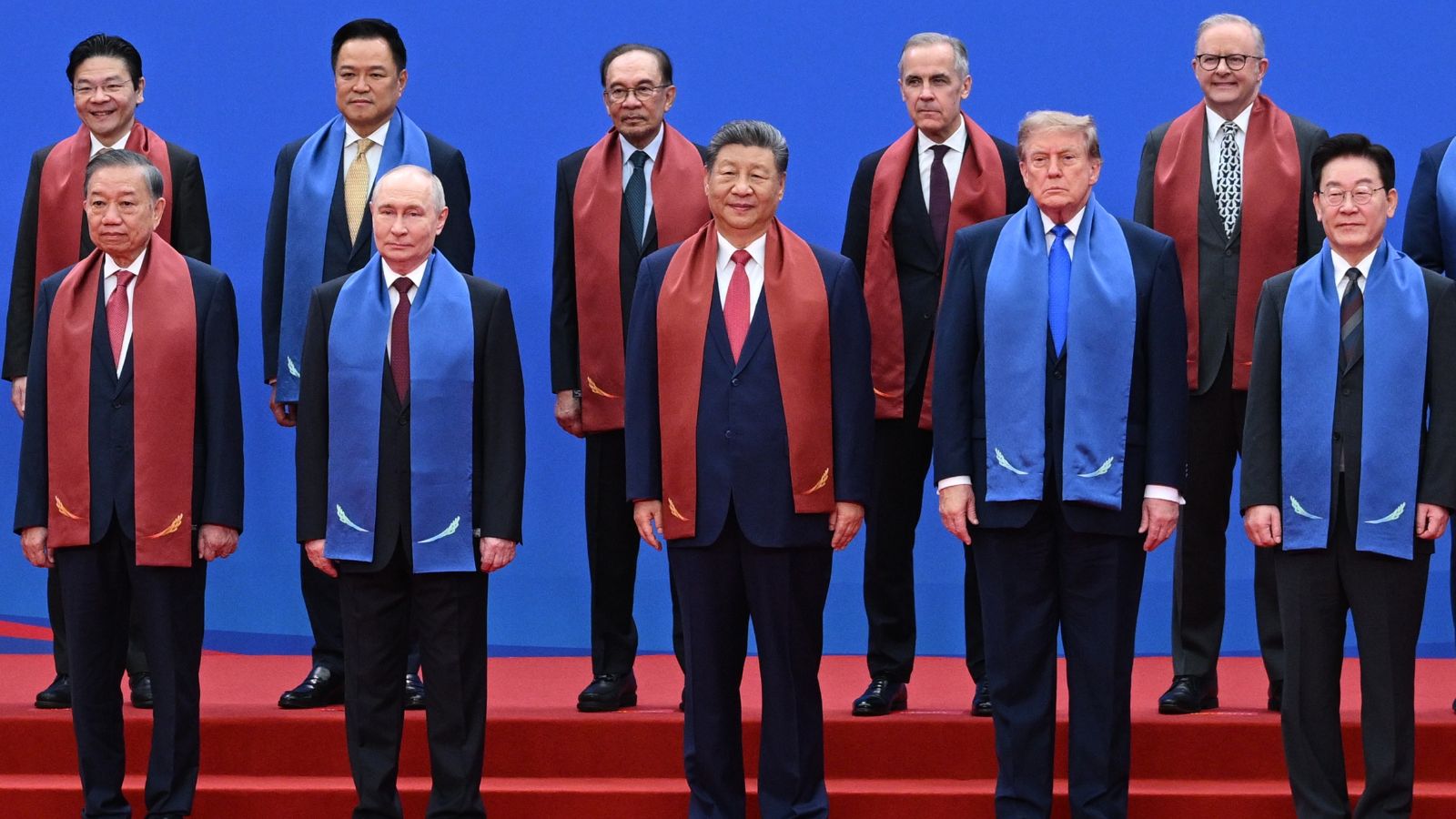
Over 20 heads of state congregated in the Philippines for the 49th ASEAN Summit. Leaders pursued multi-alignment while balancing ties with China and the US. The spotlight then shifted to a trilateral meeting in Shenzhen during the 33rd APEC Economic Leaders' Meeting. Experts said there is little chance of a reset.
Manila and Shenzhen were at the crosswinds of geopolitics this week. If Manila represented multipolarity, Shenzhen suggests a triadic geopolitical endeavour.
Over 20 heads of state and government congregated in the Philippines for the 49th ASEAN Summit and related meetings. The kaleidoscopic sequence featured the Quad Summit alongside the 21st East Asia Summit and ASEAN meetings with its dialogue partners.
ASEAN nations have taken strategic autonomy to the next level, capitalising on the group's centrality in the Indo-Pacific. ASEAN leaders traipsed from a meeting with Premier Li Qiang -- focused on China's role as the primary economic partner -- into a meeting with President Donald Trump to discuss reciprocal trade, maritime security in the South China Sea, and supply-chain resilience, all shaped by China's shadow.
A defining paradox of statecraft today is strategic autonomy. Every leader in Manila was pursuing multi-alignment. Competing powers -- China and the US -- wooed the same constituency. Estranged allies -- the US and Canada -- roamed the same corridors, all availing themselves of ASEAN's neutral convening power, to advance their own strategic agendas.
The discourse across fora in Manila points to a central truth: The fulcrum of global security, critical supply chains and maritime stability is the Indo-Pacific. In recognition of realities, Trump returned to the Quad table in pursuance of leverage ahead of his meeting with presidents Xi Jinping and Vladimir Putin in Shenzhen on the sidelines of the 33rd Asia-Pacific Economic Cooperation (APEC) Economic Leaders' Meeting.
Xi and Putin skipped Manila, preferring to prioritise their trilateral meeting with Trump. Seven of the 11 ASEAN member states are full APEC economies and are participating in the Shenzhen meetings, which, though focused on economic issues, bring together much the same cast, including the leaders of Japan, South Korea, Australia, and Canada, besides a few from Latin America. The motley membership of APEC is a limitation -- ensuring that its "consensus" is markedly different from that of the East Asia Summit, the Quad and the ASEAN convening.
The Manila conclaves demonstrate both the level of hedging in international statecraft and the ability of competing nations to engage on certain issues despite big differences, even if outcomes reflect anodyne common denominators.
After the Philippines, the geopolitical spotlight shifted to the trilateral in China. However, Shenzhen is no Yalta. There is little chance of the meeting achieving a substantive reset in geopolitics. Unlike 1945, when three powers could carve up spheres of influence, this is more about optics than substance -- not least because none of the three is in a position to achieve their core objectives in the dialogue.
Both Manila and Shenzhen offered Trump an opportunity to burnish his credentials in Asia after the setback in the midterms. The truth is that the US cannot end the war in Ukraine without the latter and the EU at the table. With Europe hunkered down and the emergence of a hostile Congress by January 2027, this seems more unlikely than ever. Moreover, Iran's rejection of dialogue has dented Washington's standing, with Tehran's confidence at an all-time high. Ironically, Trump's idea of a fourth meeting with North Korean leader Kim Jong Un with China's help suggested that he was on the back foot.
China, despite its considerable chokeholds on supply chains, cannot reverse the US's protectionist tide due to structured antagonism in ties. On the other hand, China is loath to subject its rapidly growing nuclear arsenal to any arms treaty. Meanwhile, the tech war has heated up following the Nvidia scandal. From Beijing's point of view, the longer the US drains its resources in the Strait of Hormuz and Ukraine, the greater its potential leverage on bilateral issues.
you may like
No doubt, Putin is looking to extract a good deal on Ukraine, with Xi on his side. However, Russia cannot force Ukraine to submit, nor is it willing to yield. The Shenzhen photo-op is little more than an assertion of its global status vis-à-vis the two big powers.
Taken together, the week's diplomatic engagements in Manila showed that Indo-Pacific nations are increasingly writing their own rules. Besides, ASEAN's refusal to choose sides has shades of India's multi-alignment. This allowed Prime Minister Narendra Modi -- fresh from proposing a long-term Maritime Cooperation Plan and critical minerals tie-up at the 23rd ASEAN-India Summit, and described by Trump variously as a "very tough" and "great leader" -- to simultaneously champion ASEAN centrality, push for equitable trade rules and reinforce Quad deterrence against unilateralism and disruptive maritime assertiveness. Overall, India's engagements across all three Manila forums -- ASEAN, the East Asia Summit and the Quad -- reinforced both its strategic autonomy and its reputation as a credible partner.