
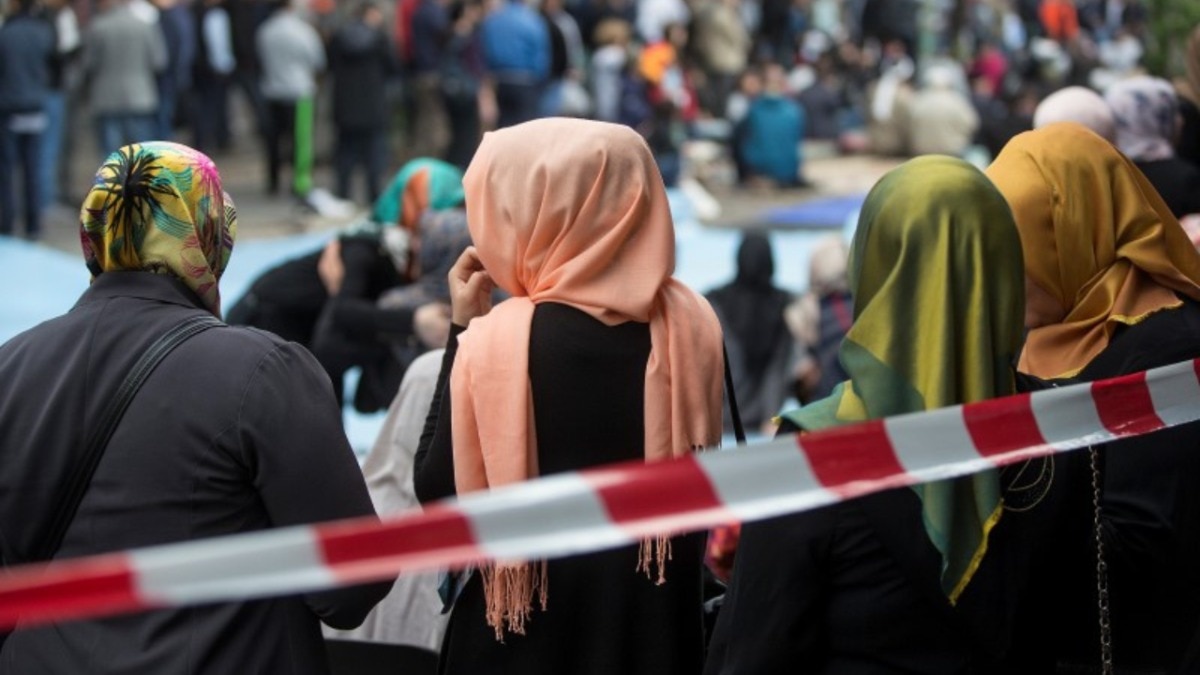
Azerbaijan introduced new school dress-code rules that effectively prevent students and teachers from wearing the hijab in classrooms. While the amendment does not explicitly ban headscarves, schools have started turning away those wearing them. Teacher Zahra Hasanova said, "It is a personal choice, and that should be my choice."
Azerbaijan has introduced new school dress-code rules that restrict clothing deemed incompatible with secular education, effectively preventing students and teachers from wearing the Islamic headscarf, or hijab, in classrooms. In a country where around 96 per cent of the population is Muslim, the restrictions have sparked a contentious debate over faith and education.
The amendment, approved last month, does not explicitly ban the hijab. Instead, it prohibits clothing that authorities consider contrary to the "principle of secularism" in state schools. However, some schools have already begun turning away students and teachers wearing headscarves, which has triggered protests in the country.
For those affected, the issue is not simply about a uniform. It is also about access to the freedom to make personal religious choices. Teacher Zahra Hasanova told Al Jazeera that she had been informed she could no longer wear the hijab at school.
"To be honest, I am a little emotional. I am hurt," she said. "(The hijab) is a personal choice, and if one day I want to take it off, that should be my choice too."
WHAT EXACTLY HAS AZERBAIJAN CHANGED?
The Azerbaijan government has amended the rules governing uniforms for students in state-run general education institutions. The stated objective is to establish a common dress code that reflects Azerbaijan's secular character.
The state-run Azerbaijani Press Agency (APA) said the rules were intended to ensure that school clothing followed the country's "secular principle". The guidelines also allow clothing reflecting the "history, culture, and national and moral values of the Azerbaijani people" to be worn during celebrations, subject to approval by the relevant Pedagogical Council.
The APA said the approach would help teachers maintain "professional standards" and positively affect the "school's public reputation".
The dispute arose because the rules do not explicitly mention the hijab, yet some schools have interpreted them as grounds to exclude people wearing Islamic headscarves.
WHY DOES A MUSLIM-MAJORITY COUNTRY INSIST ON SECULAR SCHOOLS?
The answer lies in Azerbaijan's history and constitutional framework.
Azerbaijan is a former Soviet republic in the South Caucasus, a region between eastern Europe and western Asia. It became independent in 1991, following the collapse of the Soviet Union.
During the Soviet era, religious practices were restricted. After independence, people gained greater freedom to observe their faith, but Azerbaijan retained a secular system of government.
In simple terms, a secular state does not officially govern according to the rules of one religion. Azerbaijan's government argues that this principle should also shape its public education system.
Article 7 of the country's Constitution defines Azerbaijan as a secular state. Article 18 separates religion from the state and explicitly establishes the secular character of state education. At the same time, Article 48 guarantees freedom of conscience, including the right to practise a religion or follow none.
These provisions are at the centre of the current dispute. The government is defending uniform rules in the name of secular education, while critics question whether excluding students and teachers who wear the hijab is compatible with constitutional protections for religious freedom.
HIJAB ROW SPARKS PROTESTS AND HUNGER STRIKE
The restrictions have prompted protests and a social media campaign. Videos circulating online showed students hugging their teachers and crying as they were reportedly turned away from schools. Several local media reported that students at least two schools boycotted classes to protest against the rules.
The authorities have also taken action against demonstrators. Azerbaijan's Interior Ministry said on Monday that 37 people had been detained for disrupting public order while opposing enforcement of the dress-code requirements.
The issue is not limited to schools. Imprisoned journalist Polad Aslanov, who was convicted of high treason in 2020 and is serving a 113-year prison sentence, launched a hunger strike over the new requirements. Reports of internet blackouts also circulated amid the unrest. However, the claims had not been confirmed by data from monitoring organisations, including the Open Observatory of Network Interference and NetBlocks.
HIJAB ROW TESTS 'ONE NATION, TWO STATES' TIES WITH TURKEY
The controversy has also strained relations with Turkey, one of Azerbaijan's closest allies. The two countries often describe their relationship using the phrase "one nation, two states", due to their close cultural, linguistic and political ties.
Protests against the restrictions have spread to Turkey, where demonstrators gathered outside Azerbaijan's consulate in Istanbul to demand that authorities in Baku reconsider the rules.
The dispute has also revived memories of Turkey's own history of headscarf restrictions. Following the military-backed intervention of 1997, often described as the country's "post-modern coup", women wearing headscarves faced restrictions on entering universities and working in parts of the civil service.
Turkey later eased those restrictions, making the current controversy in Azerbaijan particularly sensitive for some Turkish politicians and religious groups.
Oktay Saral, an adviser to Turkish President Recep Tayyip Erdogan, criticised Azerbaijan's move as "unacceptable".
"Leaving a student who covers her head for reasons of faith at the school gate - how can this fit into any conscience, any sense of justice?" he posted on X.
Azerbaijan's governing Yeni Azerbaijan Party (YAP) responded sharply, describing Saral's remarks as "populist and irresponsible". It said the comments risked damaging relations between the two countries and argued that Azerbaijan's education policy was based on equality, secularism and the rule of law.
The party also warned Turkey against using Azerbaijan's domestic education policies for political purposes, stressing that close bilateral ties did not justify interference in each other's internal affairs.
WHAT DOES AZERBAIJAN'S GOVERNMENT SAY?
Azerbaijani officials have rejected accusations that the rules amount to religious discrimination. They argue that the restrictions concern the school environment rather than people's right to practise their faith in everyday life.
Zahid Oruj, chairman of the human rights committee of Azerbaijan's parliament, said the measure was not an attack on religious freedom or free expression.
"There is no ban on wearing headscarves outside school, and the primary objective is to maintain uniform rules within the educational environment," he told Al Jazeera.
Oruj also said that religious belief should not be confused with the question of how students dress in public schools. Many Azerbaijanis, he noted, believe in God and regard the Quran as a holy book without necessarily wearing the hijab.
The immediate question is whether the authorities will clarify how the dress-code rules should be applied and whether students and teachers wearing hijabs will continue to face exclusion from schools.