
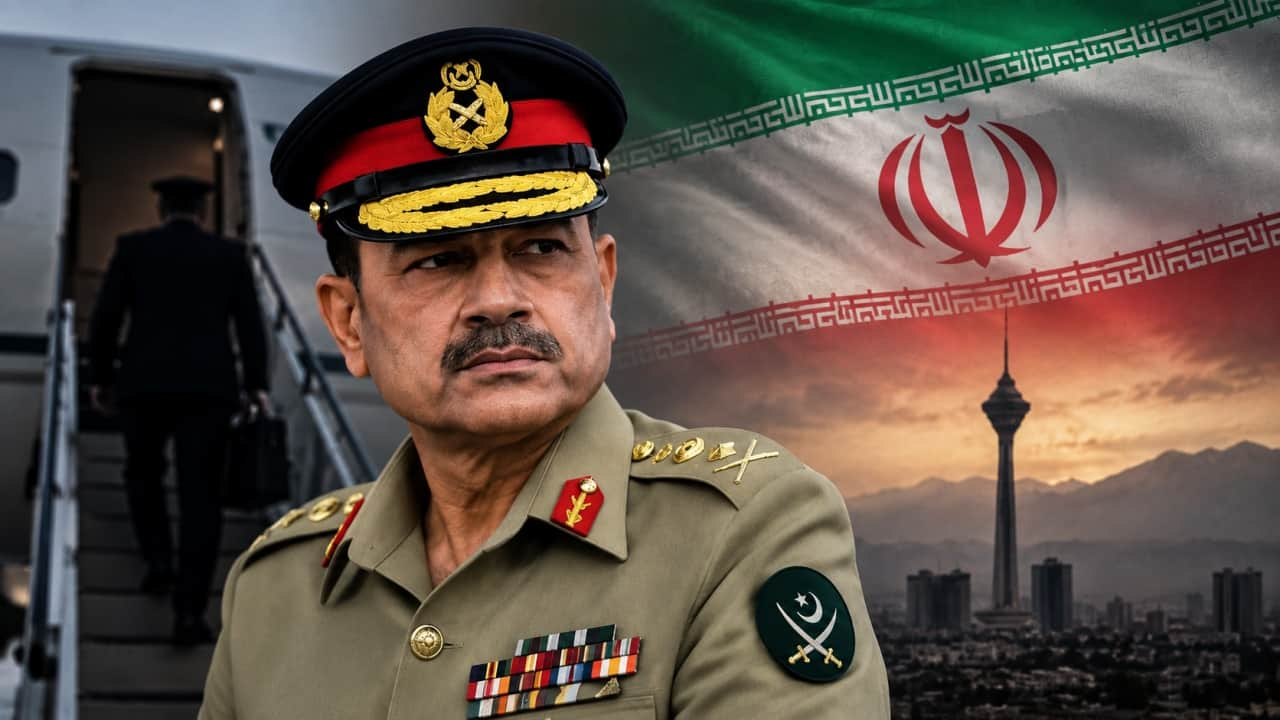
Pakistan Army chief Asim Munir arrived in Tehran on Monday, October 26, with Saudi and Turkish officials to discuss regional security. Iran continues to reject US demands, with President Masoud Pezakiashan saying, "The Americans must first remove the threats and sanctions; only then can we engage in dialogue."
Pakistan Army chief Field Marshal Asim Munir is back in Tehran for another round of high-level diplomacy, this time alongside senior officials from Saudi Arabia and Turkey. But the latest talks come after his previous visit failed to produce a publicly announced breakthrough, with Iranian leaders rejecting key US demands and insisting that Washington must first address Tehran's conditions. The delegations from the three countries that signed the Makkah Joint Defence Agreement are meeting Iranian officials on Monday, October 26, to discuss regional security and efforts to prevent the conflict from escalating further. Saudi Defence Minister Khalid bin Salman and Turkish intelligence chief Ibrahim Kalin are joining Munir, according to Iranian and Saudi officials. The meeting places Pakistan in a delicate position. Islamabad has been involved in efforts to mediate between Washington and Tehran, but its previous intervention highlighted the limits of its influence over an Iranian leadership that has publicly refused to negotiate under military pressure. Munir's previous Tehran visit produced no public breakthrough During Munir's previous visit to Iran, Iranian leaders made it clear that they were not prepared to meet Washington's demands without prior concessions from the United States. As reported by Moneycontrol, citing Iranian state television and other media reports, Iran's security chief Mohsen Rezaei rejected any proposal to transfer the country's enriched nuclear material abroad. "Not even a tiny bit of enriched nuclear material will leave Iran; such materials constitute a major asset and national wealth for the Iranian people, intended for use within the country," Rezaei said. ALSO READ | 'Get back on your plane': Asim Munir, carrying Trump's 'last warning', gets a cold reception from Iran Iranian President Masoud Pezeshkian also insisted that Washington must change its approach before negotiations could resume. "The Americans must first remove the threats and sanctions; only then can we engage in dialogue," Pezeshkian said. Iranian Parliament Speaker Mohammad Bagher Ghalibaf had said: "We have nothing new to say; America cannot gain Iran's trust unless it fulfils the seven conditions." CNN-News18 separately analysed footage of Munir's earlier meeting with Rezaei, describing the interaction as brief and formal. The report added to accounts of a restrained reception for the Pakistani military chief. Claims that Iranian officials explicitly told Munir to "get back on your plane" were not independently established, as Moneycontrol noted in its October 22 report. The public statements from Iranian leaders indicated that Pakistan had not persuaded Tehran to soften its position on the nuclear dispute. The latest talks will test whether Islamabad can make progress on a wider regional agenda even as the central US-Iran disagreements remain unresolved. Iran sets out its priorities for regional security talks Iranian officials have said the discussions will cover regional security, including Israel's policies, developments in Palestine and Lebanon, and the consequences of US and Israeli military action against Iran. Esmaeil Baghaei, Iran's foreign ministry spokesperson, said the meeting could be a step towards developing regional security arrangements based on the interests of countries in the region, according to reporting by Reuters carried by Al Jazeera. The talks follow eight months of conflict that began with US and Israeli strikes on Iran in late February. An interim agreement reached in June subsequently unravelled, leaving diplomatic efforts stalled. The Strait of Hormuz remains a major flashpoint, with Washington maintaining a naval counter-blockade on Iranian ports and Tehran asserting control over shipping through the strategic waterway. The conflict has also spread to Yemen, where Houthi attacks have increased pressure on Saudi Arabia. Riyadh intercepted another wave of missiles and drones on Sunday, Reuters reported. These developments give Saudi Arabia a direct security interest in the Tehran discussions, while Pakistan is seeking to support mediation efforts involving Qatar and Iran. Can the Mecca pact deliver results? The Mecca Joint Defence Agreement, signed by Saudi Arabia, Turkey and Pakistan in August, treats an armed attack on one member as an attack on all. The three countries have also discussed joint military coordination and the rapid deployment of military capabilities in Saudi Arabia amid escalating Houthi attacks. Pakistan approved the agreement last week, while Turkey's ratification process remains under way, according to Reuters. The Tehran meeting is significant because it brings all three pact members into high-level contact with Iran as the regional conflict threatens to widen. Saudi Deputy Minister for Public Diplomacy Rayed Krimly said the visit was part of continuing efforts by the pact countries to reduce tensions and promote diplomatic solutions, while supporting mediation by Qatar and Pakistan. "The visit comes as part of the continued efforts by the Mecca Joint Defence Agreement countries for de-escalation between parties involved in the ongoing crisis," Krimly said in a post on X. He added that the talks were aimed at "promoting dialogue and diplomatic solutions, in support of the mediation efforts carried out by the State of Qatar and the Islamic Republic of Pakistan". For Munir, the challenge is to demonstrate that Pakistan can help advance regional de-escalation despite the lack of a publicly announced breakthrough during his earlier Tehran visit. The latest meeting may open another channel for dialogue, but Iran's stated conditions and the stalled negotiations with Washington remain major obstacles to a wider settlement.