
Volodymyr Zelensky told NBC on October 18th, "If the United States takes the side of Russia...of course we will not prevail." As America shifts its stance, Europe faces growing pressure to support Ukraine alone. Leaders struggle with internal politics and Russian sabotage while fearing a total transatlantic breakdown ahead.
KIRILL DMITRIEV, Russia's main negotiator with America over the war in Ukraine, has enjoyed the past fortnight, to judge by his posts on X. President Donald Trump's latest bust-up with Ukraine and embrace of Russia -- especially his waiver of sanctions against countries buying Russian oil -- was a "truly historic moment". Forthcoming economic deals, not least in the Arctic, prove that "the ice has broken". As for Europe's dismayed leaders, he claimed, this week's violence in the streets of Paris and Milan showed European citizens were turning against "warmongering". On October 16th Mr Dmitriev reposted a meme about the new global order: the American eagle and the Russian bear together taking on the British lion over the fate of a fracturing European continent.
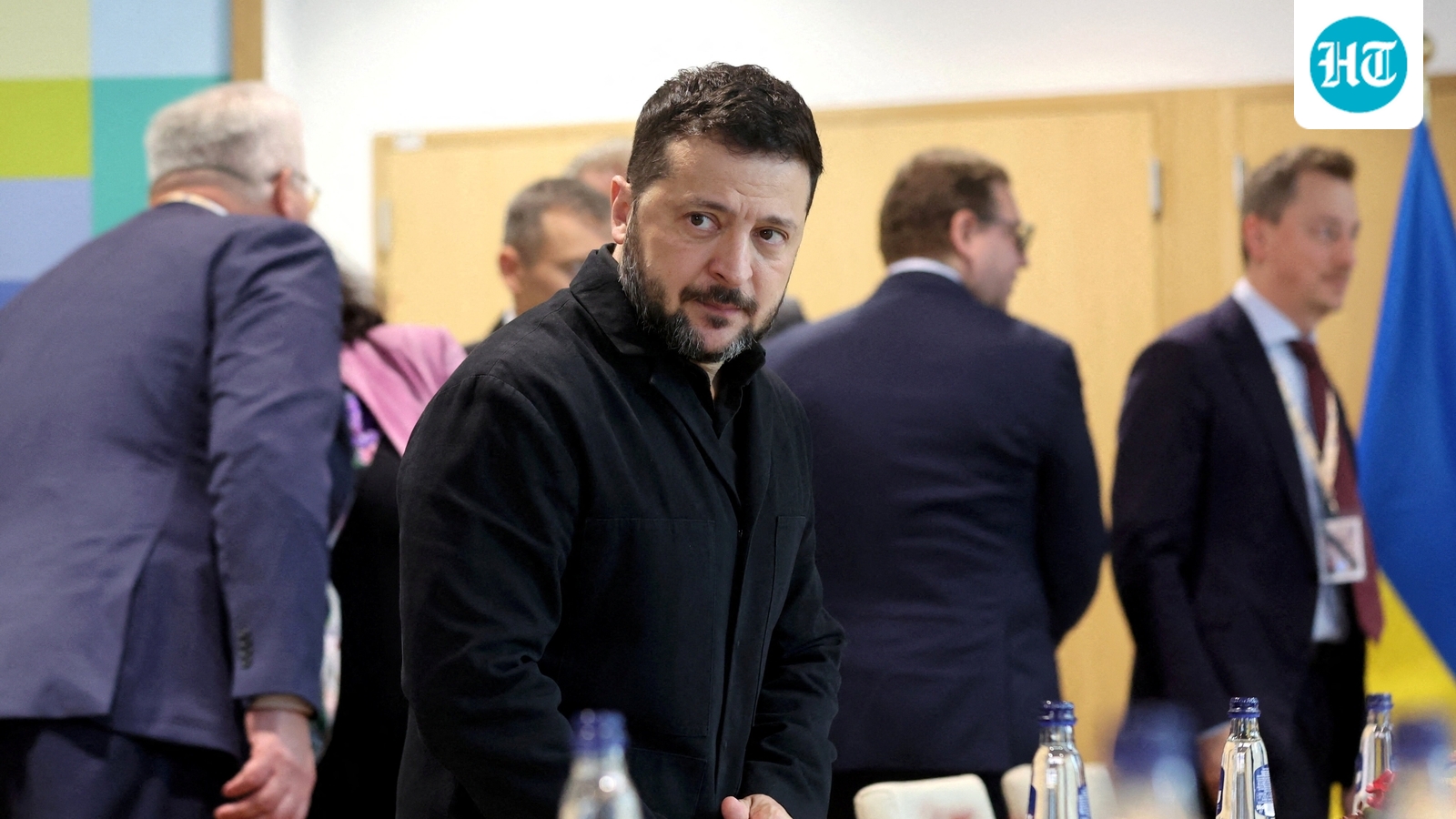
Increasingly, that is how the world looks to the Ukrainian leader, Volodymyr Zelensky. "If the United States takes the side of Russia...of course we will not prevail," he told NBC television on October 18th. At a summit in Brussels on October 16th, Mr Zelensky had hailed Europeans as "real leaders". But they are under growing pressure, too: largely united in supporting Ukraine, yet alarmed by the prospect of a transatlantic breakdown and unable to replace the loss of American military and intelligence support. They also face ever more brazen Russian "grey-zone" sabotage and intimidation, growing fiscal pressures and more polarised politics at home.
On October 17th Friedrich Merz, the German chancellor, told the youth wing of his Christian Democratic Union that "we must not leave [Ukraine] and its people to fend for themselves". But Alice Weidel, co-leader of the populist-right Alternative for Germany, which leads in opinion polls, insists that "90% of Germans oppose the continued burning of German taxpayers' money in Ukraine". A return to energy deals with Russia, she claims, would lower energy costs and boost the economy.
Until recently European leaders thought they had successfully drawn Mr Trump away from the notion of doing deals with Russia at Ukraine's expense. In June they even got him to sign up to a G7 statement pledging to "strengthen our sanctions, including those on the oil and gas sectors". But with America's midterm elections slightly more than two weeks away, and his Republican Party at risk of losing control of one or both houses of Congress, Mr Trump has changed his tune.
On October 9th he announced a deal with Vladimir Putin to lift sanctions temporarily to allow Russia to sell more diesel to America and other countries. He promised the move would bring down fuel prices; economists think it will be ineffectual. Mr Trump then declared that Russia and Ukraine would stop bombing each other's energy infrastructure. Russia disregarded that so-called energy ceasefire, and Ukraine observed it only briefly. It abandoned all restraint after America mysteriously failed to warn it of impending ballistic-missile attacks, and blocked its high-speed drones from using the Starlink internet-satellite system. Mr Trump claimed he had given no orders to halt such support. On October 16th he waived new congressionally-mandated sanctions against countries buying Russian oil and gas, citing "national interests".
The details of what access Ukraine still has to American satellites are still murky, and Mr Zelensky now says access to Starlink is being restored. But if restricting technical support and exerting political pressure were intended to halt attacks on Russian refineries, they have plainly failed. On October 18th Ukraine launched the biggest drone assault yet against St Petersburg, setting the city's oil terminal alight and striking other targets. Mr Merz, for one, says long-range strikes are justified. "These strikes are the only means Ukraine has to make Russia understand it is ready to seriously defend itself."
Mr Zelensky argues that concessions to Russia only lengthen the war. But his ripostes and open criticism of Mr Trump may be hastening a permanent estrangement with America, and ultimately weakening Ukraine's position on the battlefield. Neither European allies nor Ukraine's innovative defence industries can yet substitute for some of America's capabilities: early warning of ballistic-missile launches, Patriot missiles to intercept them and Starlink's dense network of internet satellites in low-Earth orbit.
In April the European Union approved loans worth €90bn ($101bn) to help pay for Ukraine's needs this year and next. But on October 16th Mr Zelensky asked for €70bn more next year, in part to boost domestic weapons production. He got a sympathetic hearing but no promises. Many European government budgets are strained by heavy debts, rising bond yields and high energy prices. Some leaders are again pushing to use more than €200bn-worth of frozen Russian assets in Europe to fund Ukraine. Belgium, where most of them are held, has so far refused to entertain the notion, fearing the damage to property rights in Europe.
America has reportedly entreated Europe to unfreeze some Russian assets, on the dubious theory that such appeasement would encourage the Kremlin to engage in peace talks. Mr Merz rejected that notion, declaring: "This is our business and we are deciding over it." The only consolation for Europeans is that bipartisan criticism of Mr Trump has grown louder in America. Republican losses in the midterms might allow Ukraine's supporters to become more assertive. There's no guarantee of that, however: If Mr Trump is chastened at home he is likely to seek someone to blame. That could mean lashing out even harder at his perceived foes abroad.