
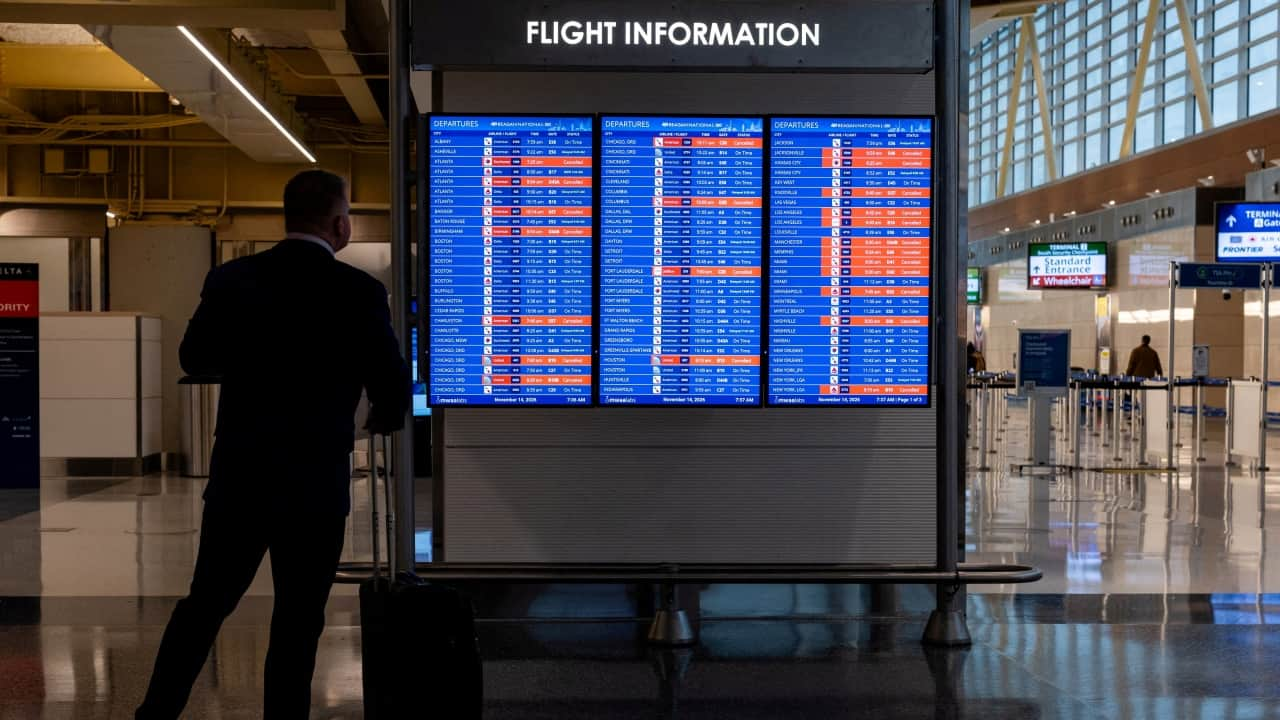
Critical US tech services faced outages recently, sparking fears of a cyberattack. Disruptions hit Microsoft, the FAA, JPMorgan Chase, and the NSA. Secretary of State Marco Rubio said, "People are fearful, people are uncertain." Officials found no evidence of foreign interference, yet many worry about our fragile, interconnected digital infrastructure.
A series of technology outages affecting critical American services, from Microsoft email systems and air traffic control to major banks and a highly classified National Security Agency (NSA) communications network, has raised questions about the vulnerabilities of the country's digital infrastructure and the Trump administration's ability to respond to a crisis. The disruptions, which have unfolded over the past few days, have fuelled public anxiety and speculation about whether the incidents are connected or could involve a coordinated cyberattack. However, there is no public evidence so far that the outages were caused by a hostile foreign power or a criminal organisation.
The Trump administration has sought to reassure Americans, but its response has also drawn criticism, with officials struggling to provide a clear explanation for the successive failures. Secretary of State Marco Rubio acknowledged the public's concerns, saying: "People are fearful, people are uncertain." Emily Harding, director of the Intelligence, National Security and Technology Program at the Center for Strategic and International Studies, told CNN's Jake Tapper that there "is absolutely a tendency to see a pattern where one may not exist." She added: "But at the same time, I don't really believe in coincidences.
And this is a lot of things piled up at the same time." What caused the technology outages across the US? The disruptions began last Thursday when a Microsoft Outlook update caused email services to crash, leaving millions of users around the world unable to access their accounts. The following day, an attempt to update communications cables triggered a nationwide ground stop by the Federal Aviation Administration (FAA), disrupting air travel and leaving more than a million travellers affected. On Monday, JPMorgan Chase experienced a software bug that disrupted access to banking services. The next day, the NSA's internal classified communications network, known as NSANet, also suffered an outage.
The agency attributed the disruption to temporary degradation during scheduled routine maintenance. The incidents have affected systems used for everyday communication, financial transactions, air travel and national security. While the precise causes have varied, the failures have drawn attention to the risks associated with ageing infrastructure and increasingly interconnected digital networks. US Senator Mark Warner said the evidence so far pointed towards efforts to secure vulnerable systems rather than malicious activity. However, he warned: "It feels like every day brings another reminder that AI is moving faster than our ability to manage its consequences."
Trump's response adds to public anxiety President Donald Trump played down concerns when asked about the outages on Tuesday. "It's life, it's life," he said. "When you're big and powerful and you have all the money, things like that happen. It's fine." Trump also refused to accept responsibility for the disruptions, while blaming the condition of infrastructure inherited from the previous administration. Transportation Secretary Sean Duffy similarly pointed to ageing systems. "Listen, this network dates back decades. It's decades old, right? It's what I inherited," Duffy told CNN's Manu Raju. Vice President JD Vance also attempted to reassure Americans, saying there was no reason to prepare for an impending crisis.
"We do not see some crisis coming down," he said, before adding: "But you have to be prepared for everything." The administration's messaging has drawn criticism even from some Republicans. Senator Rick Scott said Americans felt they were not receiving the full picture, adding: "You can't blame anybody for that. I'm a member of Congress, and I feel that way!" A wider question of infrastructure and preparedness The outages have renewed concerns about whether the US government and private companies are adequately prepared for simultaneous emergencies, including infrastructure failures and cyberattacks.
CNN's analysis noted that even if the recent incidents were unrelated, they have exposed vulnerabilities that adversaries such as Russia and China could potentially exploit to cause disruption and political uncertainty. The failures have also raised questions about the consequences of rapid technological upgrades, workforce reductions and the loss of experienced personnel responsible for maintaining complex systems. For the Trump administration, the challenge now extends beyond identifying the causes of individual outages. Public confidence will also depend on transparency, clear explanations and a credible plan to strengthen the systems on which Americans rely.