
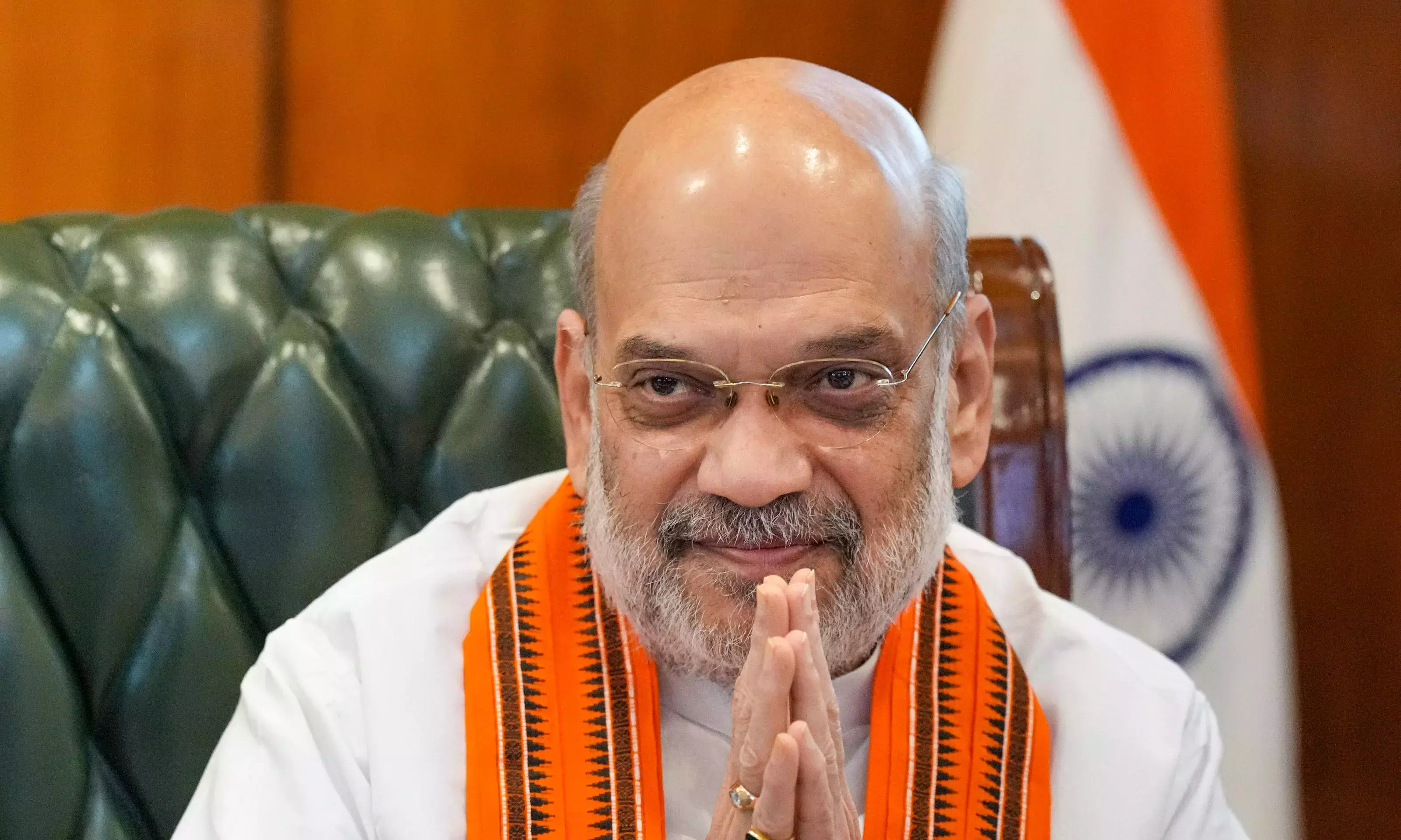
Union Home Minister Amit Shah arrives in Arunachal Pradesh on Friday for a two-day visit. He will review development and security amid ongoing protests against the proposed Siang Upper Multipurpose Project. Local communities fear the dam will displace many people and destroy ancestral lands, causing significant unrest in the region.
Two-day visit comes amid opposition to proposed 11,000 MW hydropower project
Amid sustained protests against the proposed Siang Upper Multipurpose Project (SUMP), Union Home Minister Amit Shah is scheduled to arrive in Arunachal Pradesh on Friday for a two-day visit focused on development review, law and order, border security and public programmes.
While announcing the Union Home Minister's visit at Itanagar, Chief Minister Pema Khandu described it as an opportunity for the state government and the public. He told reporters that the Union Home Minister would present medals to police personnel in recognition of their service. He would also hold a review meeting to discuss the state's progress, developmental priorities and challenges.
Shah will attend events, including the presentation of medals to police personnel at the Police Training Centre in Banderdewa, programmes in Itanagar, a review meeting with the state government on developmental priorities and challenges, and other official engagements. He is scheduled to return to New Delhi on November 22.Law and order in the wake of the ongoing anti-dam agitation in the state is expected to figure in the discussions, as his visit comes amid continued opposition to the Siang Valley project, which is currently at the pre-feasibility stage.
Indigenous Adi and other communities, organised under groups such as the Siang Indigenous Farmers' Forum (SIFF), Adi Baane Kebang United and related youth bodies, have raised concerns that the project could submerge dozens of villages, displace large numbers of people, affect ancestral lands, paddy fields, orchards, burial grounds and cultural practices tied to the river, while also posing environmental and seismic risks in the Himalayan region.
Protests intensified in late October, including a bandh that turned violent in Pasighat, with reports of an NHPC office and other properties being targeted. Security forces, including Central Armed Police Forces and Rapid Action Force companies, were deployed. Dozens of people (reports cite figures of around 69-75 or more) have been arrested or detained in connection with the agitation. Some detainees were later released as a goodwill gesture by the state government in early November in an effort to revive dialogue, though groups have continued to demand the unconditional release of the remaining arrestees, withdrawal of cases and forces, and a halt to survey activities.
Anti-dam protesters and their organisations have consistently maintained that no decision should proceed without the free, prior and informed consent of affected communities. They have rejected or set strict preconditions for talks with the state government, arguing that arrests and the heavy security presence do not create a conducive atmosphere. Spokespersons from SIFF and allied groups have stressed that ancestral land and the river cannot be sacrificed, and have called for genuine consultation rather than the top-down advancement of the project, which the Centre and state have linked in part to strategic considerations, including upstream developments by China on the Yarlung Tsangpo.
Shah's last visit to the state was in June 2024 for the chief minister's swearing-in. The current trip comes against the backdrop of both developmental priorities in a strategically sensitive border state and unresolved tensions over large hydropower projects in the region.