
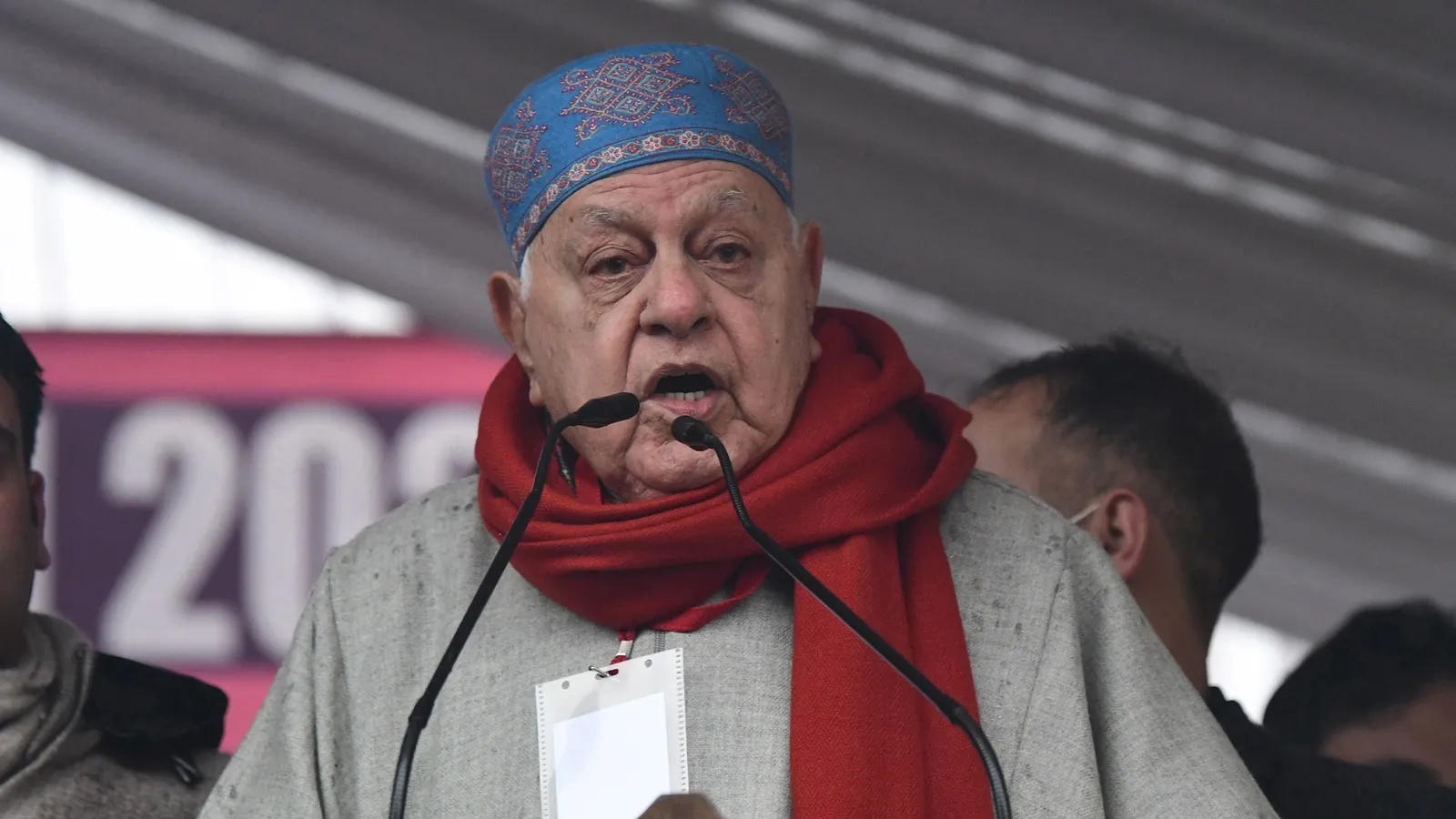
National Conference chief Farooq Abdullah started a plan to include party MLAs in advisory groups attached to ministers. This move follows discontent after the October 27 Cabinet reshuffle. Legislators got letters asking for their preferred ministries. One MLA said, "Let's wait and see how things unfold" regarding the new process.
NC chief writes to all party MLAs to get them inducted in advisory groups attached to ministers and be part of Omar Abdullah govt's decision-making process
Amid discontent among its legislators, the ruling National Conference (NC) in Jammu and Kashmir has initiated an exercise to set up informal advisory / consultative groups comprising three-four MLAs to be attached to each minister in the Omar Abdullah-led government for consultations on various measures of different ministries for development and public welfare.
The NC leadership has launched this move in a bid to address the concerns of a slew of party MLAs who felt ignored by the recent Cabinet expansion undertaken by CM Omar. Several disgruntled MLAs had met party president Dr Farooq Abdullah and Omar on November 6 to express their grievances.
The letters proposing the formation of such advisory groups have been sent by Farooq to all NC MLAs, party sources said.
Some of the MLAs also confirmed having received the letters from the NC chief, saying they have been asked to give in writing their choice of three ministers/ministries they would like to be associated with. This would enable the NC high command to finalise the names for all advisory groups. Each of them can be a member of two such groups, some party MLAs told The Indian Express.
According to Farooq's letter, the ministers will be required to hold regular meetings with the advisory groups associated with them and keep its members informed about their policy initiatives and progress being made in their respective departments.
Some NC legislators, when asked about Farooq's initiative, reacted cautiously, saying "Let's wait and see how things unfold''. The proposed advisory groups may assuage the NC legislators' "bruised sentiments" to a degree as every MLA would have a say in matters concerning the ministers' policy decisions, party insiders said. "However, everything would depend on the mechanism and operation of these groups,'' said a legislator.
On October 27, Omar rejigged his ministry, taking it to a maximum of 9 members including the CM. This caused resentment among at least 18 MLAs who went into a huddle following the Cabinet reshuffle.
In the 90-member J&K Assembly, the NC has 42 members. The party also has the support of six Congress MLAs and one CPI(M) member besides four Independent MLAs, which has increased the ruling coalition's tally to 53.
With all eight ministers and Speaker Abdul Rahim Rather belonging to the NC, the party has 32 other MLAs. So, if four-member advisory groups are constituted and attached to each minister, the entire NC Legislature Party could be accommodated informally in the government's decision-making process, party leaders said.
In July 1984, J&K saw an entire ruling legislature party accommodated in the ministry, when then dissident NC leader G M Shah toppled the Farooq Abdullah government to form his own government with 12 defector MLAs, which was then backed by the Congress.
NC's play
you may like
Meanwhile, in a bid to keep its flock together now, the NC leadership has also taken some additional initiatives to appease its legislators. It has formed a party disciplinary committee headed by a senior leader Khalid Najeeb Suharwardy with the party's Kashmir and Jammu province presidents, Showkat Ahmad Mir and Rattan Lal Gupta, respectively, as its members.
One of the NC MLAs, who was present at the November 6 meeting with Farooq, said they had also sought a change in a minister's portfolio besides the constitution of a manifesto review committee and strengthening of the party's publicity cell.
He claimed, "The dissenting MLAs only want the NC leadership to undertake reforms in the party to seize the opportunity arising out of growing public disenchantment with the BJP, especially in the Jammu region," adding that they had become restive as they wanted "visible changes in the functioning of the party and the government".