
The Election Commission announced a Special Summary Revision of electoral rolls in 17 states and UTs. The poll body also promised to give political parties readable PDF copies of final voter lists. These moves follow massive protests over the Special Intensive Revision exercise that excluded over 13 crore voters recently.
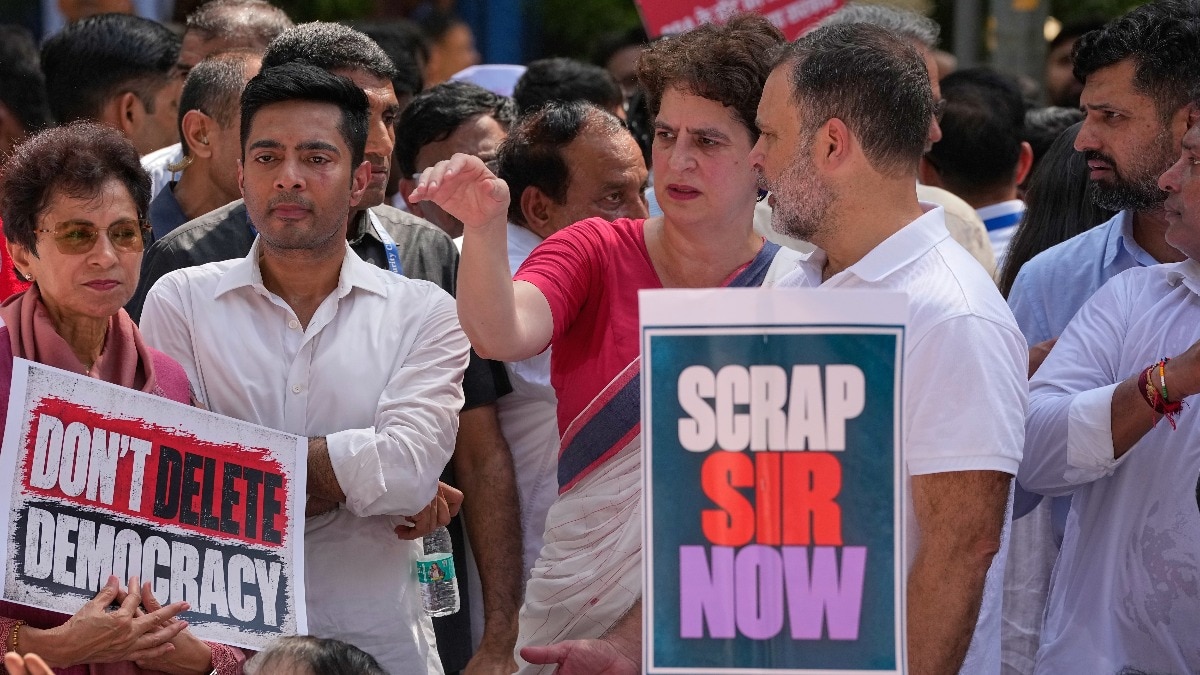
Amid massive protests over its Special Intensive Revision (SIR) exercise, the Election Commission seems to have changed course on two issues that have long put it at odds with the opposition. Over the past 24 hours, the beleaguered poll body announced a Special Summary Revision (SSR) of electoral rolls in 17 states and UTs to enrol new voters. Secondly, the ECI, in a first, has promised to give political parties readable PDF copies of the final electoral rolls - reversing its own long-standing stand.
Both the issues have been raised repeatedly by the opposition, especially the Congress, in recent years. The second announcement has drawn the maximum attention as the ECI itself opposed releasing machine-readable voter lists, citing privacy concerns after the Congress approached the Supreme Court in 2018.
The timing is significant. The protests against the poll body, especially Chief Election Commissioner (CEC) Gyanesh Kumar, by the Cockroach Janta Party and the opposition have only grown louder over alleged SIR irregularities. The nationwide purging of electoral rolls have resulted in the exclusion of over 13 crore voters and a whole lot of chaos.
WHAT IS SPECIAL SUMMARY REVISION (SSR)?
Crucially, due to SIR, the Election Commission had paused the special SSR exercise, through which newly eligible voters, including those turning 18, are enrolled. It meant Gen Z voters could not enrol since the 2024-25 SSR exercise, triggering outrage.
Before we move forward, let me explain in brief how SSR is different from SIR.
SIR is a more exhaustive process, involving documents to prove citizenship or be mapped with previous electoral rolls. SSR is a routine and annual process to update voter lists and add newly eligible voters. Therefore, voters aren't required to "map" themselves to a previous intensive revision.
A look at the ECI website shows the last SSR exercise took place in 2024. In fact, we had reported earlier how the decision to pause SSR led to discontent within the Election Commission itself.
According to a report in The Economic Times, Election Commissioners Sukhbir Singh Sandhu and Vivek Joshi had urged CEC Gyanesh Kumar to resume the exercise. Sandhu and Joshi had said it was necessary to include those turning 18 each year in the electoral rolls.
SSR TO BE HELD ACROSS 17 STATES IN FIRST PHASE
The ECI is now returning to the tried-and-tested annual revision cycle. The special drives, previously announced on September 29, and SSR process will now provide voters with a formal opportunity for re-enrolment.
However, it does not mean that the 13 crore excluded so far in the SIR exercise will be able to find their way back onto the electoral rolls.
The poll watchdog said the SSR exercise would be carried out in 17 states and UTs, including poll-bound Uttarakhand, Uttar Pradesh, and Punjab.
The announcement has come under heavy criticism from Congress MP P Chidambaram.
"After the protests and the notice issued by the Supreme Court, wisdom has dawned on the ECI and Gyanesh Kumar," Chidambaram tweeted.
"After removing crores of names illegally, now the ECI has undertaken another exercise to include the 'left out' voters! Gyanesh Kumar should be surcharged for the double expenditure," the former Union Minister said.
ECI TO PROVIDE SOFT COPIES OF VOTER ROLLS
The other key move by the Election Commission was its decision to provide all political parties with machine-readable electoral rolls in PDF format - a long-standing demand of the opposition. The ECI order also directs officials to share lists of additions, deletions and modifications to help parties track changes in voter records.
This will be the first time that political parties will be provided soft copies in readable PDF format of draft and final electoral rolls for each polling station. This will allow political parties to search and analyse voter lists more easily.
So far, the ECI only provided 'image-only' or scanned PDFs. These are not searchable and the text usually cannot be selected, searched or copied.
Congress first raised the issue in 2018. Then senior leader Kamal Nath moved the Supreme Court, seeking readable voter lists to help identify duplicate and bogus entries ahead of the Madhya Pradesh elections.
Opposing the demand, the Election Commission had then cited privacy concerns and the risk of data mining. The Supreme Court supported the ECI's argument, saying it was for the poll body to "decide about the format in which it is to be published".
Rahul Gandhi renewed the demand in 2025 during his 'vote chori' campaign. At a press conference, the Leader of Opposition accused the poll panel of deliberately providing image-only PDF rolls to make it difficult for parties to search for similar entries or bogus voters.
Responding to Rahul, the ECI referred to the 2018 Supreme Court judgment, claiming that releasing machine-readable voter lists was "forbidden".
A year later, amid mounting criticism of its SIR exercise, the same ECI has now made a subtle U-turn.
"Finally, ECI, after creating a big drama, has now agreed to provide a soft copy of the final electoral rolls in a readable format to political parties. Congress even moved SC in 2018 requesting the same, but the ECI opposed it. What did the Election Commission seek to hide?" NCP (SP) MLA Jitendra Awhad said.
Now, whether the twin moves by the ECI are in response to mounting pressure is a question the opposition is likely to raise. It remains to be seen if it manages to pacify the protests against the CEC.