
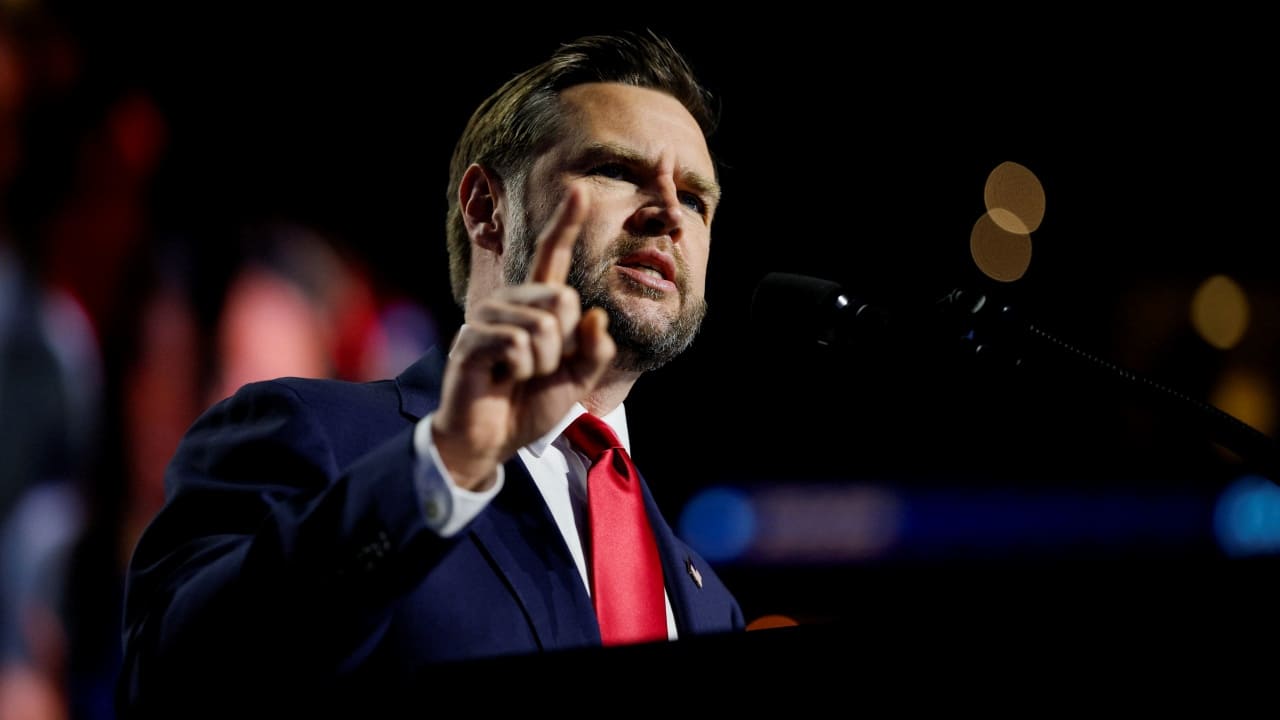
US Vice President JD Vance is facing questions about his political future after Republicans suffered a major defeat in the midterm elections. He now looks to build an identity beyond Donald Trump. Strategist Michael Ricci said, "This is about him using his megaphone of the vice presidency to set the terms."
US Vice President JD Vance is facing questions about his political future after Republicans suffered a major defeat in the midterm elections, triggering discussions among his allies about a possible presidential bid in 2028. Although Vance has not confirmed whether he intends to contest the next presidential election, he is considered a potential Republican contender. His challenge will be to retain the support of President Donald Trump's political base while establishing an identity independent of the current administration. Vance shifts focus away from Trump During the final weeks of the midterm campaign, Vance increasingly focused on issues associated with his own political agenda rather than Trump's most controversial policies.
An analysis of his campaign speeches showed that he emphasised economic nationalism, foreign policy restraint and public safety. He largely avoided discussing the Iran war and the administration's deportation drive as Trump's declining popularity became a concern for Republican candidates. The strategy was deliberate, according to people familiar with the matter. Vance and his advisers believed these issues offered an opportunity for the vice president to establish himself as a prominent Republican voice. The shift became more apparent after the election results. In a social media post on Wednesday, Vance blamed the Iran war for Republican losses and called for a swift end to the conflict.
He also urged the party to prioritise affordability, reassess foreign policy and reconsider the US relationship with Israel. The remarks marked a notable departure from Trump's position. The president has continued to defend the military campaign against Iran, although he acknowledged that higher fuel prices resulting from the conflict contributed to Republican losses. "I would have done nothing different," Trump told reporters on Wednesday. Republican leadership debate intensifies Vance's intervention has brought renewed attention to the question of who could lead the Republican Party after Trump's presidency.
Republican strategist Michael Ricci said the vice president's comments had pushed conservatives to debate the merits of the Iran war and reconsider the issues that should define the party's next presidential campaign. "It's simplistic to say this about him looking for ways to differentiate himself from Trump," Ricci said. "This is about him using his megaphone of the vice presidency to set the terms of debate." However, Vance's political standing has also taken a hit. Republican candidates lost in several states where he campaigned, raising questions about his ability to translate his national profile into electoral support.
Some campaign strategies he backed also attracted criticism. An advertisement by Ohio gubernatorial candidate Vivek Ramaswamy that questioned aspects of the sexual abuse suffered by his Democratic rival, Amy Acton, was among the controversies following the election. Other Republicans have offered their own explanations for the defeat. Senator Ted Cruz said the party had not done enough on affordability, while Florida Governor Ron DeSantis argued that candidates had focused too heavily on transgender issues instead of concerns surrounding data centres and artificial intelligence. Secretary of State Marco Rubio has remained silent.
Can Vance emerge as Trump's successor? Vance faces the challenge of retaining support among Trump's conservative base while preparing for a potential national campaign in which Democrats are likely to associate him closely with the current administration. Democratic strategist Igor Volsky said Republican candidates would have to balance winning their party's primary with appealing to general election voters. "There's a real challenge of how you position yourself to be viable in a general election while winning a primary that still requires you to bow down and kiss the ring," Volsky said. Vance's campaign speeches offered an indication of his political priorities.
At rallies, he focused on government spending, alleged fraud in federal healthcare and anti-poverty programmes, immigration and the cost of living, while making relatively few references to Trump by name. At one of his final rallies in North Carolina, Vance said: "I want my kids to raise a family in a country that is vibrant and thriving and free and prosperous. I want the simple things," Vance said. "And because I want that for me, I want it for you too." As Republicans reassess their electoral strategy, Vance's ability to shape the party's future direction could prove crucial to his own political ambitions ahead of 2028.