
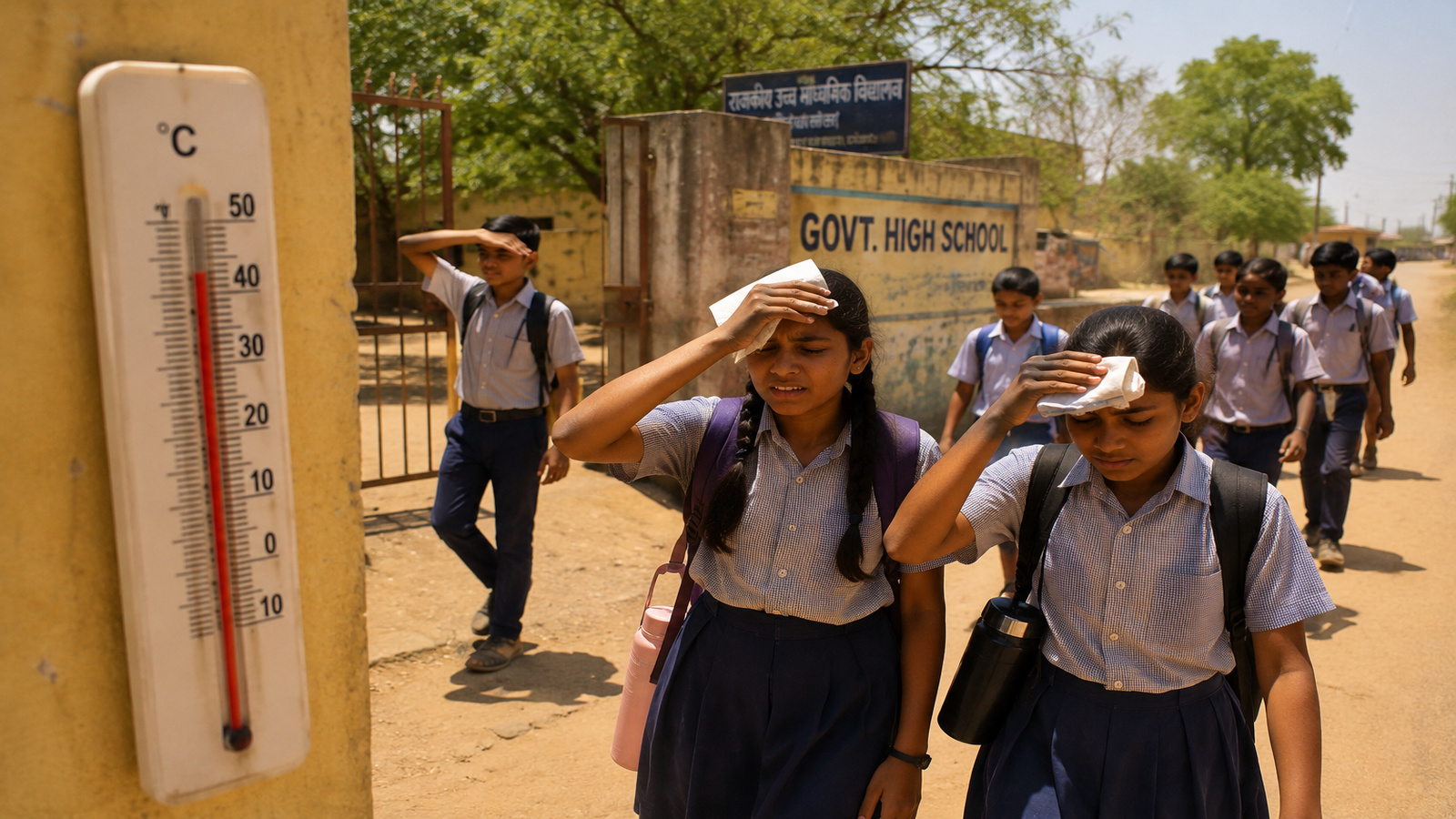
Children in average government primary schools get only 85 hours of learning each year, far below the prescribed 800-900 hours. Frequent holidays, extreme weather, and non-teaching duties like election work eat into classroom time. This massive teaching gap remains an overlooked issue, even as many programs fail to improve results.
An inconsistent holiday calendar and non-teaching duties eat into the time that teachers can spend in classroom instruction
Eighty-five hours. That is how much time a child in an average government primary school actually spends learning in a school year -- barely a tenth of the 800-900 hours the system prescribes as the annual instructional hours. Good teaching matters, but limited teaching means limited learning. Yet in debates about learning quality, this elephant in the room is almost entirely overlooked.
This erosion of teaching time happens for several reasons. Board examination duties, campaigns and celebrations, extreme heat or cold, and holidays declared by the local district administration can together account for 30-35 additional days when schools are closed or teaching is minimal.
Frequent holidays also disrupt consistent teaching, and the school calendar does not optimise instructional time. March, free of extreme weather, is lost almost entirely to examinations and "correction of answer sheets", even in primary schools. When classes resume in April, attendance stays low for 6-8 weeks. In rural areas, parents are not yet accustomed to a few weeks of next-grade classes before the summer holidays, a pattern that may suit CBSE schools but yields little teaching here. Summer holidays are often advanced by 8-10 days because of heat.
July is considered the enrollment month, and students slowly return to school. August and September offer decent teaching time, but holidays break up October and November, when schools in several states close for 15-20 days, before a winter break that some states extend. January and February offer good teaching time before examinations in March. In Northern and Eastern India, this adds up to only about 140-145 days of teaching, and even these are broken up.
Non-teaching duties take a further toll. A University of Oxford programme to improve oral language teaching in primary schools in 2024-25 showed no impact, largely because repeated school closures and teachers' official duties meant it could not be implemented consistently. Section 27 of the Right to Education Act prohibits deploying teachers for non-educational purposes, except for the decennial population Census, disaster relief, and elections to local authorities, state legislatures, or Parliament. Elections and electoral roll revision alone take up about 25-30 days. While the Election Commission of India (ECI) guidelines emphasise that Booth Level Officer (BLO) duties should not disrupt classroom teaching, this rarely happens. In some states this year, SIR, SSIR, BLO, and Census duties could take away three months of teaching time. District administrations routinely add other tasks and surveys; some, like a survey of stray dogs, border on the bizarre. The Government of Gujarat has identified 123 non-academic tasks that get assigned to teachers. Many teachers, in turn, use these duties as cover to stay away from teaching longer than required.
Teachers are also entitled to two weeks of casual leave, during which students in multigrade teaching schools rarely receive much attention. This brings actual teaching days down to 100-110 a year, before counting any unauthorised teacher absence. Student attendance, averaging 75 per cent and often much lower, cuts contact time further.
Then there is data entry. With the spread of apps and internet connectivity, teachers now enter large amounts of school and student data, including learning assessment data, reducing teaching time by an estimated 10-15 days for some teachers.
Over 70 per cent of government primary schools have three or fewer teachers, and 1.04 lakh are single-teacher schools. Where one teacher teaches two or more grades, each grade may receive as little as one-third of the teacher's time. In most primary schools in Northern and Eastern India, little teaching happens after the mid-day meal, leaving only about 3-3.5 effective hours a day. We are now down to about 120-130 hours of teaching per student in an academic year, against 800-900 hours allocated -- an erosion of over 80 per cent. In good education systems worldwide, the gap between allocated and actual teaching time is less than 20 per cent.
Whatever its quality, teaching can only work within this sliver of time.
The Teaching and Learning Practices Survey (TLPS 2025), a nine-state study of early-grade classrooms, found that students are distracted or off-task for 27 per cent of the time they were being taught. That brings us to the startling number we began with: Only 85 hours spent on any kind of learning task in a whole school year. The fact that rote memorisation, handwriting practice, choral repetition, and other mechanical tasks make up almost half of this time is a story for another day.
you may like
Some solutions can be tried out. ECI guidelines and court judgments must be followed. The district administration should first identify other employees, like those from the revenue and agriculture departments, for such duties. Teachers from schools with inadequate teachers should not be nominated for these duties. Governments can explore recruiting or designating a dedicated pool of personnel for recurrent voter-list-related work. The school calendar should protect uninterrupted teaching when attendance is likely to be high. And repetitive data entry on apps must be rationalised so that it does not eat into precious teaching time.
Teachers belong in classrooms, teaching. Unless this most basic condition for learning is met, all other efforts to improve student learning will fall short. This problem needs to be solved. Now.