
Two Harvard University letters have sparked a controversy over protests demanding Chief Election Commissioner Gyanesh Kumar quit. On October 12, faculty and students criticized police actions during the October 10 rally. The Harvard Club of India later rebutted this, saying, "this is not the official position of the Harvard Club."
Two letters from Harvard University - one by 100 faculty, staff, and students, and the other a rebuttal from the Harvard Club of India - have added to the controversy over national protests calling on Chief Election Commissioner Gyanesh Kumar to quit.
The first letter was released on October 12.
The signatories referred to the 'unprecedented siege of Delhi by police and paramilitary forces' and 'arbitrary, illegal, and unconstitutional police actions against peaceful protesters'.
They also referred to Shadan Farasat (a 2009 Harvard Law School graduate) and Meher Pasricha (a 2025 Harvard Kennedy School grad).
Farasat, they said, had been 'detained and manhandled by the police while rushing to prevent the illegal detention of a peaceful protester. And Pasricha was reportedly dragged away despite not even being part of the protest. She was then 'illegally detained' for 13 hours.
The rebuttal came within 48 hours.
In its letter the Harvard Club of India - the 'official alumni body connecting graduates and affiliates of all Harvard schools across India' - said it was 'deeply concerned by the negative public discourse and concerted campaign against India's constitutional institutions'.
The second letter was widely shared on X by the ruling Bharatiya Janata party.
It said 'the language used to describe India - i.e., 'under siege' - and to characterise constitutional authorities as 'thieves' raises serious questions about the intent to undermine public trust in democratic institutions'.
Separately, Rajat Sethi, an Executive Committee Member of the Harvard Club of India, told news agency ANI: "... certain individuals have gone ahead and issued a letter making comments about the recent protest and detentions that followed... also, this is not the official position of the Harvard Club of India."
Anti-Gyanesh Kumar protests
Behind both was a weekend in which central Delhi were locked down after the Abhijeet Dipke-founded Cockroach Janta Party and Neha Bora-led All India Students Association of India called for a rally at Jantar Mantar on October 10 to press for Kumar's resignation.
Full Coverage | Rahul Gandhi, CJP, Neha Bora's anti-CEC protest
Delhi Police said it denied CJP-AISA permission to protest because the request had been made too late. Authorities then activated a 37-point dragnet, including deploying over 20,000 cops and paramilitary, and detaining more than 1,000 people overnight.
By close of day on October 10 another 7,000 - including leading opposition figures like ex-Delhi Chief Minister Arvind Kejriwal and his Bengali counterpart, Mamata Banerjee - had been detained. Dipke and two senior CJP figures - Ashutosh Ranka and Saurav Das - were dragged off an Air India plane at the IGI Airport minutes after it landed.
And over 500 more were detained on Sunday.
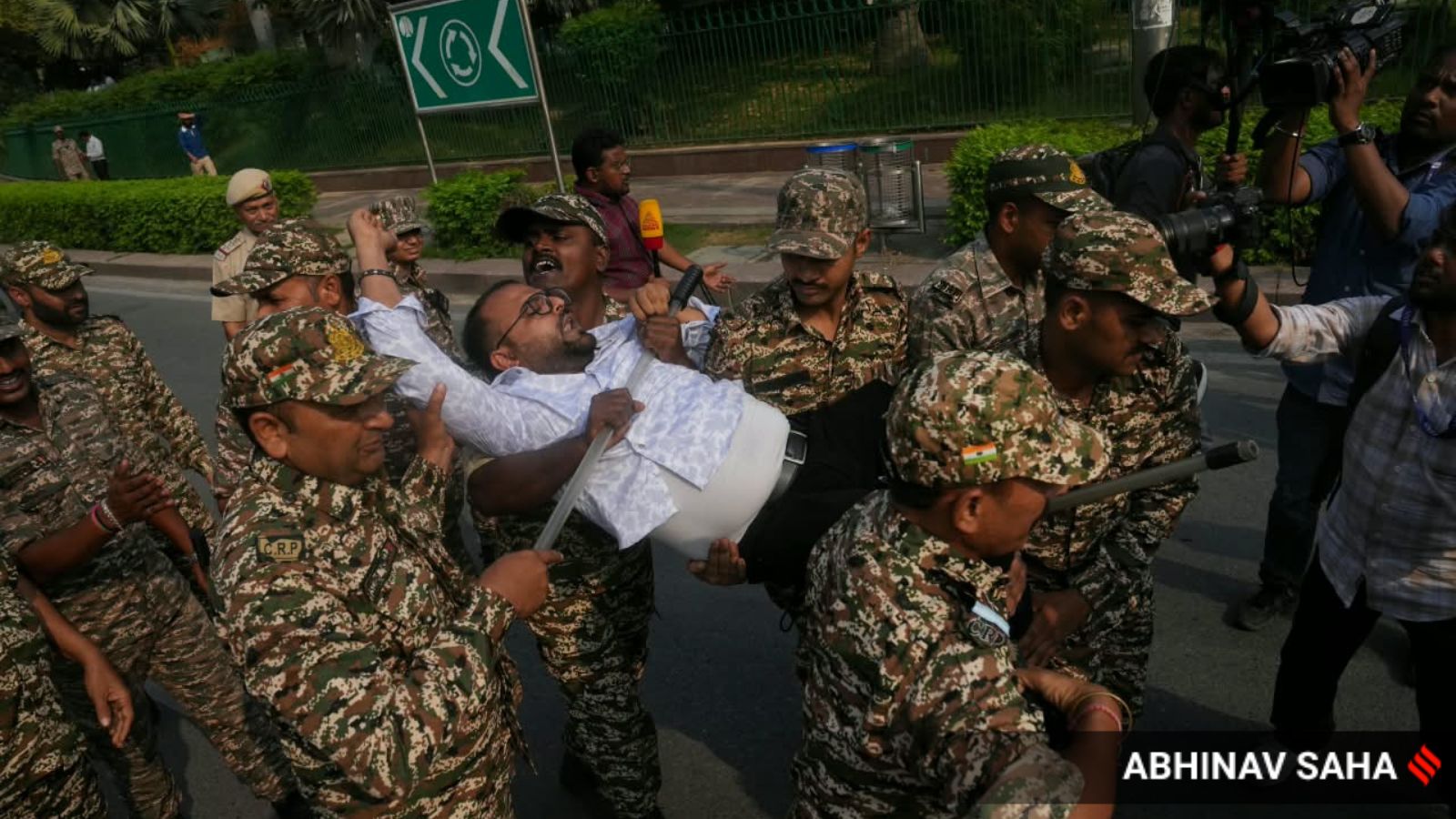
The ferocity of the crackdown - disturbing visuals showed uniformed and plainclothes cops wrestling protesters to the ground and dragging them away, while others showed right-wing goons assaulting and harassing women - was widely condemned.
The crackdown included action against reporters - including from The Indian Express' Hindi publication. "We call upon the government and all law enforcement authorities to immediately cease and desist from all violations of constitutional rights... and ensure that those responsible are held accountable..." the 100-signatory letter said.