
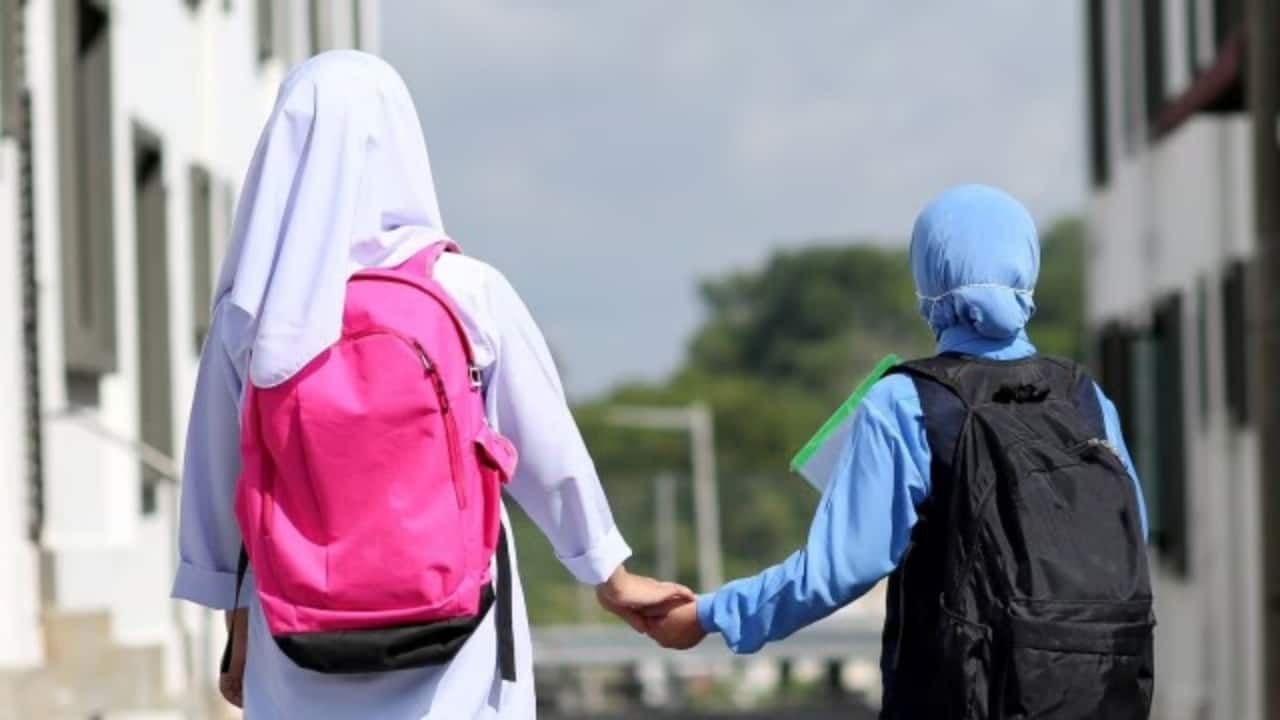
Azerbaijan’s new school dress code has triggered protests after hijab-wearing students were denied entry to classrooms. Adopted on September 21, Resolution No. 309 enforces secular standards in schools. While the government says these rules maintain professional standards, many parents and students argue that headscarves do not interfere with learning at all.
Azerbaijan's new school dress code has triggered protests, class boycotts and arrests, with hijab-wearing students reportedly being denied entry to classrooms and some teachers being asked to remove their headscarves. The controversy has raised questions about religious freedom, access to education and the boundaries of secularism in a country where around 96% of the population identifies as Muslim, according to Al Jazeera. The dispute centres on Cabinet of Ministers Resolution No. 309, adopted on September 21. The measure prohibits additional clothing that violates school uniform requirements or contradicts the principle of secular education. Although it does not explicitly name the hijab as a prohibited garment, its enforcement has reportedly affected Muslim women and girls who wear headscarves. According to the state-run Azerbaijani Press Agency (APA), the amendments to the uniform rules for state general education institutions are intended to establish a common dress code consistent with the country's secular principles. The rules also allow clothing reflecting Azerbaijan's history, culture and national traditions during celebrations, subject to approval by the relevant Pedagogical Council. However, the enforcement of the revised rules has sparked demonstrations in Baku and other parts of the country, with students and parents demanding that girls wearing hijabs be allowed to attend classes. Why is a Muslim-majority country restricting hijabs? Azerbaijan's population is overwhelmingly Muslim, with most Muslims identifying as Shia and a significant Sunni minority. Yet the country's Constitution defines Azerbaijan as a secular state and guarantees religious freedom. The government's position, as reflected in the revised uniform requirements, is that state schools must uphold secular education through common standards of dress. The authorities have also defended the rules as necessary to maintain professional standards among teachers and protect the public reputation of educational institutions. Critics, however, argue that a secular school system does not necessarily require students to abandon religious clothing. They have questioned why wearing a headscarf should prevent a child from attending lessons when it does not, in itself, interfere with classroom learning. The distinction between a formal ban and enforcement has become central to the controversy. While the resolution does not explicitly prohibit the hijab by name, reports suggest that students wearing headscarves have been turned away from schools. JAMnews has also reported that the amendments do not separately prescribe suspension from classes as a punishment for violating the dress code. On October 9, the Baku City Education Department announced inspections to check compliance with the clothing requirements for students and teachers. Teacher Zahra Hasanova, speaking to Al Jazeera, said she had been told she could no longer wear her hijab at school. "To be honest, I am a little emotional. I am hurt," she said. "[The hijab] is a personal choice, and if one day I want to take it off, that should be my choice too." The dispute has also brought parental rights into focus. Article 18 of the International Covenant on Civil and Political Rights recognises the freedom of parents to ensure their children receive religious and moral education in accordance with their beliefs. Articles 5 and 14 of the Convention on the Rights of the Child also recognise the role of parents in guiding children's development and religious upbringing. Students boycott classes as protests spread The enforcement of the dress code has triggered demonstrations, online campaigns and class boycotts. Videos circulating online reportedly showed students embracing teachers and crying after being denied entry to school. JAMnews reported protests at School No. 322 in Baku, where students demanded that their hijab-wearing classmates be allowed to attend lessons. At School No. 69 in the capital's Balakhany settlement, students reportedly refused to attend classes in solidarity with their classmates. One protest message stated, "The hijab does not prevent anyone from getting an education." At School No. 9 in the Jalilabad district, girls were reportedly stopped from entering the premises because they wore headscarves. In the Khokhmeli settlement near Baku, some parents threatened to stop sending their sons to school as well. The controversy has extended beyond students. After separate dress code requirements for teachers were approved on October 6, educators in Sumgayit told Toplum TV that some schools were asking hijab-wearing teachers to remove their headscarves or submit resignation letters. The protests have therefore developed into a wider dispute over whether the enforcement of secular dress requirements should determine a student's access to education or a teacher's ability to continue working. Why have 37 people been arrested? The confrontation escalated on October 12, when Azerbaijan's Interior Ministry announced the arrest of 37 people in connection with incidents surrounding the enforcement of school uniform rules, JAMnews reported. The ministry accused those detained of provoking confrontations with education workers in Baku, damaging educational institutions and attempting to disrupt school operations and traffic. Authorities opened a criminal case under Article 233 of the Criminal Code, which concerns organising actions that disrupt public order or actively participating in them. However, the ministry did not identify the schools allegedly damaged or provide detailed accounts of the acts attributed to the detainees. Their names and ages were also not disclosed, leaving unanswered questions about whether any minors were among those arrested and how authorities distinguished peaceful protests from alleged criminal activity. The ministry said its actions were necessary to protect students and teachers. The arrests have nevertheless added another dimension to the dispute, as families and demonstrators face uncertainty over the consequences of opposing the restrictions. Imprisoned journalist Polad Aslanov has also announced a hunger strike against the new requirements. Aslanov, who was convicted of high treason in 2020 and is serving a 113-year prison sentence, according to Al Jazeera, announced his protest in a message posted on Facebook by his wife, Gulmira Aslanova. "Despite being in prison, I am raising my voice against the trampling of our constitutional rights by employing the only means of struggle available to me - a hunger strike!" Reports of internet blackouts also circulated during the protests. However, Al Jazeera reported that monitoring organisations, including the Open Observatory of Network Interference and NetBlocks, had not confirmed the claims. Is Azerbaijan linking the hijab dispute to foreign influence? The controversy has unfolded alongside official concerns about ideological influence from abroad, adding a geopolitical dimension to the domestic debate. Addressing the eighth congress of the New Azerbaijan Party on October 2, President Ilham Aliyev emphasised the role of education in protecting the country against what he described as ideological threats. "Therefore, we must protect ourselves from ideological provocations. How? First and foremost, of course, through education," he said. Aliyev also criticised Azerbaijani-language media outlets operating in neighbouring countries. Although he did not explicitly refer to Iran or the hijab in that part of his speech, some political commentators interpreted his remarks as a warning against Iranian religious influence. Asif Narimanli, a political commentator described by JAMnews as close to the authorities, linked the controversy to alleged attempts at "political and ideological interference" by Iran. He referred to a religious gathering in Qom and protests in Istanbul. Journalist Aygun Muradkhanli, who works for a pro-government media outlet, also argued that religious groups opposing the restrictions had links to centres abroad. Aliyev issued a warning against outside criticism at the party congress, saying others should not "interfere with our lifestyle", Al Jazeera reported. He did not directly name Turkiye. These claims reflect the authorities' concerns about foreign influence, but the supplied reports do not establish that the students and teachers protesting the dress code are acting on behalf of a foreign government. How has Turkiye responded? The dispute has also prompted protests in neighbouring Turkiye, where demonstrators gathered outside Azerbaijan's consulate in Istanbul on October 3 to demand that the restrictions be lifted and call for Turkish authorities to intervene. The demonstrations revived comparisons with Turkiye's 1997 so-called post-modern coup, when women wearing headscarves were barred from universities and some women working in civil service positions were dismissed or forced to resign. On October 7, Omer Celik, spokesperson for Turkiye's ruling Justice and Development Party, said groups opposing Azerbaijan had no links to either the party or the Turkish government. Turkish President Recep Tayyip Erdogan had criticised discrimination against Muslim women in an address to the United Nations General Assembly on September 23, Al Jazeera reported. However, Ankara had not officially responded to Aliyev's criticism of the protests, according to the supplied account. Within Azerbaijan, views remain divided. Press Council chairman Rashad Majid has defended the restrictions as necessary to preserve the country's secular character and has pointed to foreign influence behind the demonstrations. Others oppose the wearing of hijabs by children but argue that students should not be excluded from school because of their clothing. The central question remains whether Azerbaijan's secular school policy can be enforced without restricting students' access to education or their freedom to express religious beliefs. While the government presents the dress code as a measure to uphold secular standards, protests and arrests have turned its implementation into a wider debate over religion, state authority and constitutional rights.