
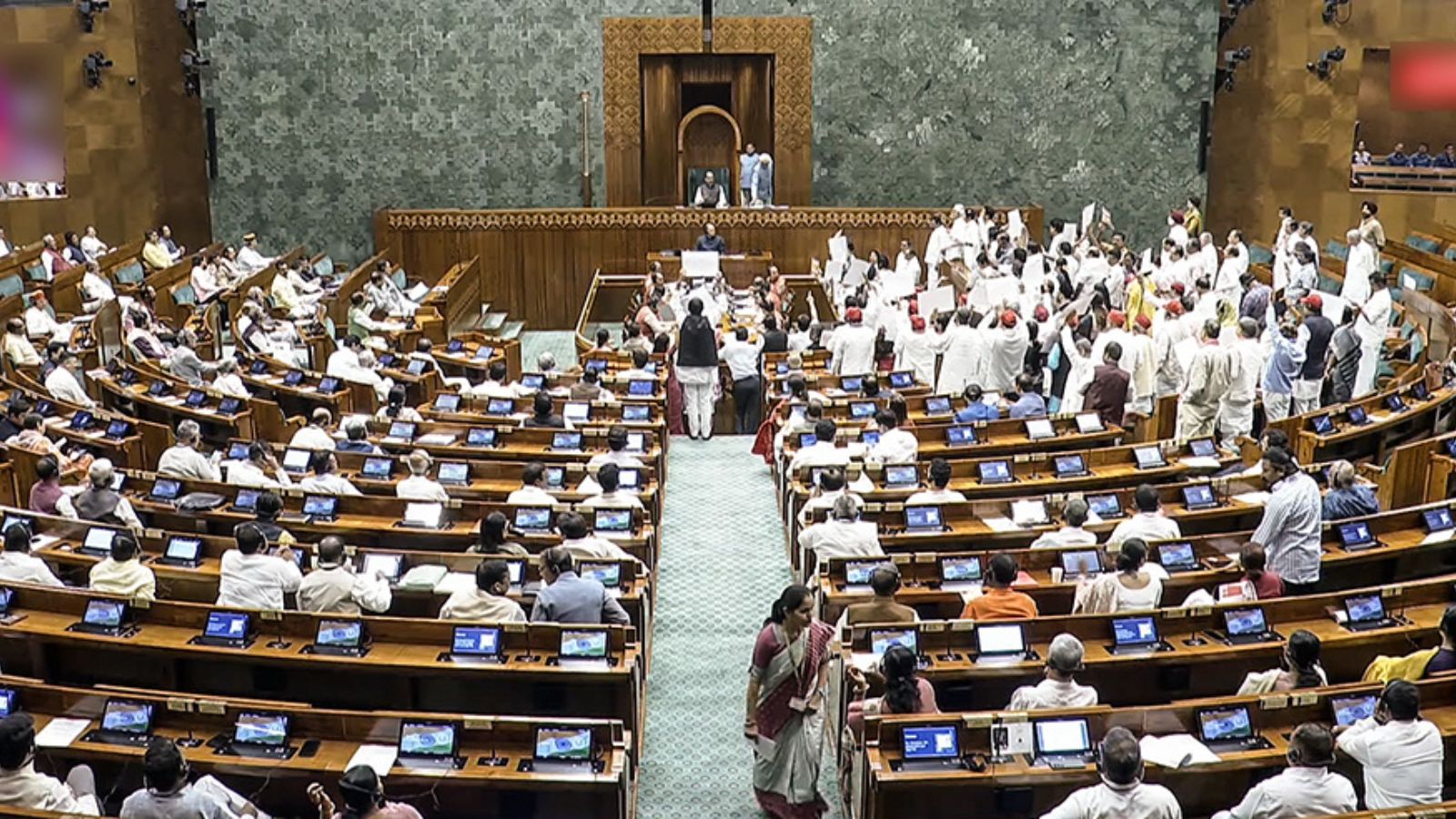
പാർലമെന്റ് മൺസൂൺ സമ്മേളനം പിരിച്ചുവിടാത്തത് ചരിത്രത്തിലെ ഏറ്റവും വലിയ ഇടവേളയ്ക്ക് വഴിയൊരുക്കി. 83 ദിവസമായിട്ടും നടപടികൾ ഔദ്യോഗികമായി അവസാനിച്ചിട്ടില്ല. ഡിലിമിറ്റേഷൻ ബില്ലുകൾ പാസാക്കാൻ സർക്കാർ പ്രത്യേക സമ്മേളനം വിളിച്ചേക്കുമെന്ന അഭ്യൂഹങ്ങൾക്കിടെ കോൺഗ്രസ് ഇതിനെതിരെ രൂക്ഷ വിമർശനവുമായി രംഗത്തെത്തി. ഭരണഘടനാപരമായ ചട്ടങ്ങൾ പാലിക്കണമെന്ന ആവശ്യം ശക്തമാണ്.
The Monsoon Session of Parliament this year -- the eighth session of the 18th Lok Sabha -- has recorded the longest sine die adjournment in history, as it has not been prorogued yet after 83 days. The Monsoon Session began on July 20 and was adjourned sine die on August 13. Unlike prorogation, which formally ends a session, an adjournment sine die ends the sitting without fixing a date for the House to meet again.
The decision not to prorogue the House has fuelled speculation about the possibility of the government reconvening the session at short notice to push through the legislative package on delimitation and operationalisation of the women's reservation law. Claims about the government's plans, however, are speculative rather than based on established parliamentary decisions.
On Tuesday, Congress communications chief Jairam Ramesh had alleged in a post on X, "82 days have gone by since the Monsoon Session of Parliament was adjourned sine die and it has still not been prorogued. This is because the Home Minister is still entertaining ideas of calling a Special Session to pass the Delimitation Bills with a super-tainted two-thirds majority in the Lok Sabha. The content of these Bills is still not known, although its intent is clear -- to save the BJP from the debacle that is staring it in 2029."
"If the Home Minister is serious about a Special Session on vote chori, he should first secure the resignation of his hatchet man CEC Gyanesh Kumar. He should also suspend SIR. And, of course, he should also be sharing with the Opposition well in advance his new proposals for delimitation. Why doesn't he have the courage to convene an All -Party meeting to discuss these proposals in detail?" Ramesh said.
While Article 85 of the Constitution empowers the President to summon Parliament, the convention is to give around 15 days' notice for a regular session. However, the rules require that no more than six months elapse between two consecutive sittings of the House.
A special session, however, can be convened at shorter notice. If a session has been adjourned sine die but not prorogued, it technically remains alive and the Lok Sabha can be reconvened at short notice by the Speaker under Rule 15 of the Rules of Procedure.
Previous sine die adjournments
The two longest sine die adjournments in Lok Sabha history before this happened in 1987 in the aftermath of the Bofors controversy.
The Eighth Session of the Eighth Lok Sabha was not prorogued for 76 days. It began on February 23, 1987, and was adjourned sine die on May 12 amid disruptions over Bofors. The Speaker subsequently exercised the power available under the proviso to Rule 15 to reconvene the House from July 27 to August 28.
The session therefore continued for several months despite the long gap between sittings. The Lok Sabha adopted a motion on August 6 to constitute a 30-member Joint Parliamentary Committee to inquire into the Bofors deal. The Rajya Sabha adopted a corresponding motion on August 12. The committee consisted of 20 Lok Sabha MPs and 10 Rajya Sabha MPs. The Lok Sabha was finally prorogued on September 3, 1987,
Two years later, the third-largest adjournment sine die lasted for 61 days in the Fourteenth Session of the same Lok Sabha. It began on July 18, 1989, and was adjourned sine die on August 18. This time, too, there was a ruckus in the House over Bofors. Around 100 Opposition MPs resigned en masse after a report of the Comptroller and Auditor General (CAG) on the deal was tabled in the House.
The Speaker again exercised the power under the proviso to Rule 15 and reconvened the House from October 11 to October 16. The House was subsequently adjourned sine die on October 13 and finally prorogued on October 20.
Weeks later, the Rajiv Gandhi government was voted out, paving the way for the V P Singh-led National Front government, which came to power with outside support from the BJP.
Under the NDA government, the 28-day period between August 2015 and September 10, 2015, and the 20-day period between August 11 and August 31, 2021 were the longest such sine die adjournments before this.
you may like
According to Practice and Procedure of Parliament by M N Kaul and S L Shakdher, a House may be adjourned from day to day, for more than a day, or sine die during a session. An adjournment postpones the sitting of the House to another time. When a House is adjourned sine die, no date is fixed for its next sitting. The sitting has ended, but the session itself has not been terminated.
Under Article 85(2) of the Constitution, a session of Parliament is formally terminated by an order of the President. The President exercises the power to prorogue Parliament on the advice of the Prime Minister. Prorogation may technically take place at any time, including while the House is sitting, though the usual sequence is for the House to be adjourned sine die before it is prorogued.
The Speaker can call a sitting of the Lok Sabha before the date to which it has been adjourned, or at any time after the House has been adjourned sine die. This means that an adjournment sine die does not, by itself, prevent the House from being reconvened.