
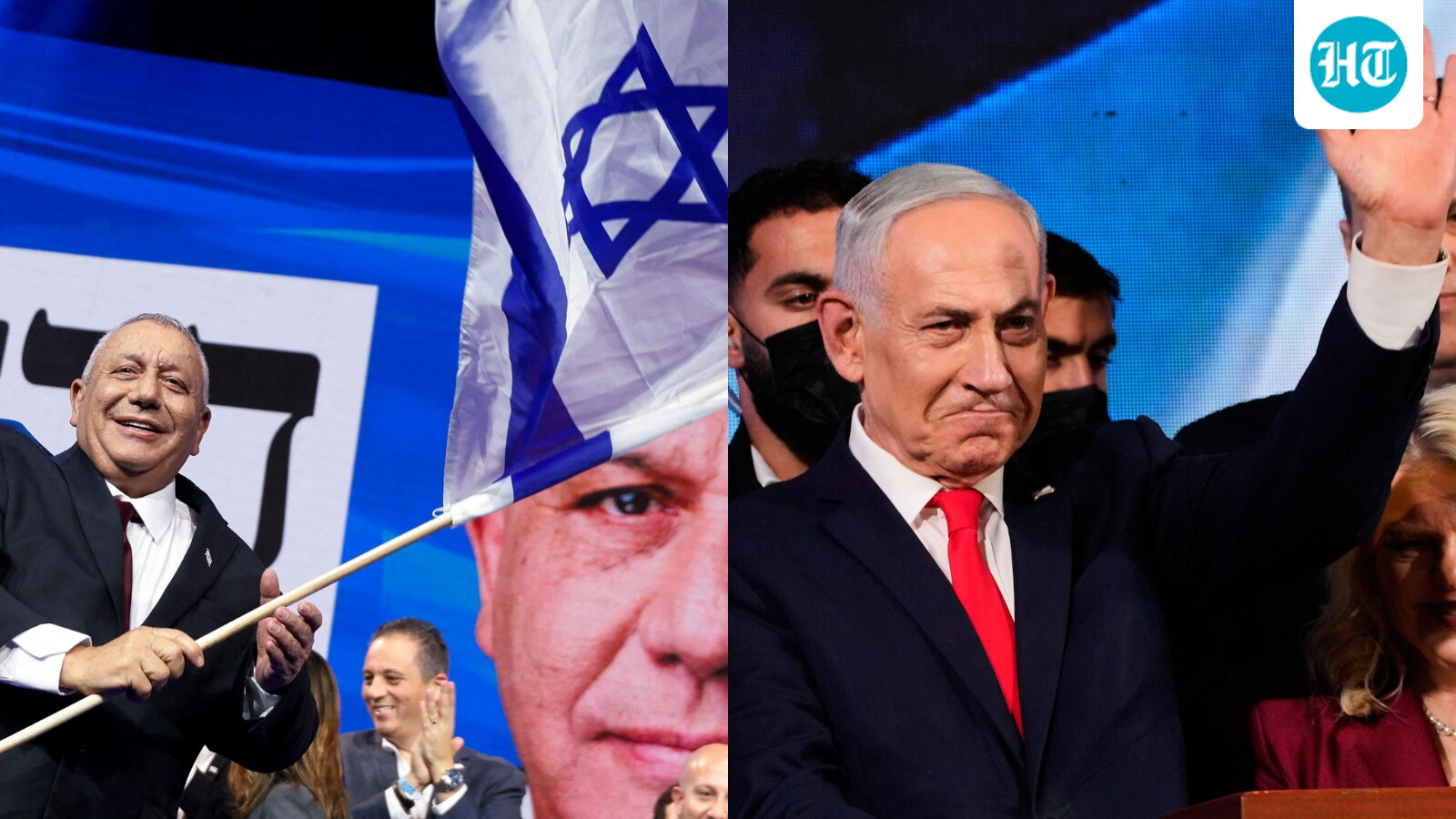
Herzog said Eisenkot would get the first opportunity to form a government after the October 27 election. Eisenkot got 67 recommendations from lawmakers, giving him majority support. He now has 28 days to build a coalition. Meanwhile, Netanyahu called for a unity government as he tries to retain his power.
Netanyahu, Israel's longest-serving prime minister, has already called for a unity government as he attempts to retain power after his coalition lost its majority in the October 27 election even though it remained the largest bloc in parliament.
* After holding consultations with all political parties during the week, Herzog said Eisenkot would get the first opportunity to form a government. Neither side secured a majority in the polls held in a country sharply divided following the Hamas-led attacks on October 7, 2023, and three years of conflict in Gaza and other parts of the region.
* During consultations with party delegations, 67 lawmakers backed Eisenkot for the post of Prime Minister, giving him majority support in the 120-member Parliament. Netanyahu received 46 recommendations, while the seven-member United Torah Judaism party did not back either candidate.
* Eisenkot's nomination is expected to be followed by weeks of negotiations. He has 28 days to form a government, with the option to seek an additional 14 days.
* Eisenkot, a former military chief, has ruled out joining hands with Arab parties, whose backing could help him secure a parliamentary majority. However, Arab leaders, who oppose what they describe as the racist policies of Netanyahu and his far-right allies, still recommended Eisenkot as the first candidate to form a government. This gave him the highest number of endorsements.
* Meanwhile, Netanyahu has been trying to prevent Eisenkot from forming an alliance with Arab-led parties. He has also made claims that Arab parties "stole" the election. Shortly before Herzog's announcement, Netanyahu in a video message called for a "national unity government" and also cautioned against "hastily swearing in a government with terrorist supporters," a phrase he uses for Arab-led parties.
* Eisenkot has several possible routes to forming a government. He could seek to lead a minority government with Arab parties supporting him on key votes, reach an agreement with ultra-Orthodox parties that he and his allies have previously avoided, or form a unity government with Netanyahu.
* If Eisenkot fails to form a government, another candidate will get an opportunity. If that attempt also fails, Parliament can nominate another person. The entire process has a deadline of around 100 days.
* If no candidate manages to form a government, Israel will have to hold fresh elections. The country went to the polls five times between 2019 and 2022 amid repeated political deadlocks.
* On Saturday night, Yashar said that "Likud and its friends" could join a coalition led by Eisenkot, but the party did not extend the offer to Netanyahu. Eisenkot has repeatedly said he would not enter a coalition with Netanyahu, The Times of Israel reported.
* Four opposition parties have also called for the Knesset (Israeli Parliament) to elect a new speaker during its first sitting on Tuesday (November 10). Such a move could lead to the removal of incumbent speaker Amir Ohana of the Likud party. Ohana has said he will not allow a vote on the matter during the new Parliament's first session, but would schedule a debate on choosing his successor within the following week if a majority of lawmakers formally requested one.