
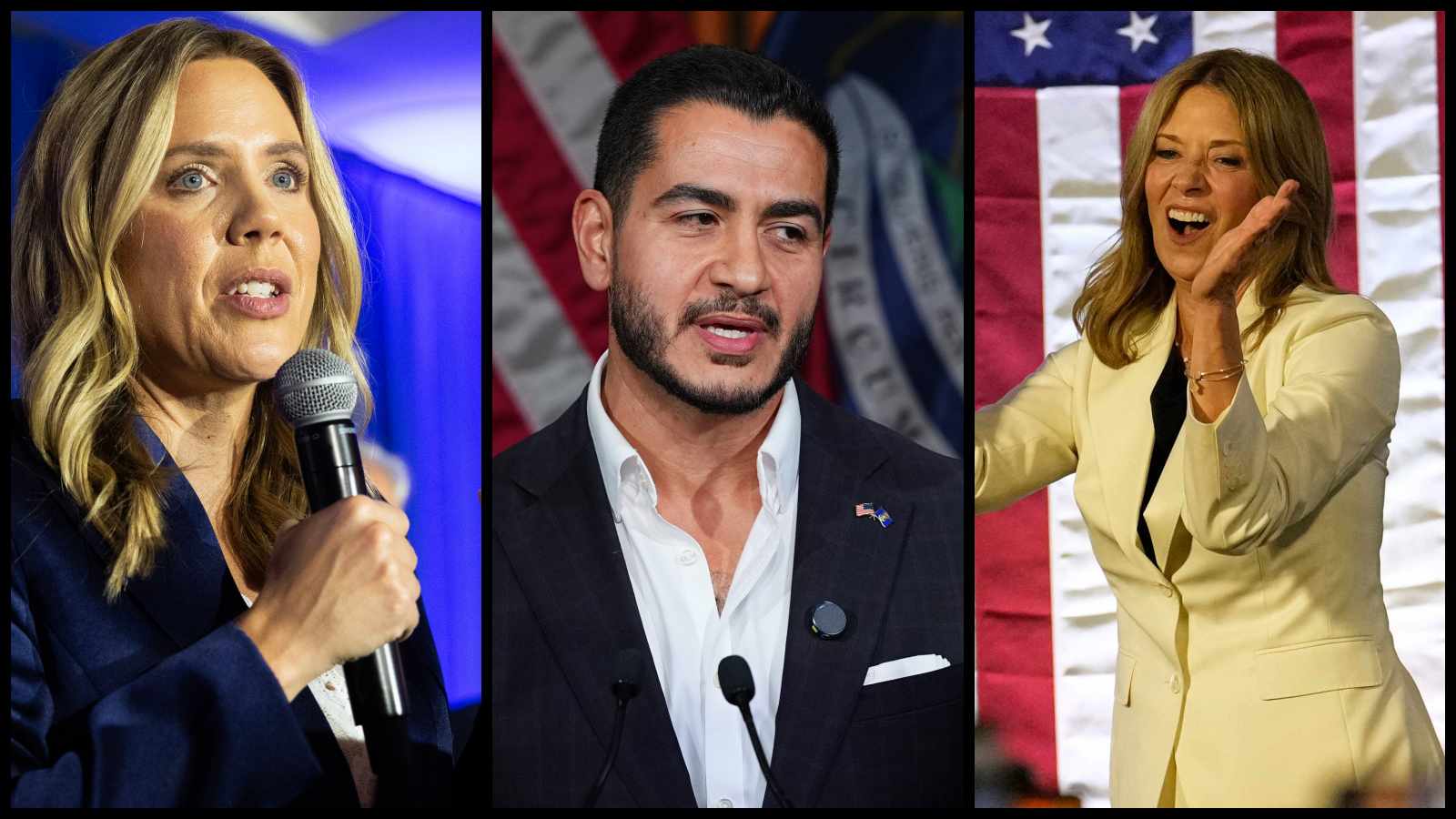
Dr Annie Andrews and Dr Abdul El-Sayed won US Senate seats, while Dr Amy Acton got elected governor of Ohio. These three Democrats bring medical experience to key political roles. Their presence could change how the country handles healthcare access, affordability, and public health as they start their new jobs.
Two doctors, Dr Annie Andrews and Dr Abdul El-Sayed, have won seats in the US Senate, while Dr Amy Acton has been elected governor of Ohio, bringing clinical and public-health experience into key political positions as America debates healthcare access, affordability and reform
The election of three Democrats with medical backgrounds in the US midterm elections could bring a distinctive perspective to debates over healthcare access, affordability and public health. While two have won seats in the US Senate, a third has been elected governor of Ohio -- giving doctors a voice at both the federal and state levels.
Dr Annie Andrews, a paediatrician from South Carolina, and Dr Abdul El-Sayed, a physician-trained epidemiologist from Michigan, have won Senate seats. Dr Amy Acton, a physician and former Ohio health director, has defeated Republican Vivek Ramaswamy to become Ohio's next governor. Their victories are significant not simply because of their medical backgrounds, but because each brings experience from a different part of the healthcare system.
A practising paediatrician, Andrews made healthcare access and affordability central to her campaign. Her clinical experience could inform discussions on childhood health, vaccination, preventive care, maternal and child health, and the difficulties families face in accessing affordable medical services.
El-Sayed brings a public-health perspective to the Senate. A physician-trained epidemiologist and former director of Detroit's health department, he has focused on health disparities, healthcare costs and the influence of corporate interests in healthcare. His campaign included support for Medicare for All, a proposal to expand publicly funded health coverage.
Their presence in the Senate could matter as lawmakers debate the future of health insurance, Medicaid, the Affordable Care Act, prescription drug costs and federal funding for medical research. Senators can scrutinise legislation, question administration officials, influence budget decisions and oversee federal health agencies. Their medical and public-health experience could help bring clinical evidence and the realities of patient care into these discussions.
Acton's victory gives the story a further dimension. As Ohio's next governor, she will have direct responsibility for state-level healthcare priorities and administration. She previously served as Ohio's health director during the Covid-19 pandemic, when she became a prominent public face of the state's public-health response. Her experience could shape decisions on public-health preparedness, Medicaid administration, healthcare access and the state's response to future health emergencies.
Unlike the two senators, Acton will have executive authority over state agencies and the implementation of policies in Ohio. However, her ability to deliver on campaign promises will depend partly on working with the state legislature, where Republicans retain control.
The challenge of Republican healthcare rollbacks
The three doctors enter public life at a time when the American healthcare and public-health systems are facing significant political and financial pressures. The Trump administration has pursued a series of spending reductions, funding restrictions and institutional changes affecting federal health agencies and programmes. Proposed budget cuts have targeted areas including the Centers for Disease Control and Prevention (CDC), the National Institutes of Health (NIH), the Health Resources and Services Administration and programmes dealing with mental health, HIV/AIDS and emergency preparedness.
The wider concern is that reductions in public-health funding, alongside workforce cuts and restructuring at the Department of Health and Human Services, could weaken the country's ability to conduct disease surveillance, support medical research, respond to outbreaks and provide preventive services. Such changes could disproportionately affect low-income families, rural communities and people dependent on publicly funded healthcare.
The administration's decision to withdraw the United States from the World Health Organization (WHO) has added an international dimension to these concerns.
What can Democrats do without the presidency?
The Democrats' ability to reverse these decisions will remain limited because they do not control the presidency. The executive branch has considerable authority over federal agencies, international engagement and the implementation of health policies. However, the absence of a Democratic president does not leave the party without political or legislative options.
In the Senate, Andrews and El-Sayed can use committee hearings, investigations and oversight to question administration officials about healthcare cuts, funding decisions and the consequences of public-health restructuring. They can demand greater transparency about the effects of reduced funding on hospitals, research institutions, vaccination programmes and disease-prevention efforts.
They can also push for legislation to protect Medicaid, strengthen the Affordable Care Act, lower prescription drug costs and restore support for public-health agencies. Although passing such legislation may be difficult without sufficient votes, Democrats can introduce amendments, negotiate bipartisan support and make healthcare funding a central issue in budget negotiations.
Congress also has the power of the purse. Federal spending requires congressional appropriations, giving lawmakers an important role in determining whether proposed cuts are accepted, modified or rejected. Democrats can use this process to oppose reductions in health programmes and seek restoration of funding for research, disease surveillance and emergency preparedness.
The WHO withdrawal presents a more complicated challenge. Since the US has formally completed its exit, the new senators cannot simply reverse the decision through individual action. However, they can press for renewed international health cooperation, advocate congressional funding for global disease-prevention initiatives and seek bipartisan support for stronger American participation in international health programmes. A future administration could also reconsider the country's relationship with WHO.
At the state level, Acton, as governor, can prioritise public-health programmes, strengthen Ohio's healthcare infrastructure, improve access to preventive services and use the state's administrative powers to protect vulnerable communities. She can also work with other Democratic governors to coordinate responses to federal policy changes.
Whether the three can make a measurable difference will depend not only on their expertise, but also on their ability to build alliances beyond party lines and make healthcare a public priority.