
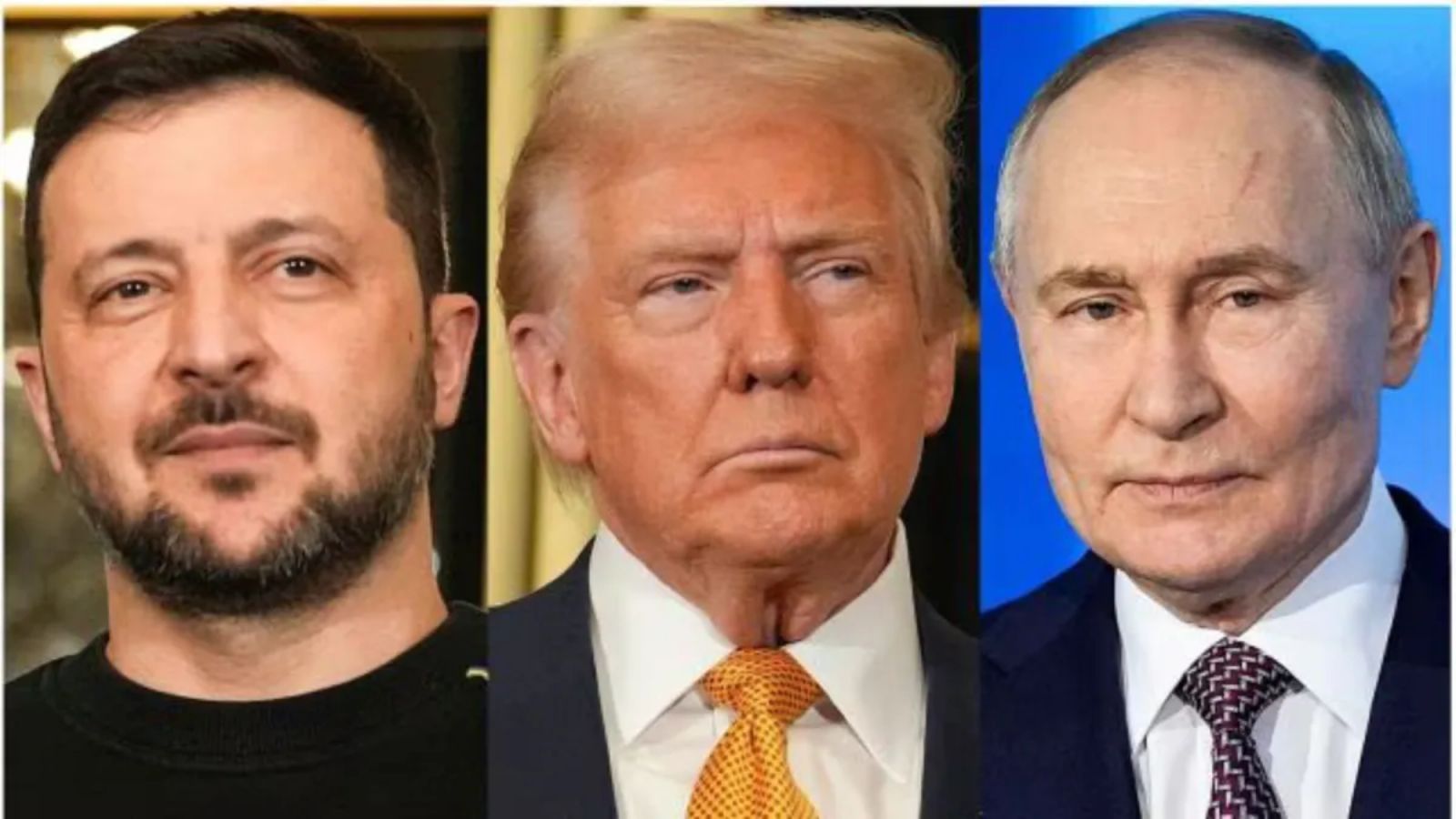
Representatives from the US, Russia, Ukraine, and Europe gathered in Abu Dhabi this week to renew stalled peace talks. Prime Minister Narendra Modi spoke to President Volodymyr Zelenskyy on Monday to support the process. India hopes this diplomatic push helps ease its own economic and geopolitical challenges amid the crisis.
The hardest question remains Ukraine's security after the fighting stops.
As representatives of the US, Russia, Ukraine and Europe gather in Abu Dhabi this week to renew the stalled peace talks, Prime Minister Narendra Modi spoke to President Volodymyr Zelenskyy on Monday to reaffirm India's strong commitment to supporting the peace process. The same evening, External Affairs Minister S Jaishankar spoke to his Russian counterpart Sergey Lavrov about the Ukraine conflict and ongoing diplomatic initiatives. Delhi has good reason to engage with the prolonged crisis in Europe amid Washington's renewed diplomatic push. For, peace in Ukraine and Europe could help ease India's current economic and geopolitical challenges.
Many in Delhi assumed that Donald Trump's setback in last week's midterm elections, which will give the Democrats control of both houses of Congress in January, would slow him down. It has not. Trump has dug in his heels at home, appointing immigration hardliner Stephen Miller as his chief of staff, while pressing ahead with diplomatic initiatives abroad.
This week's trilateral talks between the US, Ukraine and Russia are their first since February. Secretary of State Marco Rubio is in Paris seeking support from G7 foreign ministers for the initiative. Expectations of a breakthrough remain modest, but the intensity of the American effort is unmistakable. Trump's envoys, Steve Witkoff and Jared Kushner, have prepared the ground through several rounds of consultations with Kyiv and Moscow.
An important element of the renewed initiative is the idea of embedding peace in Ukraine within a broader European security architecture. When negotiations reach a deadlock, diplomacy can either break the problem into smaller parts or widen the framework to create room for compromise. Washington has chosen the latter.
Trump hopes that addressing Russia's larger security concerns will make Vladimir Putin more amenable to an immediate ceasefire and a sustainable settlement with Ukraine. The challenge for Washington is to accommodate Moscow's concerns without sacrificing the legitimate security interests of Ukraine and Europe.
Kushner has outlined five objectives for a broader European security framework: Permanent security consultations, reliable crisis communications, greater military transparency, reciprocal measures to reduce the risks of escalation, and arrangements for long-term stability. He has also affirmed that countries must remain free to make their own security choices. Rubio says there has been progress in discussions on Europe's future security arrangements, but no final agreement. Whether Abu Dhabi can produce a broad set of principles acceptable to all sides remains uncertain.
Europe, meanwhile, is struggling to come to terms with an American initiative that could produce a settlement negotiated over its head. Washington has stepped up consultations with European capitals. Senior officials from the EU, France, Germany and Britain will be present in Abu Dhabi, but not at the trilateral negotiating table. Moscow has resisted their direct participation.
Europe's foreign policy chief, Kaja Kallas, argues that Europe already has a security architecture; the problem is Russia's refusal to respect it. Moscow insists that the West has violated the principles of European security agreed at the end of the Cold War.
There is also a fundamental disagreement over sequencing. Kyiv and its European partners want a ceasefire before negotiations on the wider security order. Washington believes simultaneous progress on both fronts could create room for progress all round.
Europe is also divided internally. Poland's Foreign Minister Radosław Sikorski has warned against Western Europe negotiating with Russia over the heads of Eastern Europeans. Italy's Giorgia Meloni has criticised Europe's fragmented diplomatic formats and called for a single European envoy. Europe wants a place at the negotiating table, but has yet to agree on who should speak for it and with what mandate.
The hardest question, though, remains Ukraine's security after the fighting stops. Kyiv wants guarantees strong enough to deter another Russian attack. Moscow opposes Western military deployments in Ukraine and wants limits on its armed forces. Reconciling these positions will not be easy. Washington is also exploring economic incentives to make peace more attractive. Trump is betting that Russian energy, European markets, Ukrainian transit routes and American capital can create a shared interest in ending the war.
Russian gas once bound Europe and Moscow together. The 2022 invasion broke that relationship, prompting Europe to reduce Russian energy imports and impose sanctions. India, as a major importer of Russian oil, was caught in the crossfire between Moscow and the West.
Today, American and Russian officials are reportedly discussing the revival of gas supplies to Germany through the Nord Stream pipelines, potentially involving American investors. Trump's calculation appears to be that commercial interdependence could help sustain a political settlement.
If the Abu Dhabi talks make progress, Trump could take the negotiations to the highest level. He has indicated an opportunity to meet Putin on the margins of the APEC summit in China later this month. There is also talk of a meeting involving Trump, Putin and Xi Jinping.
Trump has embarked on a difficult diplomatic balancing act in Ukraine, reinforced by his pursuit of accommodation among the great powers. Its success is far from assured, but the stakes for India are considerable.
you may like
Peace in Ukraine could bring three benefits. First, it would ease pressures on energy and food security. Second, even a limited relaxation of tensions between Russia and the West would expand India's diplomatic space to strengthen relations with both Moscow and Washington. Third, it would give fresh momentum to India's growing economic and strategic partnership with Europe.
Together, these developments could create a more favourable international environment for India's economic transformation. Delhi has every reason to support the peace process and contribute wherever it can.
The writer is contributing editor on international affairs for The Indian Express. His new book, India Pivots to Europe: In Search of a New Eurasian Balance is published this month