
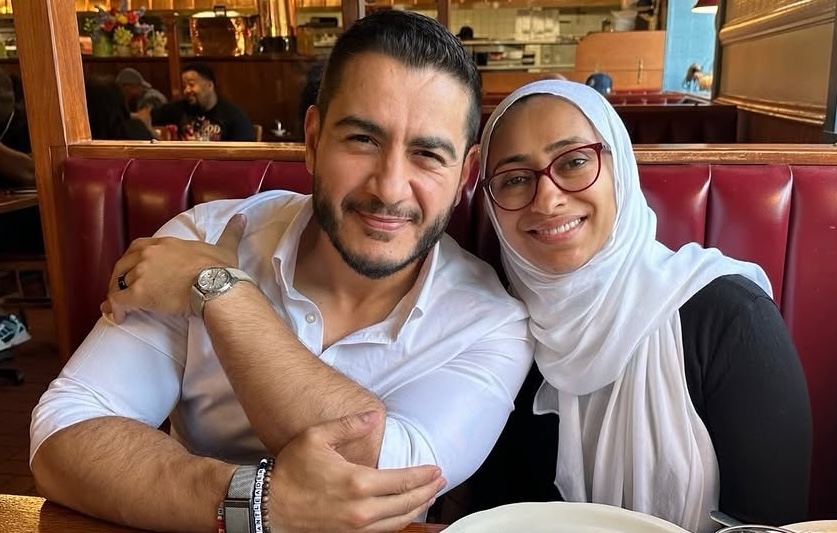
India's liberals admire Michigan Democrat Abdul El-Sayed for his approach to faith and politics. He famously joked about shawarma law to dismiss religious paranoia. His success highlights how Indian parties often ignore local talent. El-Sayed said, "his faith is personal, his political obligations constitutional," challenging assumptions about Muslim political agendas.
It lacks political parties willing to include those Muslims who refuse to tow the stereotypical line.
India's liberals have discovered a new Muslim hero. Unfortunately, he lives in Michigan. Fortunately for him, he lives in Michigan.
Abdul El-Sayed, the Egyptian-American Democrat, has offered an unexpected lesson in negotiating faith, identity and political loyalty. More interestingly, he has held up an uncomfortable mirror to India's self-appointed guardians of secularism.
Confronted with accusations that he intended to impose Sharia law, El-Sayed humorously announced that he actually favoured the shawarma law. Its first commandment? A shawarma containing lettuce is not a shawarma, it is a sandwich masquerading as one.
Imagine the cute audacity. A Muslim politician making light of religious paranoia without demanding an apology from civilisation.
Then came the Muslim Brotherhood question. Republican opponents attempted to associate him with the Islamist organisation through old writings and alleged family connections. El-Sayed denied any affiliation and challenged the assumption that his religion implied allegiance to the organisation. Invoking John F Kennedy, who faced suspicions about his Catholic faith, El-Sayed insisted that his political allegiance was to the American Constitution.
On Iran, he questioned the wisdom of spending American resources on foreign military adventures while citizens struggled with rising costs and other problems. His argument concerned American priorities, not religious solidarity.
Three propositions emerge. Religion need not be a political straitjacket; being Muslim does not imply allegiance to Islamist organisations; shared faith does not automatically dictate foreign policy. Hardly revolutionary ideas. Yet in the politics of Muslim identity, revolutionary indeed.
The enthusiasm for El-Sayed among sections of India's liberal commentariat raises an awkward question: Would political parties here ever make room for an Indian Abdul El-Sayed?
Picture an Indian Abdul making El-Sayed's Sharia-shawarma joke in public. Would the Congress party agree to allow him in their vicinity, for fear of upsetting the mullahs? He explains that his faith is personal, his political obligations constitutional, and being Muslim does not oblige him to support Sharia as state law.
El-Sayed was not ridiculing Islam. He was ridiculing the assumption that a Muslim politician must harbour only a religious agenda.
Now transplant that argument to Uttar Pradesh. Our Abdul challenges religious intermediaries, refuses to treat the All India Muslim Personal Law Board as the final authority on Muslim political opinion, and insists that constitutional rights require no clerical approval.
The resulting furore is easy to imagine. Demands for clarification, televised theological disputes, accusations of insulting Islam, perhaps even calls for a fatwa.
Forget a Congress ticket or a Samajwadi Party nomination from a Muslim-majority constituency. He would not make the cut. Not because his position is unconstitutional or anti-Muslim, but because his independence would upset established equations between parties, religious intermediaries and their presumed vote banks.
Consider the recent Aligarh Muslim University elections. The victorious Noman Ashraf invoked Sharjeel Imam and Umar Khalid, questioned their detention and spoke of Gaza, Palestine, Iran and Sudan. Defending due process is perfectly legitimate. But the prominence of these issues reveals the competing priorities of identity and everyday governance in campus politics.
Now imagine an Indian Abdul, a Muslim candidate who speaks not of Sharjeel Imam or Palestine but of hospitals, schools, jobs and opportunities for all, irrespective of religion. His electoral appeal, and whether Congress or the SP would offer him a ticket in a Muslim-majority constituency, remain open questions. The irony is that Abdul might have to establish his credentials as a Muslim representative before being heard as a representative of Muslim interests. He could promise to build a hospital for everyone, yet still be asked why he hasn't spoken about Gaza.
Abdul El-Sayed's respect for Judaism throughout his campaign is an important part of the contrast. As a Muslim politician, he has spoken of Jewish safety as being as precious to him as the safety of his own daughters. His Rosh Hashanah greetings and participation in Jewish celebrations demonstrate a willingness to honour another faith without compromising his own.
El-Sayed's point was that a Muslim need not prove his Americanness by renouncing his faith. An Indian Abdul's predicament would be that he might have to prove his Muslimness by surrendering his political independence.
Consider another test. An Indian Abdul condemns SIMI's Islamist politics and finds it narrow and limited. He calls Sharjeel Imam's controversial chicken-neck speech reckless and divisive. He honours Inspector Mohan Chand Sharma, killed during the Batla House encounter, without qualifying his tribute with a political disclaimer.
None of these positions is contradictory. Yet a Muslim politician articulating them risks being accused of pandering to the majority. The familiar vocabulary is never far away.
A sell-out! Quam ka gaddar. The speed with which a Muslim can be converted from an independent citizen into a communal traitor is one of the more efficient operations in Indian politics.
In Michigan, El-Sayed's opponents attempted to turn his Muslim identity into a question of national loyalty. In India, the policing of Muslim political opinion will come from the same clique who lament the absence of the Indian Abduls.
Muslim voters need employment, functioning schools, economic opportunity and public safety. Yet their political representation is frequently reduced to communal controversies, religious negotiations and demonstrations of collective grievance. All with an undercurrent of the implicit sense of religious persecution.
El-Sayed refused to allow others to turn his faith into an instruction manual for his politics. Like him, a Muslim leader in India need not just be a representative of his Qaum. His Ummah is a bigger world. That's his constitutional mandate.
you may like
An Indian Abdul should be free to reject Islamist organisations, criticise inflammatory speeches and defend constitutional rights without repeatedly proving his Muslim credentials. India does not lack independent Abduls. It lacks political parties willing to include those Muslims who refuse to toe the stereotypical line.
I envy Abdul El-Sayed and his freedom to be himself. To embrace his faith without being imprisoned by it, to reject Islamist politics without renouncing his identity, and to hold nuanced positions without having to apologise for their complexity. I envy him, too, his audience and his voters, who were willing to listen to those distinctions rather than demand the comfort of predictable loyalties.
In Michigan, Abdul refused to let religion dictate his politics. In India, he might find his candidature rejected in a backroom, where the ideology is checked, the clerics consulted, and the shawarma sent back for lacking sufficient communal seasoning.