
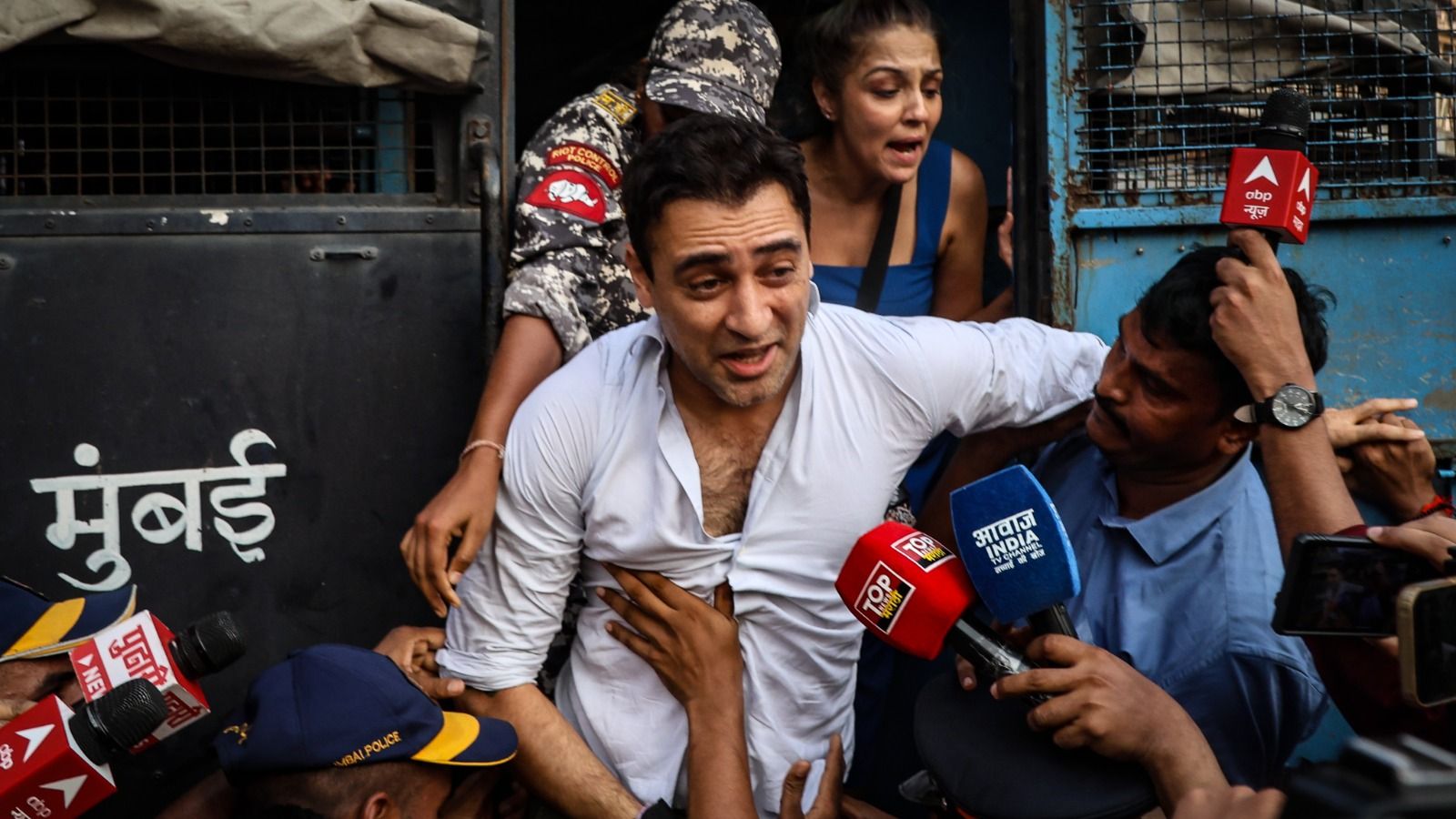
The Foreigners Regional Registration Office asked actor Imran Khan to leave India by October 28. This notice followed his participation in a protest against Chief Election Commissioner Gyanesh Kumar on October 10. Authorities said Khan, a US citizen, violated rules for foreign nationals by joining a political demonstration in Mumbai.
Actor Imran Khan has been served a notice by the Foreigners Regional Registration Office (FRRO), asking him to leave India by October 28 after attending a protest against Chief Election Commissioner Gyanesh Kumar at Mumbai's August Kranti Maidan on October 10. The notice followed a complaint alleging that Khan, a US citizen and Overseas Citizen of India (OCI) cardholder, had violated the rules governing foreign nationals in India.
The action has brought into focus the restrictions applicable to foreign nationals participating in political demonstrations in India, and the circumstances under which immigration authorities can direct them to leave the country.
Q: What happened?
Khan was among those detained by Mumbai Police during the October 10 protest, which called for the resignation of Chief Election Commissioner Gyanesh Kumar. BJP leader Kirit Somaiya subsequently complained to the police, alleging that Khan's participation in the demonstration violated the rules applicable to foreign nationals and OCI cardholders.
The Gamdevi police forwarded the complaint to the FRRO, which subsequently issued a notice asking Khan to leave India by October 28.
Q: What does the Immigration and Foreigners Act say?
The Immigration and Foreigners Act, 2025, which replaced the Foreigners Act, 1946, provides the framework for regulating the entry, stay and removal of foreign nationals.
Under Section 29, the Central Government may direct the removal of a foreigner from India for violating any provision of the Act, or any rule or order made under it, or based on an adverse security report.
Section 7 empowers the government to regulate or restrict the entry, departure or continued presence of foreign nationals. Orders under this provision can require a foreigner not to remain in India, restrict movement or impose conditions governing residence and activities.
The Act also prescribes penalties for specific violations. Under Section 23, a foreigner who overstays a visa, remains without a valid passport or travel document, or breaches visa conditions can face imprisonment of up to three years, a fine of up to Rs 3 lakh, or both. Section 21 provides for punishment for entry without the required valid travel documents, while Section 22 deals with the knowing use or supply of forged or fraudulently obtained passports, travel documents or visas.
Q: What violations can lead to a foreigner being asked to leave?
The law does not restrict removal to one particular offence. Grounds that can trigger action include overstaying a visa, staying without valid travel documents, violating visa conditions, entering India without the documents required by law, using forged immigration documents, or disobeying a lawful order governing a foreigner's presence or movement. Section 29 also provides for removal on the basis of an adverse security report.
Q: Do the same rules apply to OCI cardholders?
Yes. Despite the name, an OCI cardholder is not an Indian citizen. OCI status provides specified immigration and other privileges, including a lifelong, multiple entry visa, subject to applicable conditions. It does not confer the political rights available to Indian citizens.
OCI cardholders can also face action under Section 7D of the Citizenship Act, 1955, which provides for cancellation of OCI registration on specified grounds. These include obtaining registration through fraud or misrepresentation, showing disaffection towards the Constitution, certain wartime conduct, specified criminal convictions, and circumstances involving national security, sovereignty and integrity, friendly relations with foreign countries or the interests of the general public.
A separate notification issued in August 2025 also specifies additional grounds for cancellation, including certain serious criminal cases. The law requires a reasonable opportunity to be heard before an OCI registration is cancelled under Section 7D.
Cancellation of OCI registration and an order directing a person to leave India are, however, distinct legal actions.
Q: Does attending a protest amount to a violation?
Article 19 of the Constitution guarantees Indian citizens freedom of speech and expression and the right to assemble peacefully, subject to reasonable restrictions. These citizen-specific rights do not extend to foreign nationals in the same manner.