
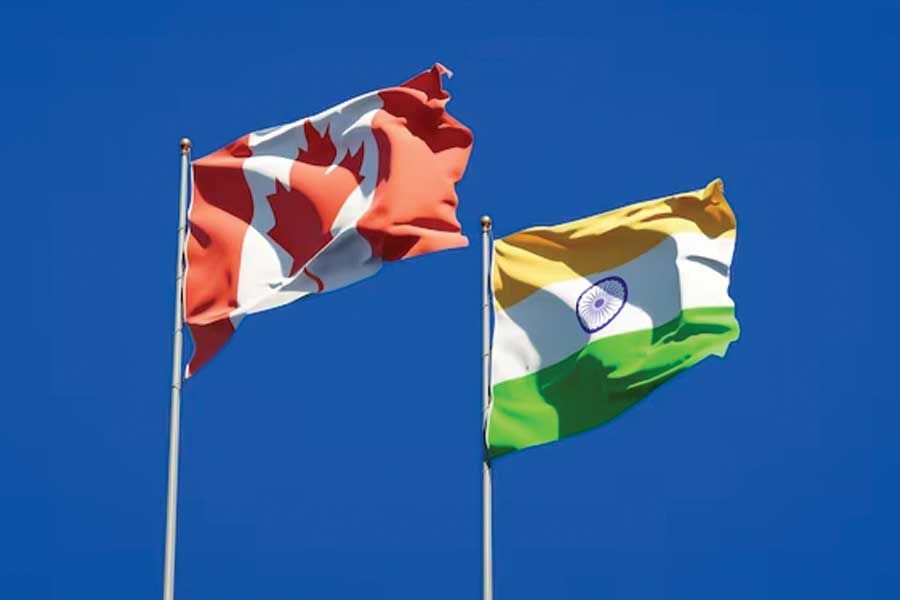
Canadian foreign minister Anita Anand visited India this week to strengthen bilateral ties. Prime Minister Narendra Modi also spoke with his Canadian counterpart, Mark Carney, about deepening relations before a planned visit in December. Both nations now seek closer cooperation as they navigate a changing global landscape and unpredictable US policies.
The reset between New Delhi and Ottawa is certainly welcome but it is about much more than their bilateral equation. A look at recent diplomatic steps taken by them underscores this
The visit to India by the Canadian foreign minister, Anita Anand, this week comes amidst a flurry of diplomatic engagements between the two nations at a time when they are urgently seeking to strengthen mutual ties.
Ms Anand's visit was preceded by a trip to New Delhi by the Canadian trade minister, Maninder Sidhu. The two countries have announced that they want to quickly seal a trade agreement. Prime Minister Narendra Modi had a telephone conversation, also this week, with his Canadian counterpart, Mark Carney, where they committed themselves to deepening bilateral relations.
Mr Modi is scheduled to visit Canada in December. Two years ago, this Indo-Canadian bonhomie would have been unimaginable. Mr Carney's predecessor, Justin Trudeau, had accused New Delhi of orchestrating the assassination of a Sikh separatist leader near Vancouver, setting off a bitter series of tit-for-tat moves by the two nations.
The reset between New Delhi and Ottawa is certainly welcome but it is about much more than their bilateral equation. A look at recent diplomatic steps taken by them underscores this. As tensions soar with the United States of America,
Mr Carney has sought tighter relations with a range of countries. He was recently in Europe, where Canada secured a special status in the form of an associate membership. Canada has also sought to set aside past acrimony with China and seek a warmer economic equation with Beijing. And it is not just Canada that is trying to wean itself away from its traditional dependence on the US. India, too, has been trying to double down on its customary belief in a multi-aligned approach -- focusing on its historical relationship with Russia, trying to keep its equation with China calm, and highlighting areas of convergence with Europe while also trying to engage a seemingly unpredictable US. New Delhi is following the same approach in its extended neighbourhood as well, juggling relations with Israel on the one hand and ties with Iran and the Gulf nations on another. India knows, as does Canada, that not only is the US no longer reliable as a partner but that its chaotic behaviour has also made South Asia, West Asia and the Indo-Pacific less secure. Locking arms with Canada is an important step towards widening the scope of insurance.