
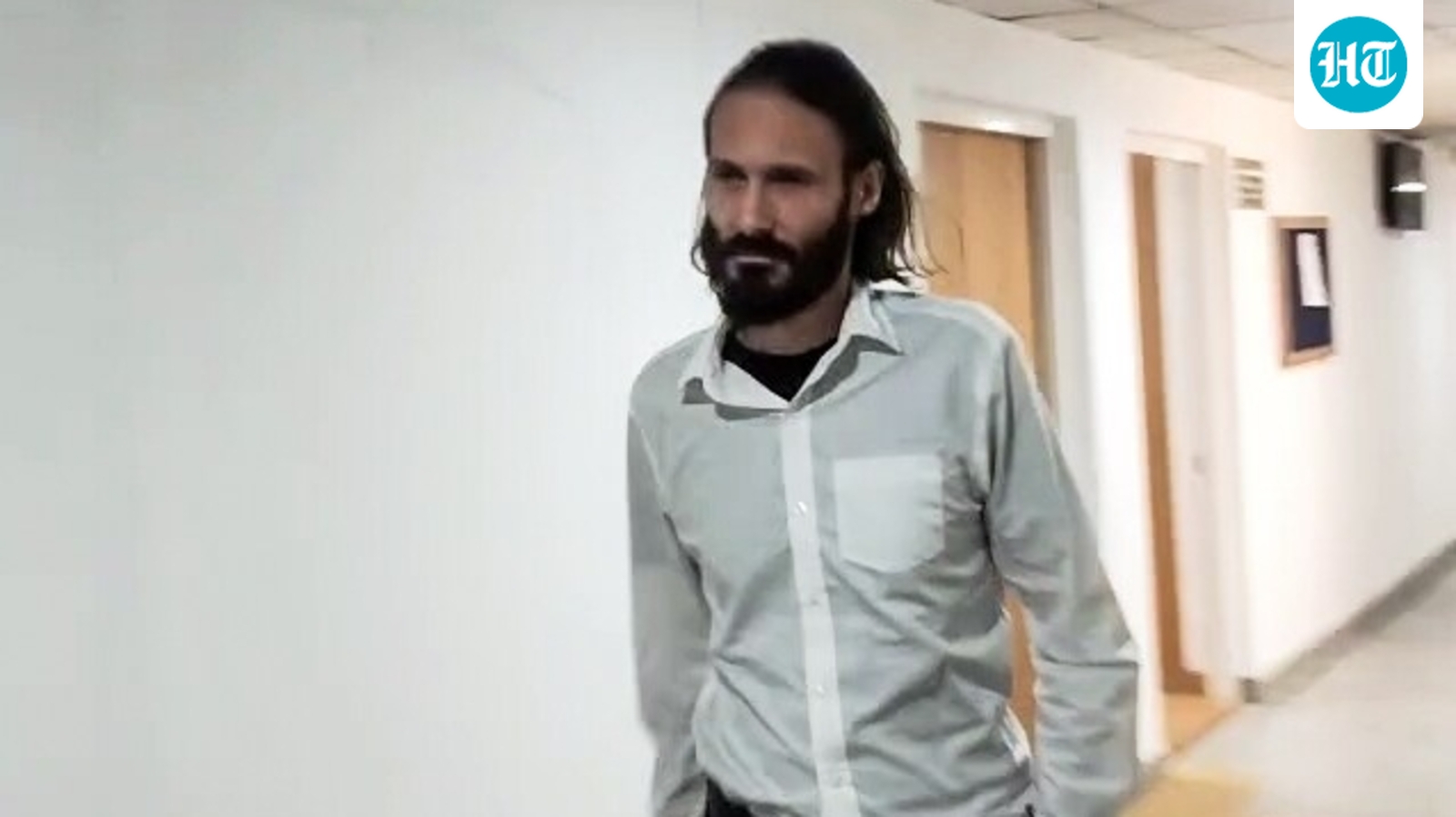
A Delhi court on Friday allowed US national Matthew VanDyke to stay out of India until February 24. He faces NIA accusations of training Myanmar-based groups in drone warfare. VanDyke said, "There's no reason for it to continue. I'll stay in India until this is over." Proceedings remain ongoing now.
A Delhi court on Friday allowed US national Matthew VanDyke to return to his home country until February 24 next year, after he appeared before it in a case in which the National Investigation Agency (NIA) has accused him and six Ukrainian nationals of training Myanmar-based ethnic armed groups in drone warfare.However, news agency PTI quoted VanDyke as saying that he'll stay in India till the case is over. "There's no reason for it [the case] to continue. I'll stay in India until this is over," he said.The US national also said that he had removed his lawyer due to financial difficulties. "I don't have any comments on the case. It's all ongoing. Especially now that I'm my own lawyer. I don't want to talk about it. There is a money issue. That's the main issue," he added.VanDyke returns for proceedingsSpecial Judge Prashant Sharma passed the order while hearing applications moved by the seven foreign nationals. The proceedings were held in-camera.
VanDyke, who was granted permission to travel to the US for a month in September, returned to India to appear before the court.
The six Ukrainian nationals, who were also allowed to leave India, appeared through video conferencing, citing health issues. The court extended the permission for all seven accused to remain outside India until February 24.
According to the court order, seen by HT, the NIA did not oppose VanDyke's return to the US. The agency told the court that it needed more time to investigate several aspects of the case, with its counsel Rahul Tyagi making submissions to this effect.
Previous cases involving foreign nationals
The case is not the first instance of a foreign national leaving India while an investigation or legal proceedings remain pending, people in central agencies pointed out.
In an earlier case, Warren Anderson, chairman of US-based Union Carbide Corporation (UCC), was allowed to leave India within hours of his arrest in Bhopal on December 7, 1984. The government of India subsequently pursued his extradition for decades, without success. Anderson died in Florida on September 29, 2015, aged 92.
Kim Davy, alias Niels Holck Nielsen, believed to be the mastermind behind the 1995 Purulia arms drop in West Bengal, also managed to flee India after being detained. India pursued his extradition from Denmark for years, but the request was ultimately rejected.
In contrast, British national Christian Michel, extradited from the UAE in December 2018 in connection with the ₹3,727-crore VVIP chopper scam, remains in Tihar jail and is yet to secure bail.
The case against VanDyke
The NIA arrested VanDyke and the six Ukrainians on March 13. It alleged that they entered Myanmar through Mizoram without valid travel documents and trained members of ethnic armed groups, including the Chin National Front and the Kachin Independence Army, for nearly three months in drone operations, assembly and jamming technology.
The agency initially invoked provisions of the Unlawful Activities (Prevention) Act (UAPA), but did not include them in its charge sheet. The seven were charged under Sections 21 and 23 of the Immigration and Foreigners Act, which provide for compoundable offences. The NIA has said its investigation into other aspects of the case is continuing.
The six Ukrainians are - Hurba Petro, Taras Slyviak, Ivan Sukmanovskyi, Marian Stefankiv, Maksim Honcharuk and Viktor Kaminskyi.