
The Democratic Party won control of both houses in the 2026 US midterm elections. This shift could lead to more practical trade talks for India. However, President Donald Trump still holds executive powers to impose tariffs. Experts believe he may continue using these tools despite the new legislative balance of power.
The Democratic Party now controls both chambers of the US Congress. But that may not necessarily translate into greater scrutiny of Trump's trade policy for two reasons -- he still has executive powers to impose tariffs, and trade largely remains an issue with bipartisan support.
The Democratic Party has pulled of a sweeping victory in the 2026 US midterm elections, taking firm control of both legislative bodies that comprise the US Congress -- the House of Representatives, which is the lower house, and the Senate, the upper house. The decisive results -- driven by a cost-of-living crisis worsened by President Donald Trump's tariffs and war on Iran -- have now fueled hopes of a more predictable trade policy in the US.
This will also come as some relief to India, which among the handful of countries that faced steep tariffs but managed to avoid getting entangled in a one-sided trade agreement that would have imposed several one-sided demands on digital trade and pushed for access into politically sensitive sectors such as agriculture. The increased scrutiny from a Democrat-controlled US Congress, experts said, could result in more practical asks from American negotiators.
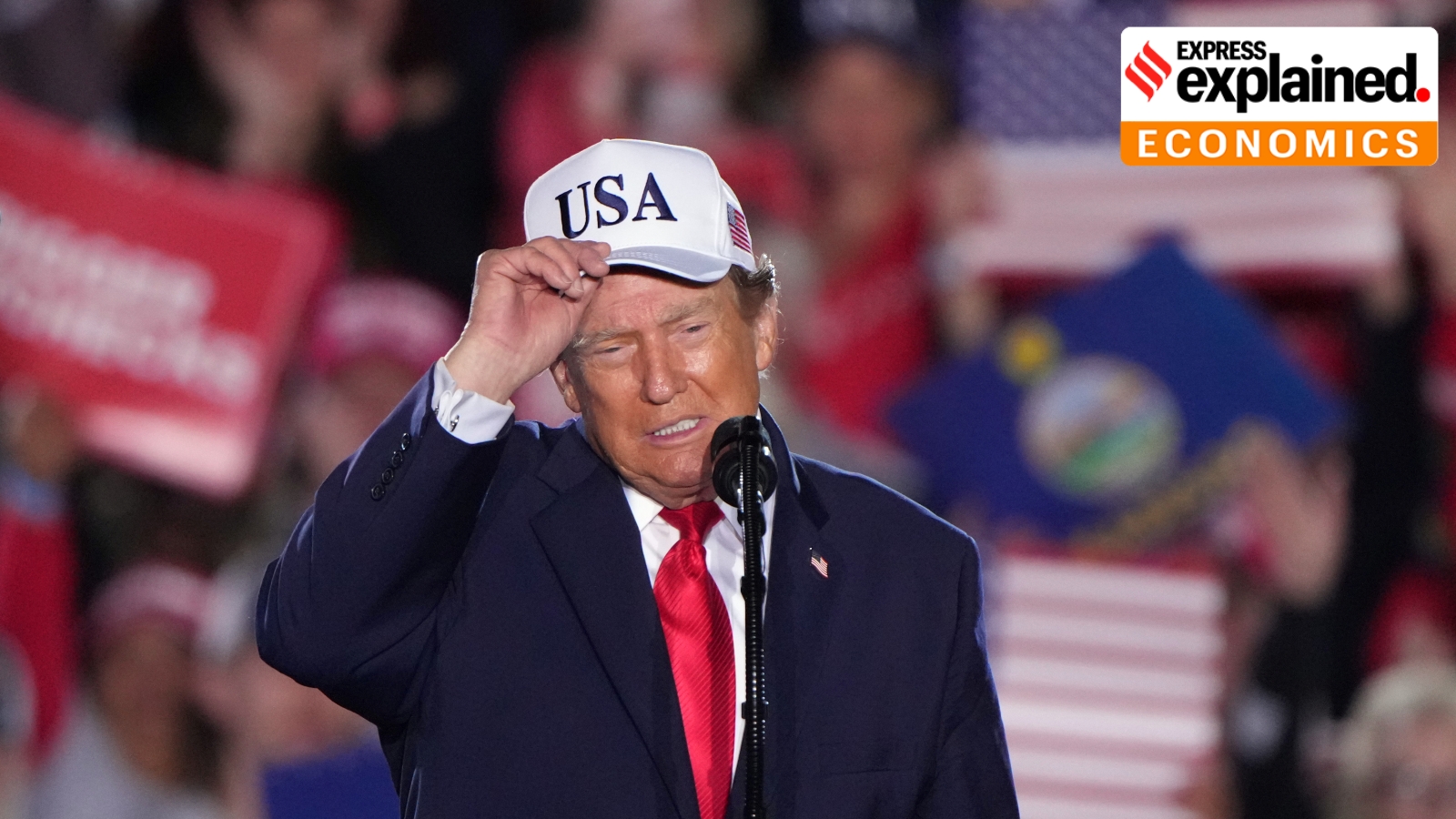
However, Trump's second term has been marked by an unusually frequent use of executive orders, which could continue to spell trouble for trade partners across the globe. In fact, soon after the results, Trump posted a photograph of a red cap emblazoned with the word "VETO" on his Truth Social platform. Indeed, he told Fox News that he would work with Democrats on issues such as immigration, but threatened to veto any "insane" bills they passed.
Midterm results could actually embolden Trump
With the elections out of the way, the United States Trade Representative (USTR) is expected to release the findings of its investigation into "overcapacity" -- a situation when a sector or a country's production capacity exceeds the demand in the market -- under Section 301 of the US Trade Act of 1974. This is the Trump administration's latest route to resurrecting its tariff architecture.
Currently, tariffs on most countries except China remain in the 10 to 12.5% range. But the new tariffs will determine the final rates and form the basis on which trade deals with global partners, including India, will be renewed.
So, after the midterm setback, will Trump tamp down such actions?
Unlikely. Mohan Kumar, a former Indian ambassador, said that a domestically constrained President in the last term feels, if anything, more free to do things abroad. So, the President's scope to do good and inflict harm abroad either remains the same as before or may even increase. "We will have to wait and see how this affects the relatively unpredictable occupant of the White House," he said.
"Congressional imprimatur has not been sought by successive Presidents for several policy initiatives. Obama issued 35 executive orders, George Bush issued 42. Biden issued 162 executive orders in just one term. President Trump has already issued a whopping 166 executive orders in just two years. So expect rule by executive decree, whether the Congress likes it or not," said Kumar, who is the Director General of the Motwani Jadeja Institute for American Studies, OP Jindal Global University. (Kumar was speaking in his personal capacity).
The former ambassador also said that there is no such thing as a "lame duck" American president when it comes to foreign, security or even trade policy. "President Trump will likely continue to do things he did before. For example, in June of this year, both the House and the Senate passed a 'War Powers Resolution' directing President Trump to end hostilities with Iran. In September, Congress passed sanctions on Russia with veto-proof majorities. President Trump used a national interest 'waiver' to nullify the sanctions. So, expect President Trump to resort to more of this for the remaining two years of his mandate," he said.
So what could be the impact of a Democrat-controlled Congress?
One of the main factors behind the election results is the anger among Americans over the cost of living and high diesel prices. Behind these high prices are Trump's tariffs -- whose burden, as research has shown, was mostly passed on to US consumers -- and his war on Iran, which resulted in the effective closure of the vital energy passage of the Strait of Hormuz.
Exit polls suggested the economy was the top concern among American voters, prompting even key Republican strongholds like Texas to side with Democrats.
Several US polls also showed that public opinion in the US has shifted when it comes to tariffs. An ABC News poll found 64% of respondents said the use of tariffs had gone too far. A Council on Foreign Relations poll showed 83% blamed high tariffs for at least partially driving inflation, a major negative factor for Trump.
A US-based think tank, Hudson Institute, said that Democrats have clearly signalled their intent to undermine Trump's dominance of trade policy while reclaiming the prerogatives of the legislative branch. In preparation for their improved, post-election political position, Democratic leaders have already surfaced ideas for reclaiming control over trade policy, the think tank said.
"The likely new chairman of the Senate Finance Committee, which has jurisdiction over trade, Ron Wyden, and the presumed Majority Leader, Charles Schumer, have introduced bills to invalidate Trump policies. Schumer's bill would repeal several of the laws invoked by Trump, as well as the widely used Section 301 authority on 'unfair trade practices', to justify his trade actions," the report said.
Bipartisan policy on trade
Trade experts, however, pointed out that both Republicans and Democrats have often been on the same page when it comes to trade policy and on dealing with China.
While Trump is believed to have abandoned multilateral organisations, including the World Trade Organization (WTO), it was under the Obama administration that the appointment of judges to the trade body began to blocked. This eventually resulted in the WTO becoming dysfunctional -- thus paving the way for unilateral measures under the Trump administration. Trump's protectionist measures, however, have been far more unconventional and erratic.
"The adverse midterm results won't change President Donald Trump's trade direction because both Democrats and Republicans now favour economic nationalism, domestic manufacturing, and strong supply chains," said Ajay Srivastava, former trade officer and founder of the think tank Global Trade Research Initiative.
Since Democratic lawmakers also support protective tariffs for local union workers, America's overall trade posture will remain intact, Srivastava said.
To bypass Congress, Trump will likely continue to rely on existing powers -- such as Section 232 of the Trade Expansion Act of 1962 and Section 301 (already mentioned above) -- using executive orders, Treasury sanctions and USTR rules to apply unilateral trade pressure.
Section 232 allows the President to impose restrictions on goods imports if it is found that the quantity or other circumstance of those imports "threaten to impair" US national security.
"With foreign policy leverage failing against Russia, China, and Iran, Trump needs a quick win. Expect heightened pressure on India for a trade deal to prove American clout," said Srivastava.