
India follows a policy of neutrality and balancing in West Asia. However, widening regional conflicts since the October 7 attacks and the Iran war now pose serious challenges to New Delhi. Experts say the changing security dynamics and the emergence of Pakistan as a key player threaten India’s strategic interests.
India abides by the principles of multialignment, neutrality and balancing in its Look West and Think West policy towards the West Asian region. But the widening regional conflicts and wars since the October 7 attacks and the Iran war have posed serious challenges to New Delhi's principles and interests in the region. What does India's response convey?
As the expansion of the Iran war continues to wreak havoc in West Asia, India's response to the escalating crisis, beginning with the October 7 attack by the Palestinian militant group Hamas on Israel and the US-Israel war on Iran, has become a subject of debate.
The emergence of Pakistan as a key player amid the changing security dynamics of the region has further prompted experts to warn of threats it could pose to India's interests in the region. What does India's response to these developments indicate? First, let's have a brief overview of India's engagement with the region.
Historical foundations of India's West Asia policy
The WANA region, comprising the Persian Gulf, the Arabian Peninsula, the Levant, the Eastern Mediterranean, and the Maghreb regions, has historically acquired a key position in Indian foreign policy. Several factors, including geographical contiguity, historical connections, centuries of people-to-people contacts, and similar political experiences under colonialism, have defined India-West Asia ties.
Independent India, therefore, developed closer ties with the newly independent states of West Asia (and North Africa) based on shared worldviews and resistance to continued colonial involvement and imperialism.
In the 1950s and 1960s, Egypt emerged as the closest partner. Indian Prime Minister Jawaharlal Nehru and Egyptian President Gamal Abdel Nasser shared the vision of resisting bloc politics of the Cold War era and were instrumental in forming the Non-Aligned Movement (NAM). But in the 1970s, the global situation and the Cold War dynamics between the two superpowers began changing.
The changes had their bearings on West Asia, and Indian foreign policy too adjusted to the new realities. While Egypt under Anwar el-Sadat moved closer to the US, India under Prime Minister Indira Gandhi forged deeper ties with the Soviet Union. Good relations with the Soviet Union brought India and Iraq closer and during the 1970s and 1980s, Indo-Iraqi relations improved significantly, especially in the defense and military domain. Hence, India's West Asia policy moved from Cairo-centric in the 1950s and 1960s to Baghdad-centric in the next two decades.
India adopts multi-alignment approach
However, a number of decisive factors, including the end of the Cold War, the disintegration of the Soviet Union, and India's own domestic economic compulsions, compelled New Delhi to adopt a gradual foreign policy recalibration in the 1990s. The unveiling of the liberalisation, privatisation and globalisation (LPG) regime meant India was ready to get integrated into the US-led global economy.
But New Delhi also began adopting a multi-alignment and interest-oriented approach in its external engagements. The establishment of diplomatic relations with Israel in 1992 came as yet another significant development in India's policy towards the region.
In the meantime, the Gulf region was also emerging as the regional geopolitical and geoeconomic nerve center due to several factors, primarily the rise of oil-based economies of the Gulf Co-operation Council (GCC) states and the emergence of Saudi-led pan-Islamism as the ideology binding the region. For India, the extended neighborhood of the Gulf was becoming more important, given its growing energy security needs and increasing flow of Indian human resources to the GCC for work.
India, therefore, began gradually recalibrating its relations with the Gulf countries under the "Look West" policy. Oman and Iran were the first to reciprocate the diplomatic outreach. At the same time, India's political, diplomatic, economic and strategic engagements with the Gulf states began to gain momentum in the 2000s. Energy imports, expatriates and remittances, bilateral trade, maritime security, and commitment to fight against organised crime became the basis for increasing cooperation.
From "Look West" to "Act West"
But interest-oriented bilateral relations helped India adopt a pragmatic foreign policy in West Asia in the 2000s, with "Look West" gradually complemented by a "Think West" policy. Multialignment, balancing and neutrality in regional tensions and conflicts emerged as the abiding principles of India's engagements with West Asia during this period. Hence, India was simultaneously able to improve relations with Iran, Israel and the GCC states, which gained further momentum under Prime Minister Narendra Modi.
A new political and diplomatic zeal became visible in India's engagement with the region, with the "Look West" and "Think West" gradually leading to "Act West" under Modi. Nonetheless, India continued to abide by the principles of neutrality and balancing, as was also visible during the civil wars (Syria, Libya and Yemen), conflicts and rifts among the regional countries.
Later on, the signing of the Abraham Accords provided a new momentum to India-West Asia engagements. The I2U2 grouping (India, Israel, the US and the UAE) joined hands for a minilateral cooperation, focussing on food security and renewable energy.
Several other initiatives, including the India-UAE-France trilateral, engagement with Iran on the Chabahar port development project, India's joining of the Manama-based and US-led Combined Maritime Force (CMF), and the signing of the MoU on the India-Middle East-Europe Economic Corridor (IMEC) underlined the growing dynamism in India's engagements with the region.
Diplomatic challenges amid conflicts and wars
However, the beginning of the war between Israel and Hamas in the Gaza Strip in the wake of the October 7, 2023, attacks posed a new diplomatic challenge for New Delhi, especially as the situation continued to fester with a worsening humanitarian crisis in the Palestinian enclave. India, however, did not give up on its stance of neutrality in regional conflicts and balancing in regional engagements, though it did express an unequivocal and categorical condemnation of terrorism.
The expansion of the Gaza war to the region with Israel and Hezbollah fighting in Lebanon, the Houthis joining in support of Hamas and Hezbollah in the Red Sea, the intensification of the conflicts in the Horn of Africa, the growing confrontation between Israel and Iran, increasing rift between Saudi Arabia and the UAE, and the eventual outbreak of the war between Israel and Iran in June 2025 posed a serious challenge to India's West Asia policy.
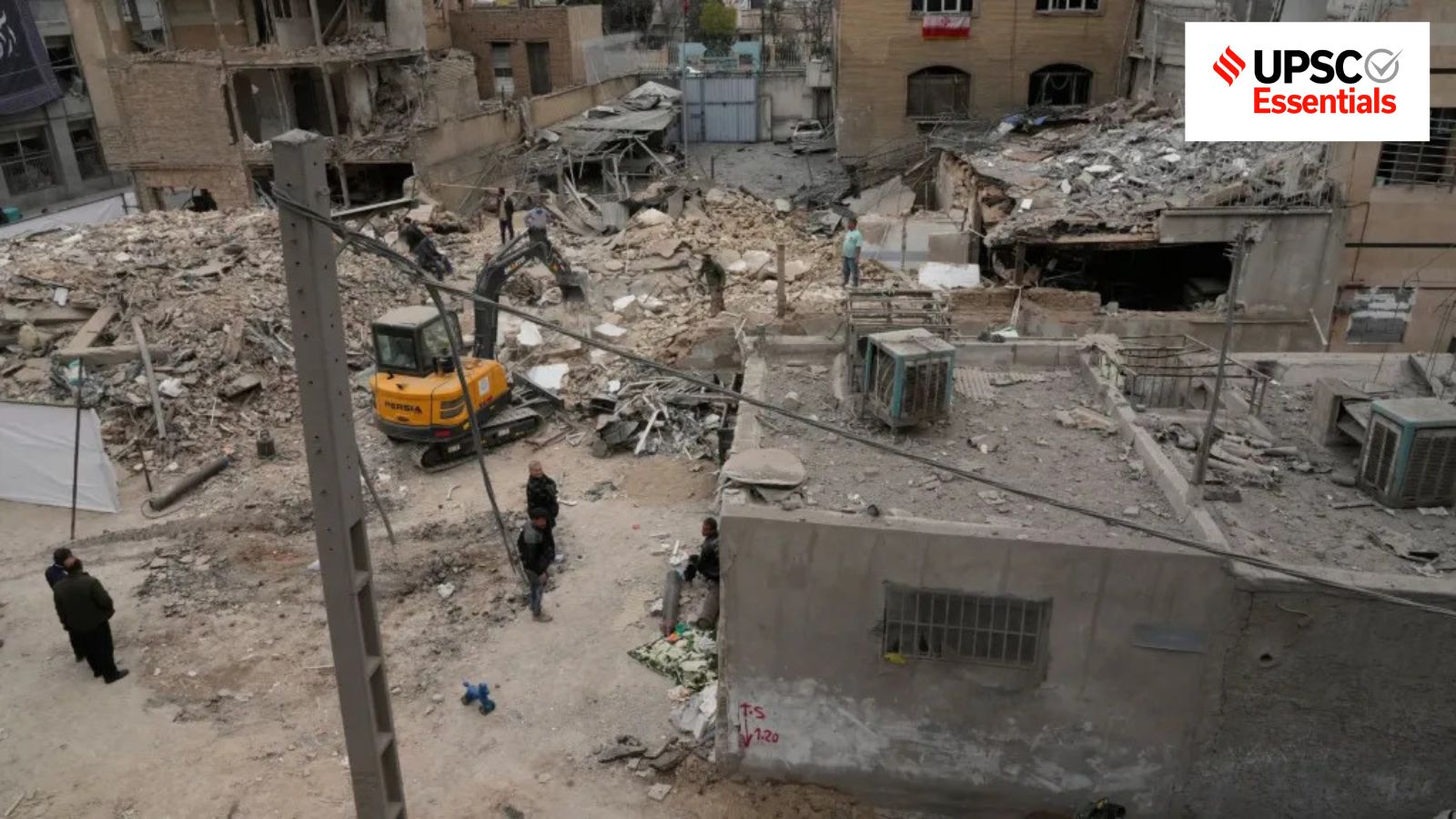
Nonetheless, New Delhi remained steadfast in calling for the de-escalation and negotiated solutions underlining its continued adherence to multialignment, balancing and neutrality. But the US-Israeli attacks on Iran in February 2026 and the subsequent war created a new dilemma for India.
The closure of the Strait of Hormuz, attacks on international and Indian ships, targeting of military and civilian infrastructure in the GCC states and the intensification of the Houthi attacks on Saudi Arabia struck at the core of Indian interests in the Gulf - energy security, safety of Indian expatriates and the trade and investment relations. These developments also pose challenges to India's growing strategic relations with some of the regional states, as they become involved in the regional quagmire.
Debates on Delhi's response to changing regional dynamics
The Gaza crisis and the Iran war have particularly brought India's West Asia policy under increased focus. Debates on New Delhi's response range from the Indian government being motivated by ideological compulsions to it adopting a friendlier stance vis-à-vis Israel and the GCC states. Discussions have underlined that New Delhi has not been true to its abiding principles of multialignment, neutrality, and strategic balancing.
The discourse has largely been based on the assessment that New Delhi has been quick in its condemnations of the Hamas attacks on Israel, the Iranian attacks on the GCC states, and Houthi attacks on Saudi Arabia, while maintaining silence on Israeli military operation in the Gaza Strip, being slow in responding to the worsening humanitarian situation there and avoiding an outright condemnation of the Israeli and American attacks on Iran.
Moreover, commentators have also warned of threats posed by Pakistan to Indian interests in the region. While the Islamabad MoU signed in June 2026 led to a brief ceasefire in the US-Iran war, the Saudi Arabia, Türkiye and Pakistan trilateral Makkah Joint Defense Agreement (August 2026), and the signing of the Saudi Arabia-Pakistan Strategic Mutual Defense Agreement (September 2025) further underlined the emergence of Pakistan as a key actor in the changing regional security dynamics. Nonetheless, the public response to the stance of the Indian government on these developments involving Pakistan has been muted or dismissive.
Balancing principles and strategic interests
The individual stamp of the leadership on foreign policy choices notwithstanding, the Indian response to the widening crisis in West Asia since the October 7 attacks has continued to abide by the principles of multialignment, neutrality, and balancing. New Delhi has prioritised its relations and friendship with countries with which its core interests align, mainly the GCC states, especially the UAE, Qatar and Saudi Arabia, as well as Israel.
With the GCC countries, India's focus is on energy security, trade and investments, and the safety and security of its nearly 10 million nationals. Similarly, strong defense and security relations with Israel, along with improved scientific and technological cooperation, have made it an important partner. Relations with Iran, however, have been affected by the US and international sanctions and have slowed down for over a decade. As a result, New Delhi has limited bilateral cooperation with Tehran to avoid jeopardising its ties with Washington.
Even in the wake of the US-Israeli attacks on Iran and the ensuing Iran war, India has been focused on engaging Iran at a lower level, while prioritising the concerns of the GCC states and the impact of the war on its interests. Similarly, when it comes to the Palestinian issue, India has long avoided dealing with Hamas and focused on engaging with the Palestinian Authority (PA) through developmental aid and adherence to the principle of a negotiated two-state solution to end the Israeli-Palestinian conflict. In its engagement with Israel, New Delhi had de-hyphenated Palestine gradually after Prime Minister Modi came to power in 2014.
Moreover, India's unequivocal stand against terrorism has been steadfast, as has been expressed on several occasions. The October 7 attacks and the Gaza war did not change these principles in Indian engagements with Israel and Palestine. India's responses to the widening regional conflicts and wars since the October 7 attacks and the Iran war rather indicate prioritising core Indian interests without necessarily a shift away from the principles that have guided its West Asia policy.
Post read questions
1. India's West Asia policy represents a pragmatic balance between enduring foreign policy principles and evolving strategic interests. Critically examine in the context of the ongoing regional conflicts.
2. India's relations with Israel, Iran and the GCC countries reflect the growing complexity of its West Asia policy. Discuss the opportunities and challenges involved in maintaining these simultaneous partnerships.
3. Trace the evolution of India's West Asia policy from the Nehruvian era to the present. To what extent have geopolitical transformations influenced its regional priorities?
4. The growing strategic engagement between Pakistan and key West Asian countries presents new challenges for India's regional interests. Examine its implications for India's diplomatic and security calculus.
5. How can India safeguard its strategic interests in West Asia while contributing to regional stability without becoming entangled in competing geopolitical rivalries?
(The author is an Associate Professor at Jawaharlal Nehru University, New Delhi.)