
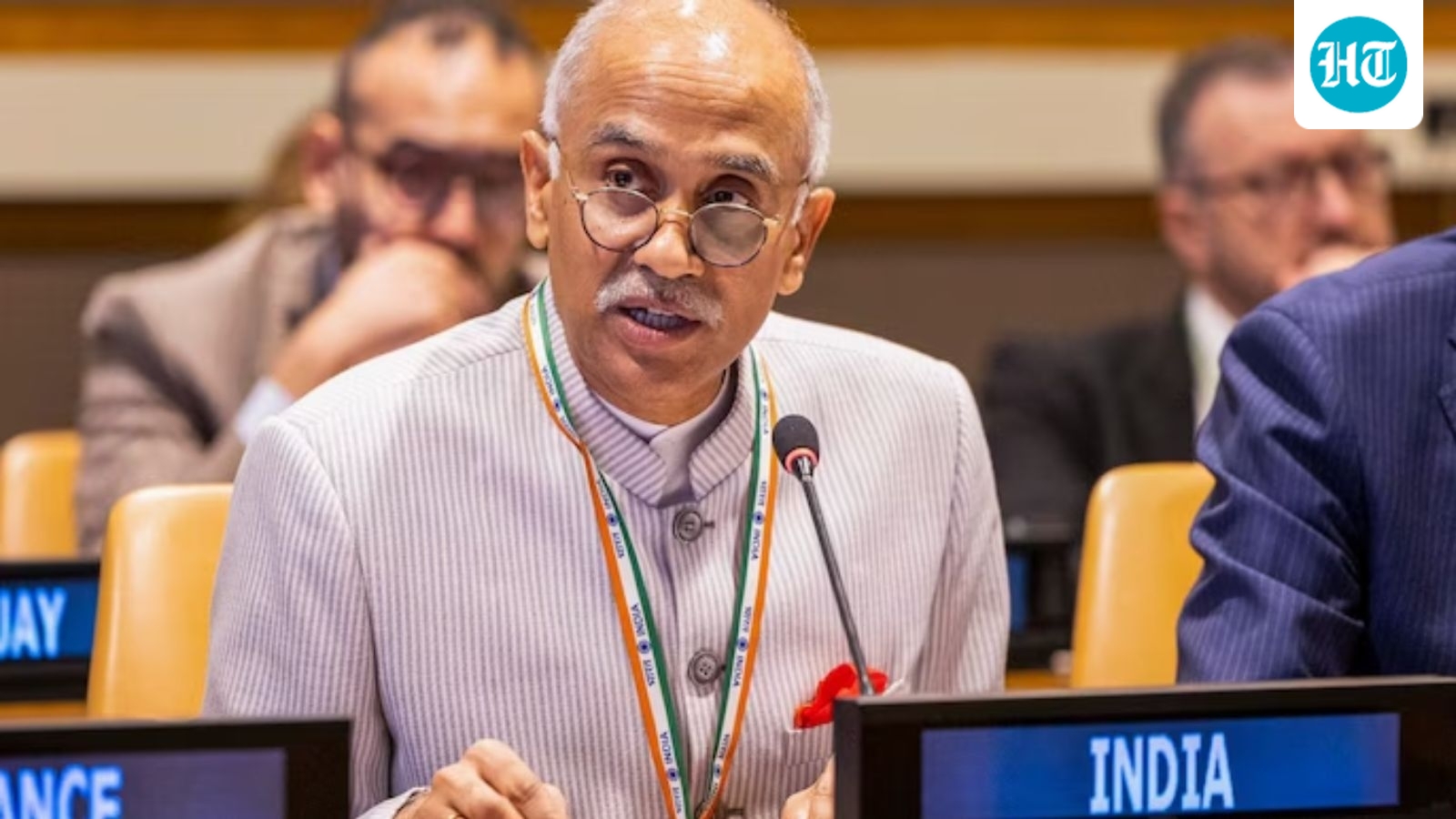
India pushed for United Nations Security Council reform, saying 1945 cannot define the world order. Parvathaneni said, "No war, especially one that took place over 80 years ago, should determine today's state of the world." Prime Minister Narendra Modi on Thursday said the limitations of global institutions are now clearly visible.
India has launched a strong pitch for reforming the United Nations Security Council, warning that its failure to reflect contemporary global realities is undermining its legitimacy and ability to deliver peace.
"The cost is already visible. Eighty years on, the organisation is struggling to deliver peace and reconciliation in some of the gravest conflicts before the council," Parvathaneni said in a video posted on X.
He stressed that the authority derived from the victory of the second world war in 1945 cannot make up for the democratic deficit of an unrepresentative council, asserting that a war fought over 80 years ago should not determine the world order today.
"No war, especially one that took place over 80 years ago, should determine today's state of the world," Parvathaneni said, adding that the year 1945, when the UN was founded, cannot be held as the "sole reference point" for today's United Nations.
Parvathaneni stressed that the world has changed massively since the UN was establishment.
PM Modi says UN's limitations 'clearly visible'
Meanwhile, Prime Minister Narendra Modi on Thursday described the current global situation as a "world between orders," saying the limitations of the United Nations and the global institutions are increasingly visible in the face of today's complex challenges.
Describing the current global situation as a "world between orders," PM Modi said, "We have to understand two things: First, why is the world's order changing, and why is the old global order unable to provide solutions to today's challenges? And second, what is India's role in this changing world".
"The Second World War taught the world a big lesson," he added.
Modi further highlighted that the UN was founded on the principles of dialogue, cooperation and peaceful dispute resolution but noted that changing global realities and increasingly complex challenges have tested the existing world order.
"The world understood that world systems cannot run solely on the basis of power and interests. Dialogue is necessary, cooperation is necessary, and the resolution of disputes is also necessary. This sentiment laid the foundation of the United Nations (UN). For decades, the UN played its role in promoting global cooperation and peace. But with time, the world kept changing. New aspirations emerged, new economies and new powers arose. The challenges before the world became much more complex than before," he said at the NDTV's event.