
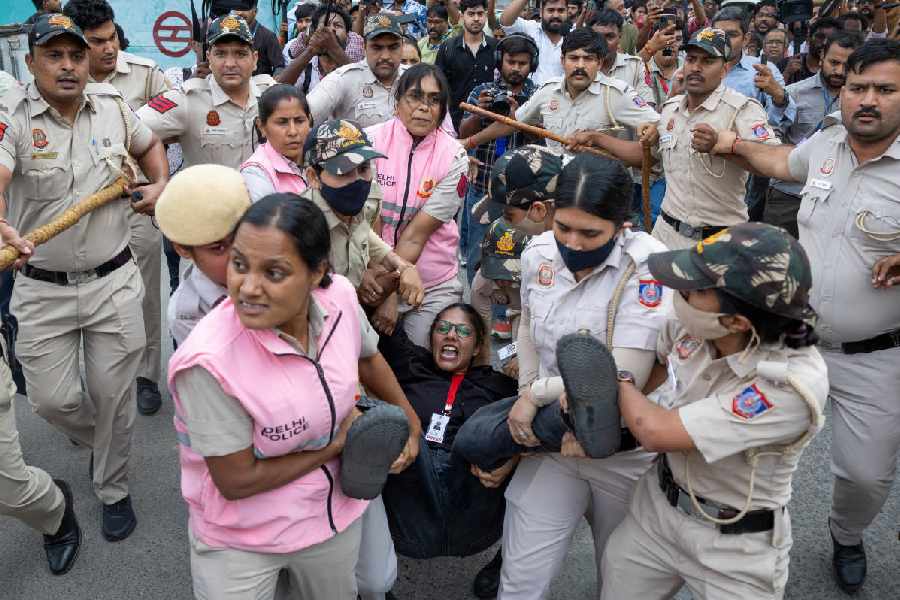
UN experts called on Tuesday for an independent investigation into the crackdown on recent protests in India. They said law enforcement used excessive force against students. "We call on the authorities to immediately cease the use of excessive force," the experts said. India dismissed the criticism as interference in affairs.
New Delhi has repeatedly dismissed such criticism and cast it as interference in the country's internal affairs, including when the UN human rights office earlier this month expressed concerns
UN experts called on Tuesday for an independent investigation into the authorities' conduct in the recent crackdown on protests in India, where they said demonstrators had sustained injuries and some reported being subjected to ill-treatment.
Opposition political parties and student organisations have held protests in recent weeks in India demanding chief election commissioner Gyanesh Kumar's resignation over a revision of voter lists that they say favours Prime Minister Narendra Modi's BJP.
Mass protests also took place in the summer over exam-paper leaks and led to the resignation of India's education minister.
"Despite the non-violent nature of the assemblies, law enforcement agencies have reportedly deployed force against unarmed students, including lathi charges, and have prevented thousands from joining the protests," the two dozen independent experts said in a statement, referring to batons used to break up crowds.
"We call on the authorities to immediately cease the use of excessive force, rescind blanket assembly bans, and refrain from the misuse of digital surveillance, including through biometrics, and internet disruptions," they said.
India has repeatedly dismissed such criticism and cast it as interference in the country's internal affairs, including when the UN human rights office earlier this month expressed concerns over mass detentions in relation to the latest protests.
The Indian embassy in Washington did not respond to a request for comment. India's government said this month the country's law enforcement acted "strictly in accordance with the law."
Protesting groups say the removal of 130 million names from voter lists led to eligible voters being disenfranchised, which disproportionately affected poor and homeless people as well as ethnic minorities including Muslims, who are unlikely to vote for the Hindu nationalist BJP. The BJP and India's Election Commission deny this.
The Election Commission says it was removing duplicate, deceased, shifted and otherwise ineligible voters and that anyone excluded in error can pursue appeals.
The protest crackdown has been condemned by human rights groups like Amnesty International and Human Rights Watch.
UN experts are appointed by the UN Human Rights Council to monitor and document specific human rights crises but are independent of the organisation itself.