
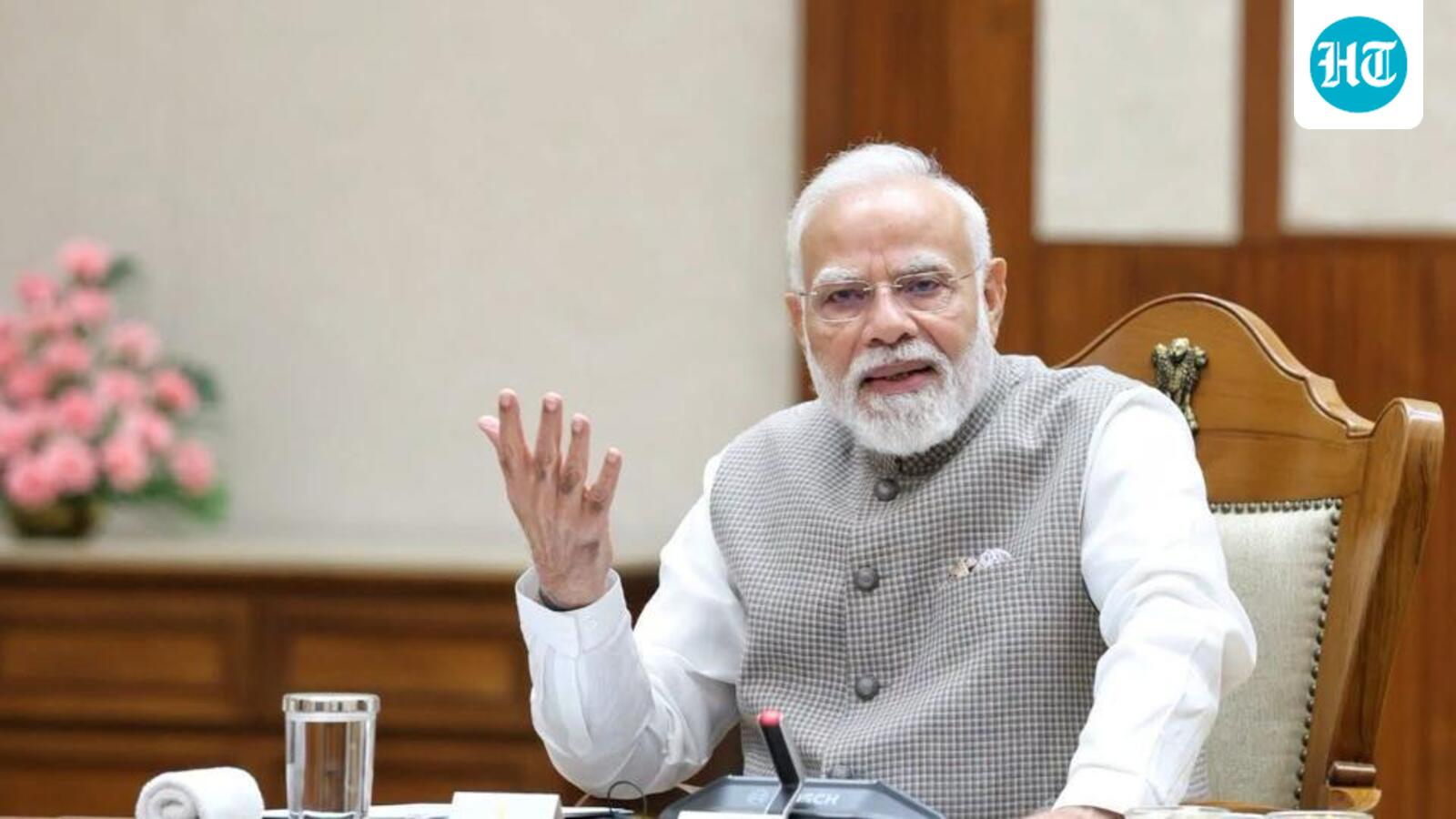
Prime Minister Narendra Modi will travel to the Philippines on Monday for a two-day visit to attend the Asean-India and East Asia summits. He will join leaders from Australia, Japan, and the United States for a Quad meeting. Discussions will focus on boosting trade, maritime security, and regional stability efforts.
Prime Minister Narendra Modi will travel to the Philippines on Monday for a two-day visit to attend the Asean-India Summit and the East Asia Summit, where he is also expected to join the leaders of Australia, Japan and the United States for a Quad Leaders' Summit and hold bilateral meetings on the sidelines, officials said on Sunday.
Modi's meetings with Asean (Association of Southeast Asian Nations) and other world leaders in Manila are expected to focus on boosting trade and investment, strengthening maritime security cooperation, and addressing regional security challenges amid shifting geopolitical dynamics, the officials said.
Philippine President Ferdinand R Marcos Jr will host a dinner for leaders of Asean and partner countries on Monday.
The 23rd Asean-India Summit follows the Asean Defence Ministers' Meeting (ADDM)-Plus at Cebu in the Philippines, where defence minister Rajnath Singh asserted that Operation Sindoor drew a "non-negotiable red line" against state-sponsored terror, and demonstrated India's "proactive, battle-tested doctrine" as the country's armed forces struck terrorist targets in Pakistan.
India is ready to explore defence cooperation with Asean in areas ranging from patrol vessels, radars and air defence systems to helicopters, drones and other technologies, signalling New Delhi's push to deepen military ties with the Southeast Asian bloc.
Rudrendra Tandon, secretary (East) in the external affairs ministry, told a media briefing last week that the 11-member bloc serves as a "locomotive for peace, stability and economic prosperity". Annual trade between India and Asean member states is worth about $122 billion.
Quad member states are expected to unveil several deliverables, mainly focused on economic security and strategic infrastructure, at the leaders' summit, as HT previously reported. The deliverables expected to be unveiled were finalised at the Quad foreign ministers' meeting on the margins of the G20 foreign ministers' meeting in Atlanta on October 31. The foreign ministers' meet resulted in several outcomes, including the provision of technical and financial aid worth more than $85 million to back access to trusted artificial intelligence across the Indo-Pacific.
The upcoming Quad Leaders' Summit -- the first gathering of the leaders of India, Australia, Japan and the US since September 2024 -- is set to be hosted by the US. The summit marks a departure from such meetings being held only in Quad member states.
The Quad is closely tracking China's expanding military footprint and influence across the Indo-Pacific. India has consistently called for a free, open and inclusive order in the Indo-Pacific region, pivoting on respect for the sovereignty and territorial integrity of all nations while stressing the peaceful resolution of disputes through dialogue and under the framework of international laws.
Security in the Indo-Pacific figured prominently in separate talks between Rajnath Singh and his US, Japanese and Australian counterparts on the sidelines of the ADDM-Plus, as the Quad partners underscored their commitment to peace, stability and respect for international law across the vast maritime expanse.
The officials also pointed to the significance of the US hosting the Quad Leaders' Summit in Manila amidst continuing tensions between China and the Philippines. Beijing and Manila have had a series of testy exchanges since last month, when the Chinese envoy reacted strongly to Philippine defence secretary Gilberto Teodoro Jr's description of China as a regional "troublemaker".
The US war department's 2026 National Defense Strategy aims to deter China in the Indo-Pacific through strength, not confrontation. India and the US signed a 10-year framework last year to strengthen defence ties, with joint efforts to promote peace and security in the Indo-Pacific as a key priority.