
The World Health Organization’s expert group recommended that countries move toward a three-dose infant schedule for the inactivated poliovirus vaccine. This new advice aims to strengthen global protection against polio. Experts said, "The new SAGE recommendation is a welcome shot (or three!) in the arm for global polio efforts."
Why the latest guidance is a welcome shot (or three!) in the arm for global polio efforts
Polio is a disease that thrives on neglect. It yields only a relentless drive to reach and protect every child. For decades, the scourge of polio stalked India's lanes and mohallas, and paralysed thousands of children. It was finally vanquished not by a single stroke of genius, but by the sustained arithmetic of a united effort: one child, one doorstep at a time.
Having worked on polio eradication in India before moving into global research and policy, I have seen how scientific innovation and community determination must work together. The indefatigable spirit of health workers has stayed with me, from the villages of India to the conference rooms where global policy is made.
Reaching zero was the proof, not the finish line
India's last case of wild poliovirus in 2011 was the result of sustained political commitment, excellence in health-programme delivery, and millions of people working toward a shared goal. That experience continues to shape how I think about the world's unfinished journey toward polio eradication.
Today, wild poliovirus continues to circulate in Afghanistan and Pakistan. In addition, outbreaks of variant polioviruses threaten children elsewhere. The challenge is not only to interrupt virus transmission, but also to ensure that future generations remain protected. With polio still circulating in some of these countries, polio-free countries such as India remain vulnerable to re-infection.
Achieving and sustaining global eradication require continued attention to three things: enabling policies, delivering of life-saving products, and fostering new possibilities opened by research.
A moment for IPV
An important development last month offers renewed hope.
In its October 2026 meeting, the World Health Organization's Strategic Advisory Group of Experts on Immunization (SAGE) recommended that countries providing fewer than three doses of inactivated poliovirus vaccine (IPV) move without delay toward a three-dose infant schedule, preferably introducing the third dose through a hexavalent vaccine.
The new SAGE recommendation is a welcome shot (or three!) in the arm for global polio efforts.
IPV protects against paralysis caused by all three types of polioviruses. Oral polio vaccine (OPV), meanwhile, remains essential for interrupting poliovirus transmission in settings of poor sanitation and hygiene and high population density.
The two vaccines complement each other, and the new recommendations strengthen IPV protection without replacing the established role of OPV.
The evidence is encouraging. Research presented to SAGE suggests that a move from the currently recommended two-dose IPV schedule to a three-dose IPV schedule with vaccines offered at 6, 10, and 14 weeks of age could increase protection at the end of the series from approximately 78 per cent to 99 per cent.
But numbers tell only part of the story. In Afghanistan and Pakistan, approximately 90 per cent of children affected by wild poliovirus since March 2022 had received no IPV doses despite the standing two-dose IPV recommendation. This is a reminder that better vaccination schedules must go hand in hand with reaching children who currently miss vaccination altogether. The best schedule in the world is useless to the child it never reaches.
India's experience offers valuable lessons here.
India already provides three fractional doses of IPV through its routine immunisation programme alongside bivalent oral polio vaccine (bOPV) and its polio-free status for more than 15 years is an indication of the country sustaining optimum immunisation coverage with such schedules supplemented by periodic bOPV campaigns.
In terms of the optimum number of IPV doses, India is already ahead of the direction now being recommended globally. The latest global guidance creates an opportunity to examine how IPV protection can be provided earlier in infancy and how India might eventually transition toward hexavalent vaccine-based schedules.
A 'sixer' in one delivery
Hexavalent vaccines combine protection against six childhood diseases -- polio, diphtheria, tetanus, pertussis, hepatitis B, and Haemophilus influenzae type b -- in a single injection.
For families, this could mean fewer visits to health centres and simpler vaccination schedules. For health workers, it would make delivery more convenient. And for health systems, it offers an opportunity to strengthen routine immunization while sustaining polio protection.
Importantly, these benefits must be affordable and accessible.
Here, India has another opportunity to contribute to global health. And this is also why the new SAGE recommendations align with the possibilities on the research and development front. A momentous synergy.
An Indian manufacturer already has a World Health Organization-prequalified whole-cell pertussis based hexavalent vaccine. Another is developing an innovative S19-based hexavalent vaccine that promises to minimize risks associated with containment failure, with its introduction dependent on completing regulatory processes.
These India-led vaccine innovations along with India's possible introduction at scale may potentially make the hexavalent vaccine more affordable and accessible to the low- and middle-income countries.
Around 40 countries eligible for support from Gavi, the Vaccine Alliance, are expected to transition to hexavalent vaccines during its current strategic period.
The next chapter
Working now at the intersection of research, vaccine development and global policy, I find these developments encouraging. They demonstrate that even after decades of progress in combating and cornering a virus, there is still much to learn, improvise and improve.
India's polio achievement was built on the conviction that every child deserved protection from paralysis, regardless of where they lived. The country's scientific expertise, manufacturing capabilities, and public health experience can now help extend that promise beyond its borders.
Continued focus on strengthening laboratory and public health infrastructure to maintain sensitive acute flaccid paralysis (AFP) surveillance and expand wastewater surveillance will be important, especially in the context of transition of roles from National Public Health Support Network (NPSN, WHO) to Integrated Disease Surveillance Programme (IDSP) under National Centre for Disease Control (NCDC), so that any polio virus importation is promptly detected and adequately responded in time.
Our shared responsibility is to give polio its final quietus in history books and ensure no child ever lives in fear of this disease again.
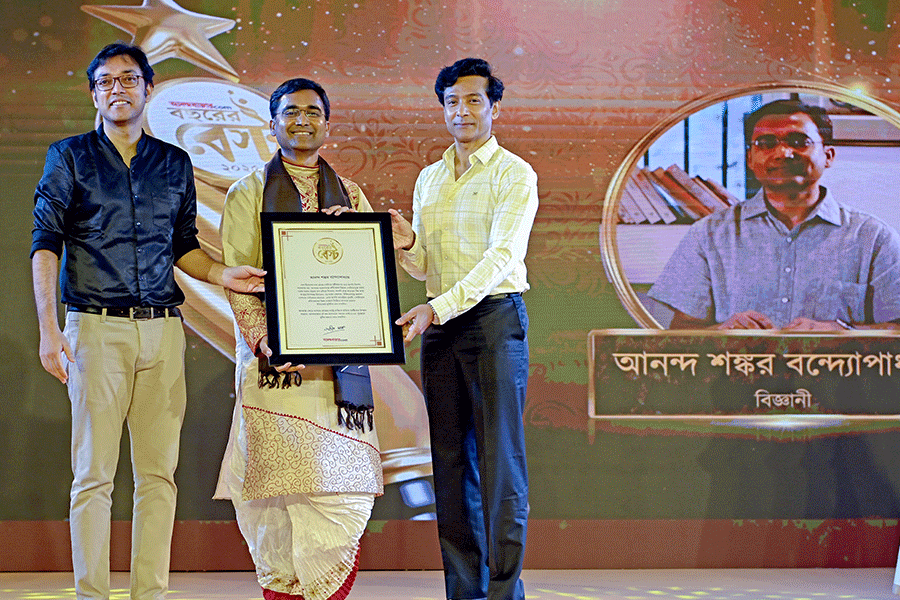
Dr Ananda S. Bandyopadhyay is Deputy Director, Polio, at the Gates Foundation, where he leads global efforts in innovation and research for polio eradication. A graduate of Calcutta National Medical College and the Harvard T.H. Chan School of Public Health, he began his career with WHO in India on the surveillance and immunisation work contributing to India's successful effort to eliminate polio. His honours include the Park MahnHoon Award (Seoul, 2025).