
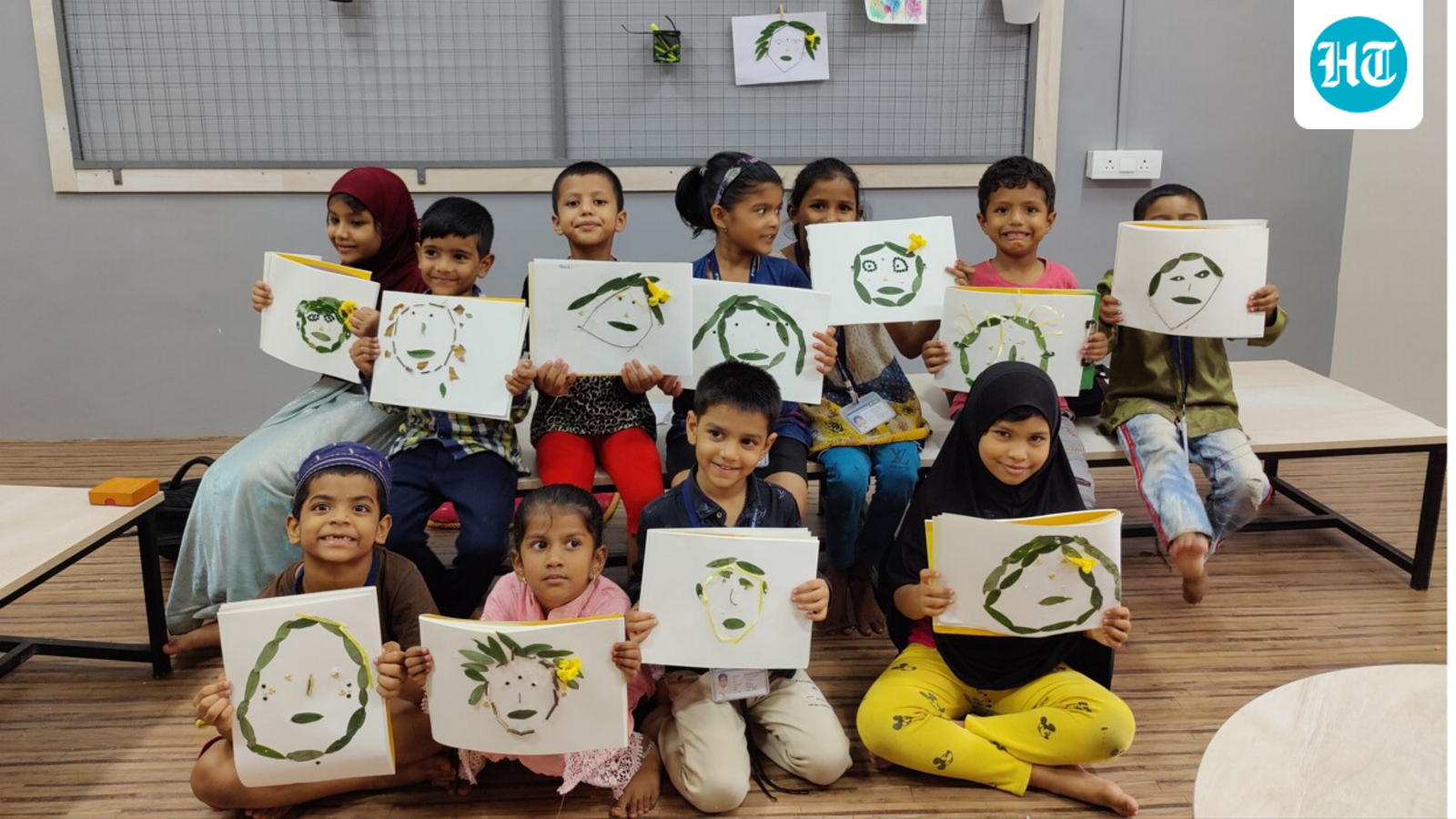
Three schoolchildren from Pune’s low-income neighbourhoods won places on a science internship that takes them to ISRO. Yaqub Bangi, Yassira Memon, and Shubham Pariyar cleared the annual science aptitude test to join the Sarabhai Younglings Internship 2026. They get to visit ISRO, HAL, and IIM Bangalore during this learning journey.
Three schoolchildren from Pune’s low-income neighbourhoods have won places on a science internship that takes them to ISRO. Yaqub Bangi and Yassira Memon, of K.C. Thackeray Vidya Niketan, and Shubham Pariyar of Epiphany High School cleared both rounds of SPOT, the annual science aptitude test held by the Vikram Sarabhai Science Foundation, and were selected for the Sarabhai Younglings Internship 2026. The learning journey covers ISRO, ISTRAC, HAL, the India Meteorological Department and IIM Bangalore.
All three are Scholars at Panaah Communities, a Pune nonprofit that began work in 2021. Panaah runs learning centres inside the city’s high-need neighbourhoods and stays with children when learning gaps first show, from Grade 4 until they begin their first job. The organisation now reaches 2,200 children and young people across Pune with its efforts directed towards keeping children in school.
The gap
Dropout figures rise as children move up through school. According to the Ministry of Education’s UDISE+ data for 2025-26, 3.6 per cent of students leave during the middle years, Grades 6 to 8. At the secondary stage, the rate nearly doubles, to 7 per cent.
In Panaah’s experience, the decision to leave rarely begins in Grade 9. A child who falls behind in reading or maths in Grade 4 or 5 tends to fall further behind each year, until they stop going to school altogether. That is why Panaah begins in Grade 4.
Panaah also works from inside the community. Its centres are in the vastis where the children live, and its staff come from the same neighbourhoods. They know the families and the pressures that can push a teenager to leave school.
“We don’t run three separate programmes,” says Shoeb Sayed, co-founder and executive director of Panaah Communities. “We build one pathway, from a child falling behind in school to a young adult in a well-paying job, and we build it inside the community, not from outside it.”
Three stages
The first stage, Solvers, is for the children most at risk of dropping out: those in Grades 4 to 10 who have fallen furthest behind. Panaah calls it Dropout-Free Pune. At a centre in their own vasti, mentors help them catch up in reading and maths, and every child gets a meal through Feeding India.
The children also work in small teams on real problems in their neighbourhood. One group built a WhatsApp directory of local shops. Another recorded a community podcast. Others filed civic complaints about broken streetlights and open drains. The programme takes its name from this work.
Solvers works with 1,600 children at centres in Yerwada, Lohiya Nagar, Ganesh Peth and elsewhere in Pune. This year, the Pune Municipal Corporation approved the programme for six of its schools, where it reaches around 350 more.
The second stage, Scholars, is for children already showing promise. Called Dreams to Destinies, it works with 440 high-potential students in Grades 5 to 10 at centres including Kondhwa and Yerwada, and aims to raise them to the top of their class. Yaqub, Yassira and Shubham are among them.
Panaah’s data shows progress across the group. On Ei ASSET, a diagnostic test that compares students with their peers across India, students in Scholars began the 2025-26 school year doing better than about one in four children nationally. By the end of the year, they were doing better than about four in ten.
Scholars also looks beyond Class 10, with two pilot centres for Grades 9 and 10 to send students straight into Grade 11 and 12 coaching, run by Avanti Fellows, a nonprofit that prepares students from low-income families for competitive entrance exams.
The last stage, Professionals, or Pathway to High-Paying Jobs, works with 160 young people from Grade 11 through graduation and prepares them for work.
The founder
The idea of a single pathway comes from Sayed’s own childhood in Bharat Nagar, a small slum in Mumbai. His mother believed deeply that education could transform a life, and that belief drew him to teaching and coaching early. As he grew older, he saw how much of a child’s future was decided by things the child had never chosen: the family, the street, the opportunities within reach.
“I often ask myself: what if I had been born in the house next door?” he says. “No child’s future should depend on that kind of luck. Panaah Communities exists so that it doesn’t.”
That question took him into education start-ups and then to the Teach For India Fellowship. In 2021, he co-founded Panaah Communities with Aarshiya Das, who now directs Solvers, and Hasnain Naqvi, who directs Scholars. “Change doesn’t arrive from the outside,” he says of what those years taught him.