
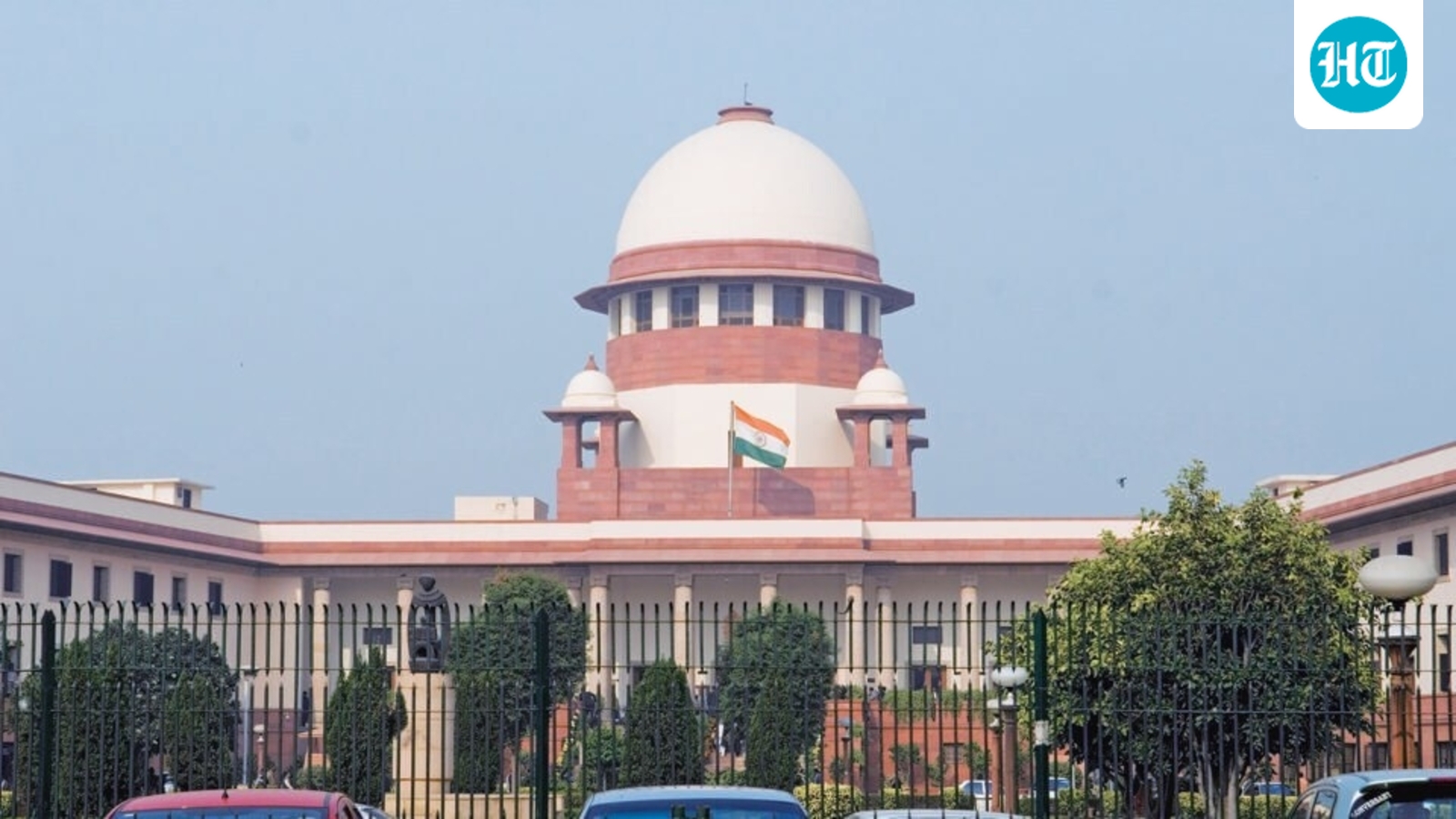
The Supreme Court set aside a Rajasthan High Court bail order for Jhabra Ram on October 28. The bench said, “A hyper-technical objection regarding the form or mode of communicating grounds of arrest cannot be treated as a self-executing, blanket key to unlock regular bail.” Procedural defects need careful assessment.
The ruling, however, appears to raise a difficult question in the court’s own recent jurisprudence: whether a case-specific assessment of prejudice and substantial compliance can dilute a constitutional safeguard it declared mandatory in every criminal case.
A bench of justices MM Sundresh and Prasanna B Varale, in a judgment delivered on October 28, set aside the Rajasthan high court’s order granting bail to Jhabra Ram, holding that the high court had treated an alleged procedural irregularity as a decisive ground for release without adequately considering the material on record, the gravity of the allegations and the established parameters governing regular bail.
“A hyper-technical objection regarding the form or mode of communicating grounds of arrest cannot be treated as a self-executing, blanket key to unlock regular bail,” said the bench, adding that, in the absence of demonstrable prejudice or denial of an opportunity to defend, an alleged defect in the mode of service could not, by itself, invalidate detention or entitle an accused to regular bail.
The judgment did not question the constitutional importance of informing an arrested person of the grounds of arrest. Indeed, it reiterated that the requirement under Article 22(1) of the Constitution and Section 47 of the Bharatiya Nagarik Suraksha Sanhita (BNSS), 2023, is a crucial safeguard intended to enable an accused to consult a lawyer, oppose remand and pursue legal remedies.
But its insistence that a procedural defect must be assessed against the actual circumstances of the case raises questions about the practical reach of the Supreme Court’s recent decisions on the subject.
If the grounds cannot be supplied in writing immediately, they may initially be communicated orally. Still, they must be furnished in writing within a reasonable time and, in any event, at least two hours before the accused is produced before a magistrate for remand.
Non-compliance, the court held, would render the arrest and subsequent remand illegal and entitle the person to be set free.
That ruling built on a line of judgments that progressively strengthened the protection against arbitrary arrest. In Pankaj Bansal Vs Union of India in October 2023, the court required the Enforcement Directorate (ED) to furnish written grounds of arrest under the Prevention of Money Laundering Act (PMLA), holding that merely reading them out would not satisfy the statutory requirement.
In May 2024, while quashing the arrest of NewsClick founder Prabir Purkayastha, it extended the written-grounds requirement to arrests under the Unlawful Activities (Prevention) Act (UAPA), rejecting the argument that the earlier ruling was confined to the anti-money laundering law.
The court subsequently reinforced the constitutional dimension of the safeguard in Vihaan Kumar Vs State of Haryana in 2025, emphasising that communication of the grounds is indispensable to an arrested person’s ability to challenge detention and defend personal liberty.
The November 2025 ruling in Mihir Rajesh Shah then made the written mode and the timeline for compliance applicable across criminal law, rather than leaving the requirement dependent on the particular statute.
The distinction is significant because the court’s reasoning suggests that the legal consequences of failing to furnish written grounds may depend not merely on whether the prescribed procedure was followed, but also on whether the accused knew why he had been arrested and could demonstrate prejudice from the lapse.
In Jhabra Ram’s case, the state maintained that the factual basis of the arrest had been communicated to him and was recorded in a signed arrest memo. The document detailed the allegations that he had been in contact with handlers associated with a Pakistani intelligence agency and had transmitted photographs, videos and information about military movements in exchange for money. The court also noted that the accused had received notices during the preliminary inquiry, that his brother had been informed of the arrest, and that he had been represented by a lawyer when produced before the magistrate.
Neither the accused nor his counsel, it said, raised an objection at the remand stage about the non-furnishing of written grounds.
The bench relied on State of Karnataka Vs Sri Darshan (2026) and Kasireddy Upender Reddy Vs State of Andhra Pradesh (2026) to underline that procedural lapses must be examined in the light of their consequences and that the purpose of communicating the grounds is to ensure the accused understands why he has been arrested. It concluded that the record established such awareness and that no demonstrable prejudice had been shown.
The Supreme Court allowed the Rajasthan government’s appeal, cancelled Jhabra Ram’s bail, and directed him to surrender before the trial court or theinvestigating agency within two weeks; failing which, the state could take him into custody. It clarified that its observations were confined to the bail-cancellation proceedings and would not affect the trial or the merits of the allegations.
If an arrest memo containing the allegations, read over and signed by the accused, can be treated as sufficient compliance even when the written grounds were not separately furnished in the manner prescribed, the boundary between substantive compliance and a breach of the mandated procedure becomes critical.
The concern is not that every procedural lapse must necessarily result in bail, regardless of the statutory framework or the facts of a case. Nor did the Supreme Court hold that the seriousness of an offence can dispense with the constitutional obligation. Rather, the judgment’s emphasis on prejudice, the accused’s awareness and the gravity of the allegations could leave lower courts uncertain about when a failure to furnish written grounds is a fundamental violation warranting release and when it is merely a curable irregularity.
That uncertainty matters because the written-grounds requirement was intended to provide a clear, enforceable standard at the point of arrest, when an individual is most vulnerable and has limited access to information and legal assistance. A requirement whose breach can be assessed retrospectively against the accused’s ability to show prejudice risks shifting part of the burden of procedural compliance from the investigating agency to the person in custody.
The ruling is therefore not a formal retreat from the court’s earlier pronouncements. But by placing substantial compliance and demonstrable prejudice at the centre of the inquiry, it has introduced a qualification that may require further clarification if the categorical protection laid down in Mihir Rajesh Shah is to operate uniformly across criminal cases.