
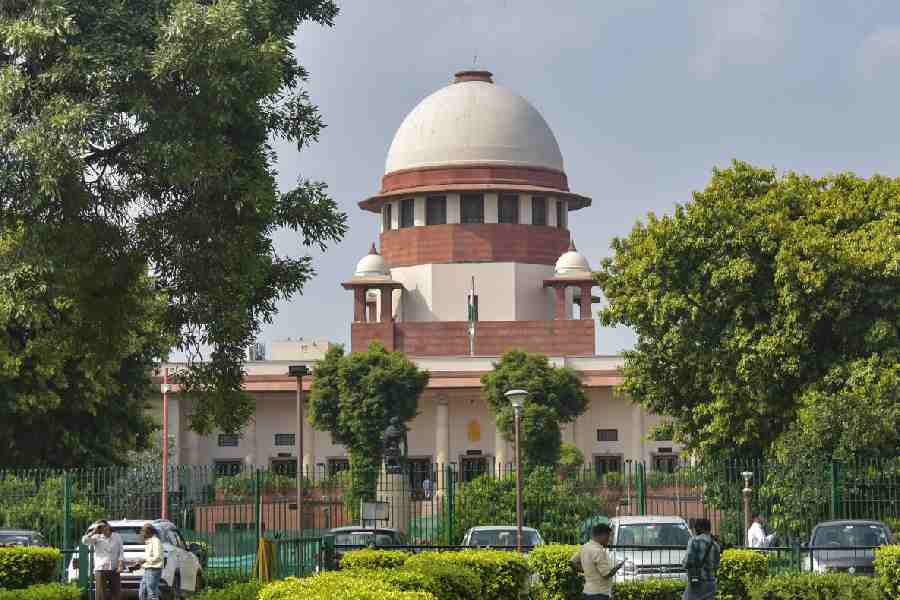
The Supreme Court will hear bail pleas from Umar Khalid and Sharjeel Imam on Wednesday regarding the 2020 Delhi riots case. Both activists have remained in jail since 2020. They argued that the prosecution failed to examine any witnesses despite listing over 900 people in the chargesheet filed in 2020.
The activists have argued that the prosecution has failed to examine even one witness despite citing more than 900 in the chargesheet, while both have remained in jail since 2020
The Supreme Court is expected to take up on Wednesday the bail pleas of activists Sharjeel Imam and Umar Khalid, who have challenged the Delhi High Court's refusal to release them in an Unlawful Activities (Prevention) Act (UAPA) case alleging a larger conspiracy behind the February 2020 northeast Delhi riots.
A bench led by Chief Justice Surya Kant, with Justices Joymalya Bagchi and V Mohana, is scheduled to hear the petitions, according to the court's cause list.
Both activists have argued that their prolonged detention is unjustified, pointing to the prosecution's failure to examine protected witnesses despite the passage of several years.
In his petition, Imam said the chargesheet, filed on September 25, 2020, named 18 accused and listed more than 900 witnesses, of whom 47 were granted protection. He claimed that not a single witness had been examined even after he had spent six years and nine months in custody as an undertrial.
Khalid has raised similar concerns, arguing that the continued failure to record the testimony of protected witnesses, coupled with the approaching end of a one-year embargo imposed by the Supreme Court, strengthens his case for bail.
Both petitions contend that keeping them behind bars beyond the embargo period would infringe their right to personal liberty under Article 21 of the Constitution.
The Delhi High Court on September 30 refused to grant bail to Khalid and Imam in a case under UAPA on the "larger conspiracy" behind the February 2020 northeast Delhi riots.
Observing that it was bound by "judicial discipline", the high court said it could not modify the Supreme Court's January 5 order, which had asked the two accused to seek bail either after the examination of protected witnesses or the expiry of one year, whichever was earlier.
Khalid and Imam challenged the trial court's July 4 decision rejecting their bail pleas for the third time since their arrest.
The trial court had rejected the bail applications, saying it had "no option but to follow" the Supreme Court's January 5 order and, therefore, could neither entertain the plea nor grant any relief.
The high court had noted that while denying bail to the two accused in January, the top court had said their roles were distinct from the other co-accused, and they were the "ideological drivers" of the alleged conspiracy.
Khalid and Imam have been booked under UAPA on allegations of being among the masterminds of the February 2020 riots that left 53 people dead and more than 700 injured.
The violence erupted during protests against the Citizenship (Amendment) Act (CAA), 2019, and the National Register of Citizens (NRC).
Activist Khalid Saifi and former AAP councillor Tahir Hussain, among others, were also booked for their alleged involvement in the larger conspiracy case, being investigated by Delhi Police's Special Cell.
Imam was arrested in the case on August 25, 2020, while Khalid was arrested on September 13, 2020.
On September 2, 2025, a high court division bench denied bail to Khalid and Imam.
On January 5, the Supreme Court upheld the verdict but granted relief to co-accused Gulfisha Fatima, Meeran Haider, Shifa Ur Rehman, Mohammad Saleem Khan and Shadab Ahmad.
A bench of Justices Aravind Kumar and N V Anjaria had then observed that there was a prima facie case against Khalid and Imam under the UAPA.
The top court, while rejecting their contention of delay in trial, had said Khalid and Imam, who have been in jail since 2020, could file fresh bail applications after the examination of protected witnesses or after one year from the date of the order.
On May 22, the Supreme Court granted six-month interim bail to co-accused Abdul Khalid Saifi and Tasleem Ahmad and referred the issue of prolonged incarceration of undertrials under the UAPA, in view of the stringent prerequisites for bail, to a larger bench.