
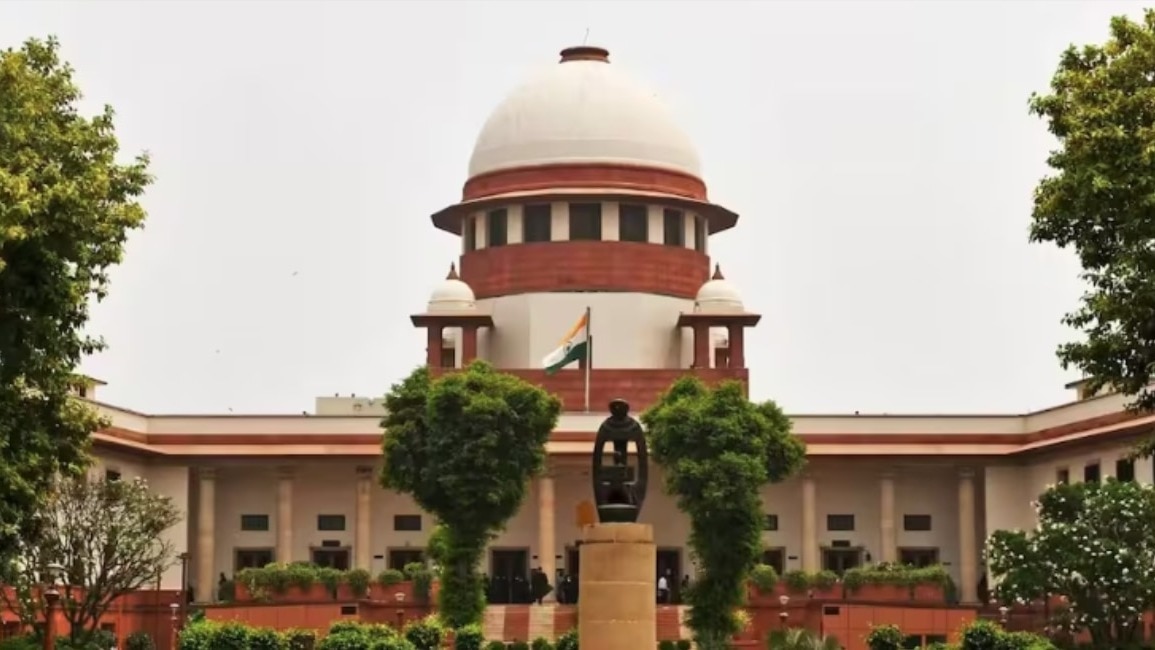
The Supreme Court on Friday said a parent’s salary cannot alone decide if a candidate falls under the OBC creamy layer. The bench rejected the Centre’s plea to apply this rule only to future cases. It gave the government two more months to implement the ruling for the involved candidates.
The Supreme Court on Friday reaffirmed that a parent’s salary from a public sector undertaking or private-sector job cannot alone determine whether a candidate falls within the OBC creamy layer and is excluded from reservation.
Rejecting the Centre’s request to apply its March 11, 2026 verdict only to future cases, the court said the candidates before it were entitled to reservation benefits and consequential placement and allotment of posts. It clarified, however, that completed selections, appointments, seniority and promotions would not be reopened.
A bench of Justices PS Narasimha and R Mahadevan also gave the government two more months to implement the ruling, beyond the six months granted in March.
SALARY ALONE CANNOT DECIDE STATUS
In the Union of India vs Rohith Nathan case, the court had ruled that creamy-layer status could not be determined solely by a parent’s salary or employment income from a public sector undertaking or private firm.
Under the 1993 office memorandum, the status and category of the parent’s post must be considered along with the prescribed income or wealth test.
Reaffirming that ruling, the bench said the candidates involved in the case fell within the OBC non-creamy layer and were entitled to reservation benefits in the selection processes in which they had participated.
CENTRE’S PLEA FOR FUTURE APPLICATION REJECTED
The Centre had asked the court to invoke Article 142 of the Constitution to give the verdict prospective effect, arguing that applying it to past and ongoing recruitment could affect people who were not parties to the case and cause “complete administrative chaos”.
The court found “no convincing or reasonable justification” to defer implementation.
It said granting relief to the candidates before it would not affect anyone else’s seniority or reopen completed selections and appointments.
The bench also referred to a December 20, 2016 letter from the Department of Personnel and Training, which had clarified that selections through the Civil Services Examination, 2016 were subject to the outcome of the pending appeals.
PENDING CLAIMS TO BE DECIDED INDIVIDUALLY
The court said claims by similarly placed people whose cases were pending before courts, tribunals or other competent authorities could be decided on their individual merits.
It expressed no opinion on those claims but said the interpretation of the 1993 office memorandum and a 2004 letter laid down in its March verdict could be considered while deciding them.
The bench said the government remained free to frame reservation and creamy-layer policies in accordance with the Constitution and the court’s principles.
It declined to set a deadline for establishing equivalence between posts or consulting stakeholders, saying those matters fell within the domain of the executive and the legislature.