
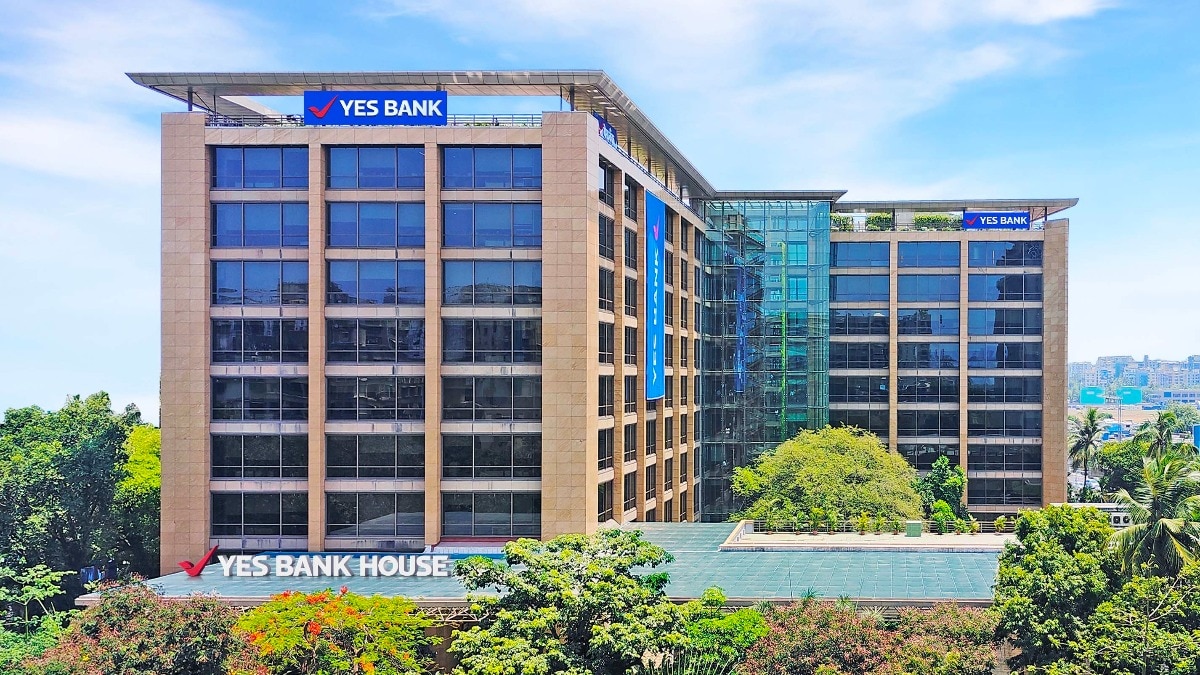
The Supreme Court overturned the permanent write-off of Yes Bank’s ₹8,400 crore AT1 bonds from 2020. This ruling creates new liability risks for the private lender. Shares fell sharply as investors now expect potential compensation claims. Deven Choksey said, “One will definitely be looking out for how funding requirement will be met.”
The Supreme Court has overturned the permanent write-off of Yes Bank’s Additional Tier 1 (AT1) bonds during the lender’s government-backed rescue in 2020, raising the possibility of fresh financial liabilities for the private sector bank. The bank’s shares fell sharply following the ruling.
According to Bloomberg News, the write-off in March 2020 wiped out bonds worth about ₹8,400 crore ($884 million) held by investors. The move was part of a restructuring overseen by the Reserve Bank of India (RBI) and was the first of its kind in India.
The judgment could have wider implications for the banking sector, particularly regarding the legal authority of regulators to impose losses on bondholders during a bank rescue.
Yes Bank faces potential capital requirements
The ruling could leave Yes Bank facing compensation claims from investors, potentially creating additional capital requirements for the lender. Japan’s Sumitomo Mitsui Banking Corporation owns a 24.9% stake in Yes Bank.
Market participants will be watching how the bank addresses any resulting financial obligations and whether its existing shareholders may need to contribute additional capital.
“One will definitely be looking out for how funding requirement will be met, whether Sumitomo as a partner will have to bring in or other shareholders though rights issue or any other way,” Deven Choksey, managing director at DRChoksey FinServ, told Bloomberg.
The development marks another legal setback for Yes Bank. In 2023, the Bombay High Court had set aside the bond write-off, citing procedural lapses without deciding on the substantive merits of the securities. Yes Bank subsequently challenged that decision in the Supreme Court.
Ashish Pyasi, managing partner at Aendri Legal, said the ruling could establish an important precedent for future bank rescues, given the implications of bond write-offs for investors and other stakeholders. He added that the government and Yes Bank could still seek a review of the Supreme Court’s decision.
Implications for AT1 bond investors
AT1 bonds form part of a bank’s regulatory capital and are designed to absorb losses when specified triggers are breached, including when a lender becomes non-viable. These instruments rank below other debt securities in a bank failure, exposing investors to significant losses.
The ruling could have mixed implications for India’s AT1 bond market. While it may strengthen investor confidence in legal protections, it could also create uncertainty over future write-offs and potentially increase banks’ borrowing costs.
“The ruling could have mixed implications for the AT1 bond market, bolstering investor confidence in legal protections while creating uncertainty over future write downs that may raise borrowing costs for banks,” Venkatakrishnan Srinivasan, managing partner at Rockfort Fincap, told Bloomberg. He also highlighted the need for clearer regulatory rules.
Yes Bank’s shares fell 14.5% on Thursday, marking their steepest decline since July 23, 2020. The stock closed at ₹18.12, its lowest level since April 7, 2005.
Former chief executive officer Prashant Kumar had said in 2023 that the bank had not made provisions for potential liabilities arising from the dispute, citing legal advice supporting its position. The bank did not immediately respond to a request for comment, Bloomberg reported.