
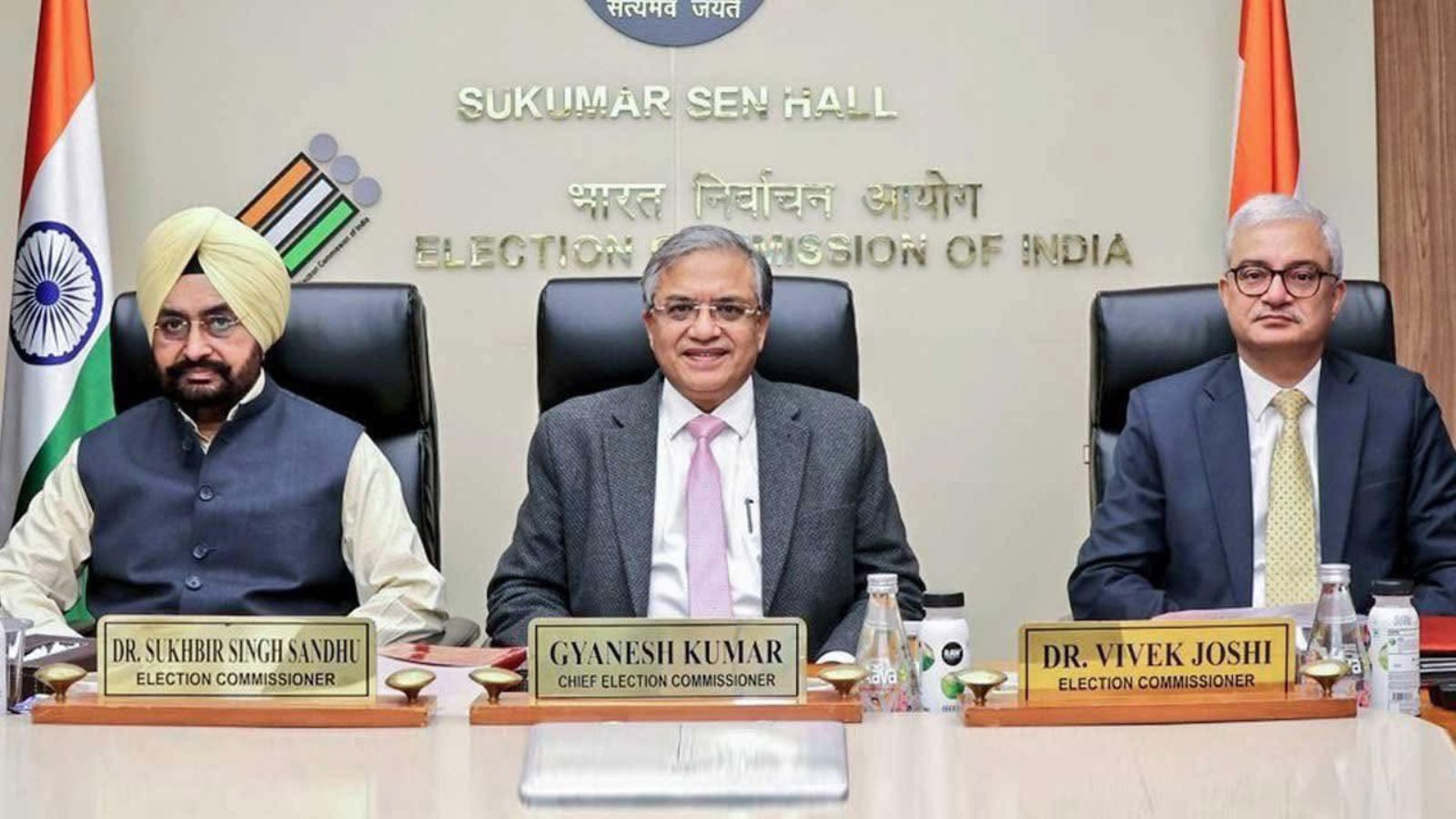
The Supreme Court on Wednesday issued notice to the Centre and the Election Commission of India regarding a plea challenging blanket immunity for election officials. Lawyer Arun Kumar Agrawal argued that this protection is excessive. The court is now seeking responses on whether this law leaves citizens without any legal remedy.
Such immunity, the plea argues, leaves citizens without a remedy if their names are struck off the electoral roll, or if they are aggrieved by corruption in the functioning of the Commission.
The Supreme Court on Wednesday issued notice to the Centre and the Election Commission of India on a fresh plea challenging "blanket immunity" granted to Chief Election Commissioner and other Election Commissioners for decisions taken while in office.
A bench of Chief Justice of India Surya Kant and Justices Joymalya Bagchi and V Mohana sought their responses on the petition filed by lawyer and activist Arun Kumar Agrawal. The plea challenges section 16 of the Chief Election Commissioner and Other Election Commissioners (Appointment, Conditions of Service and Term of Office) Act, 2023.
The top court is already seized of a petition against the provision by NGO Lok Prahari. Hearing the NGO's plea in January, the court had issued notices, but refused to stay the provision.
The provision says that "notwithstanding anything contained in any other law for the time being in force, no Court shall entertain or continue any civil or criminal proceedings against any person who is or was a Chief Election Commissioner or an Election Commissioner for any act, thing or word, committed, done or spoken by him when, or in the course of acting or purporting to act in the discharge of his official duty or function".
In his plea, Agrawal said that similar protection extended to other constitutional functionaries is only for acts done or intended to be done in good faith, but the CEC and ECs have been granted blanket immunity without any exception which is unconstitutional, disproportionate, and, hence, liable to be struck down.
"The objective of protecting Election Commissioners from vexatious proceedings can be achieved through less restrictive measures, such as safeguards against frivolous complaints and prior judicial scrutiny. Granting blanket immunity is therefore excessive and goes beyond what is necessary to protect the independence of the Election Commission," the plea said.
Such immunity, it argued, takes away every civil and criminal remedy against the CEC and ECs for their acts. "A voter whose name is wrongly deleted from the electoral roll, a candidate prejudiced by a mala fide act, and any citizen aggrieved by corruption in the functioning of the Commission are left without a remedy."
The petition contended that "despite the absence of such blanket immunity, the Election Commission of India has successfully conducted elections over several decades. This shows that the Commission can function effectively without granting its members blanket immunity from legal proceedings".
The petitioner underlined that when the corresponding bill was initially introduced, it did not have any provision granting such blanket immunity to CEC and ECs. The later amendment that introduced this provision was not accompanied by any reasons for such a move, he said.
"The Minister's justification during the parliamentary debate did not demonstrate that the provision was necessary to enable the Election Commissioners to discharge their functions independently and unhindered. The absence of any demonstrated necessity for the impugned provision, particularly one conferring such sweeping protection against civil and criminal proceedings, raises serious concerns regarding the application of mind to its necessity, scope and proportionality," the plea states.
Agrawal said the bill was passed when a large number of its members (Opposition MPs) were suspended from the House.
He insisted that "independence of the Election Commission does not mean that its members should be free from legal accountability. While protection from undue interference is necessary, the same cannot justify a blanket bar on legal proceedings against them".
The plea also referred to the Indian Express reports on alleged differences between CEC Gyanesh Kumar and two ECs over the SIR exercise, and also to news reports about allegations against Kumar linked to his tenure as the Secretary of the Kerala government's Public Works Department.