
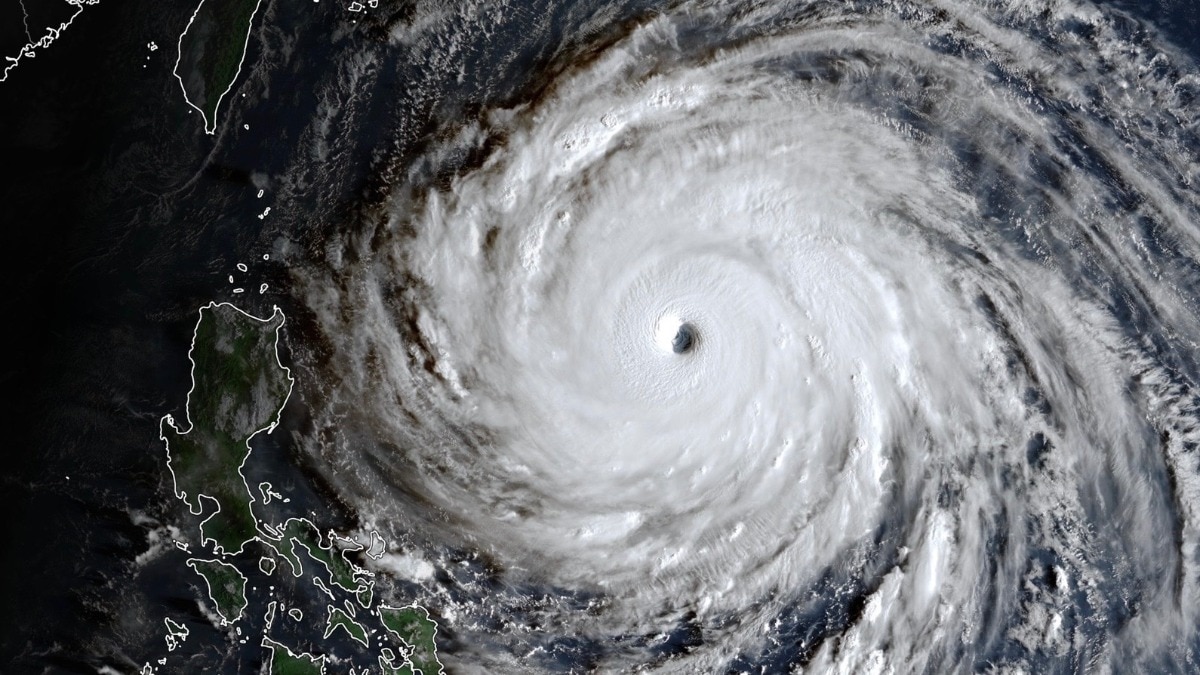
Super Typhoon Champi became the strongest tropical cyclone of 2026 with peak winds of 296 kmph. The storm strengthened over warm Pacific waters, reaching Category 5 status. By October 21, it moved towards Taiwan. Experts said warm seas provided the heat that helped the powerful system grow and maintain its structure.
Super Typhoon Champi has become the strongest tropical cyclone on Earth in 2026 so far, with peak wind speed of 296 kmph.
The powerful storm strengthened over the western Pacific Ocean, becoming a Category 5-equivalent system as it moved away from Guam and towards the waters east of Taiwan.
The storm's peak wind speed makes it the most powerful tropical cyclone of the year so far by this measure, overtaking Hurricane Polo, which reached maximum sustained winds of 285 kmph.
However, storm rankings can differ depending on whether wind speed or central air pressure is used.
WHY HAS CHAMPI BECOME SO POWERFUL?
Champi intensified over unusually warm ocean waters, with sea surface temperatures in the region around 30°C, slightly above normal for this time of year.
Warm seas provide the heat and moisture that fuel tropical cyclones.
Champi also developed in an environment with relatively weak winds at different heights in the atmosphere, allowing the storm to maintain its structure and strengthen.
When these upper-level winds are strong or change direction sharply with height, they can disrupt a storm's organisation. Favourable conditions helped Champi build into a powerful system.
The storm became the seventh Category 5 system of 2026, a designation used for the highest level on the Saffir-Simpson hurricane wind scale to classify storms based on their sustained wind speeds.
WHAT HAPPENS NEXT?
Champi had earlier passed close to Guam, an island in the western Pacific, prompting emergency preparations across the region.
The Associated Press reported that airports, harbours and some healthcare facilities in Guam and the Northern Mariana Islands were closed as the storm approached.
By October 21, the Hong Kong Observatory placed Champi about 1,740 km east-southeast of Hong Kong, tracking it towards the seas east of Taiwan.
The observatory forecast that the storm would weaken as it moved through less favourable conditions later in the week.