
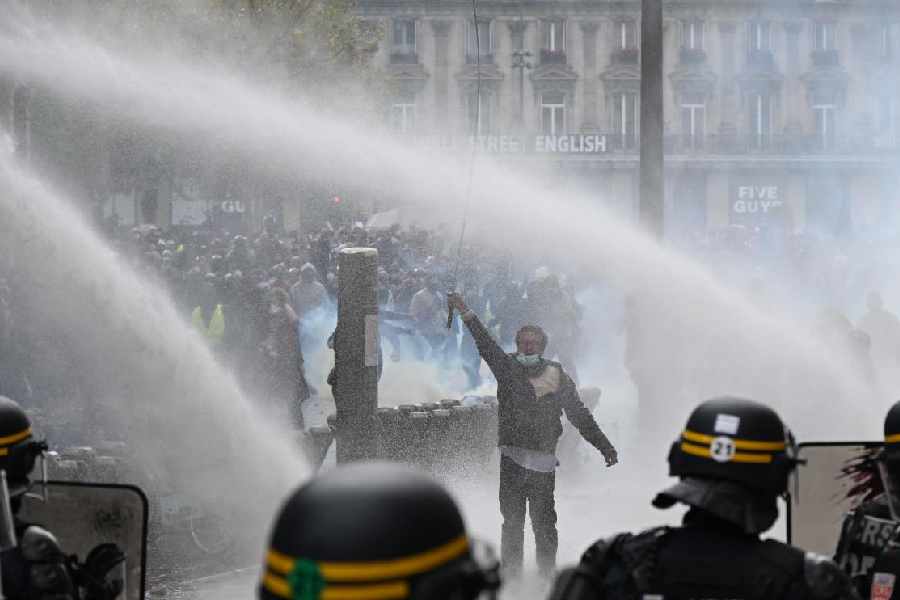
Student-led protests against education quality in France have expanded into a wider movement against inequality and soaring costs. Similar unrest erupted across Europe and India, where youth feel unheard. Governments often blamed political conspiracies, but these protests show deeper crises. Young people must be allowed to shape their future.
What started as student-led protests against the declining quality of education in France has rapidly expanded into a wider movement against inequality and soaring costs of living in the European Union's second-largest economy. Over the weekend, the protests -- until then largely peaceful -- turned violent in several cities, with rioters looting shops and setting alight police cars, public spaces and even historical buildings. The French police have arrested thousands of people and stand accused of using excessive force. In the meantime, similar protests over economic concerns have erupted in Spain, Italy, Portugal and Albania. Europe's tumult also comes amid major youth protests in India over alleged electoral improprieties. While arson, violence and rioting cannot be justified in the name of democratic protest, governments and their supporters in Europe and India alike have, almost reflexively, tried to suggest that a political conspiracy orchestrated by sections of Opposition parties is behind the protests. Worse still, influential figures, including Donald Trump, the president of the United States of America, have tried to suggest that immigrants are to blame for the clashes in Europe. Such explanations might be politically expedient in the short term but they remain willfully blind to the deeper crises that this wave of protests reveals.
Both Europe -- especially France -- and India have a rich history of political protest and defiance against elected governments that ought to be cherished as a democratic safeguard -- not vilified. Within Europe, while the specific triggers for the protests vary across countries, a common theme runs through the frustrations that are now visible on the streets. Incomes are not keeping pace with costs. Real incomes -- after adjusting for inflation -- are declining in most countries across the Continent even as government investments in education and social security benefits have come down over the past two decades. Soaring debts mean that governments have little fiscal legroom to expand public expenditure. India does not suffer from some of these challenges, but it has its own chasms: there are too few jobs for a burgeoning youth population. Ultimately, whether in Europe or India, a shared undercurrent ties recent protests: young people feel that they are not being heard. They must not only be given a stake in the future but must also be allowed to shape it. Treating the protests as threats to peace would be a mistake. The youth, in Europe and India alike, are attempting to repair flaws in the system. Their voices must be heard.