
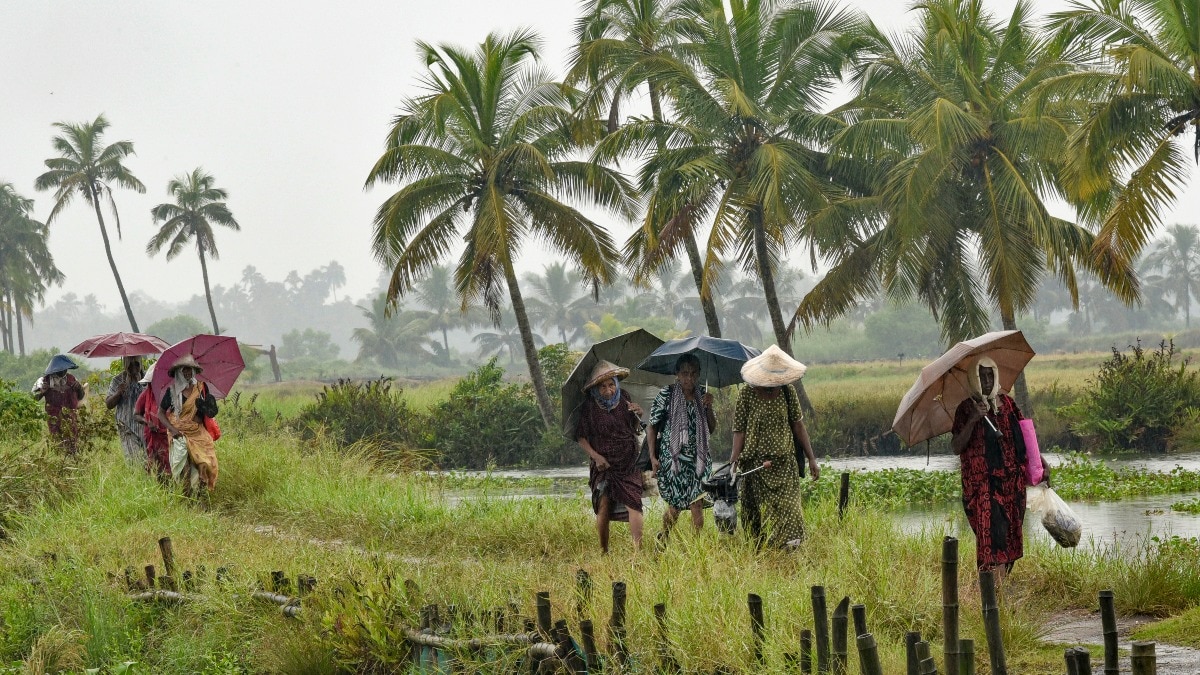
India’s southwest monsoon officially withdrew from the entire country on October 15. The India Meteorological Department said the northeast monsoon has started bringing rain to parts of southern India. This season is crucial for Tamil Nadu and nearby regions, as it supplies a large share of their annual water needs.
India's southwest monsoon officially withdrew from the entire country on October 15, making way for the northeast monsoon, which has begun bringing rain to parts of southern India.
The seasonal shift, confirmed by the India Meteorological Department (IMD), marks the end of the main June-September rainy season and the beginning of another important spell of rainfall for the southern peninsula.
Often called India's second monsoon, the northeast monsoon is particularly important for Tamil Nadu and neighbouring regions, where it supplies a substantial share of the year's rainfall.
WHAT IS NORTHEAST MONSOON?
The northeast monsoon is the seasonal rainfall period that generally runs from October to December, after the southwest monsoon retreats. Unlike the southwest monsoon, which brings widespread rain across much of India, the northeast monsoon mainly benefits the southeastern peninsula.
The name comes from the direction of the winds. As the southwest monsoon withdraws, wind patterns change and winds from the northeast become more prominent. These winds pick up moisture over the Bay of Bengal and can bring rain to the southern parts of the country.
Rainfall during this season is also influenced by low-pressure systems and cyclones forming over the Bay of Bengal. These weather systems can sometimes bring intense downpours over a short period.
WHY IS NORTHEAST MONSOON IMPORTANT?
The northeast monsoon is crucial for Tamil Nadu, Puducherry, coastal Andhra Pradesh and parts of Karnataka and Kerala. Tamil Nadu, in particular, receives a large share of its annual rainfall during these months, making the season important for agriculture, reservoirs and drinking-water supplies.
The IMD confirmed that northeast monsoon rainfall activity commenced on October 15 over Tamil Nadu, Puducherry and Karaikal, coastal Andhra Pradesh, Rayalaseema, south interior Karnataka, and Kerala and Mahe.
The department has forecast a wet spell, including isolated heavy rainfall, over many parts of southern peninsular India until October 21.
HOW IS NORTHEAST MONSOON DIFFERENT?
The northeast monsoon is closely related to the retreat of its twin, the southwest monsoon, which are closely related but describe different aspects of the seasonal transition.
The retreating monsoon refers to the withdrawal of the southwest monsoon from India. The northeast monsoon describes the rainfall associated with the changed wind pattern that follows, particularly over southern India.
The two seasons therefore mark a transition rather than a sudden end to rain across the country. While much of India moves towards drier weather, the northeast monsoon brings a fresh rainy season to parts of the south.