
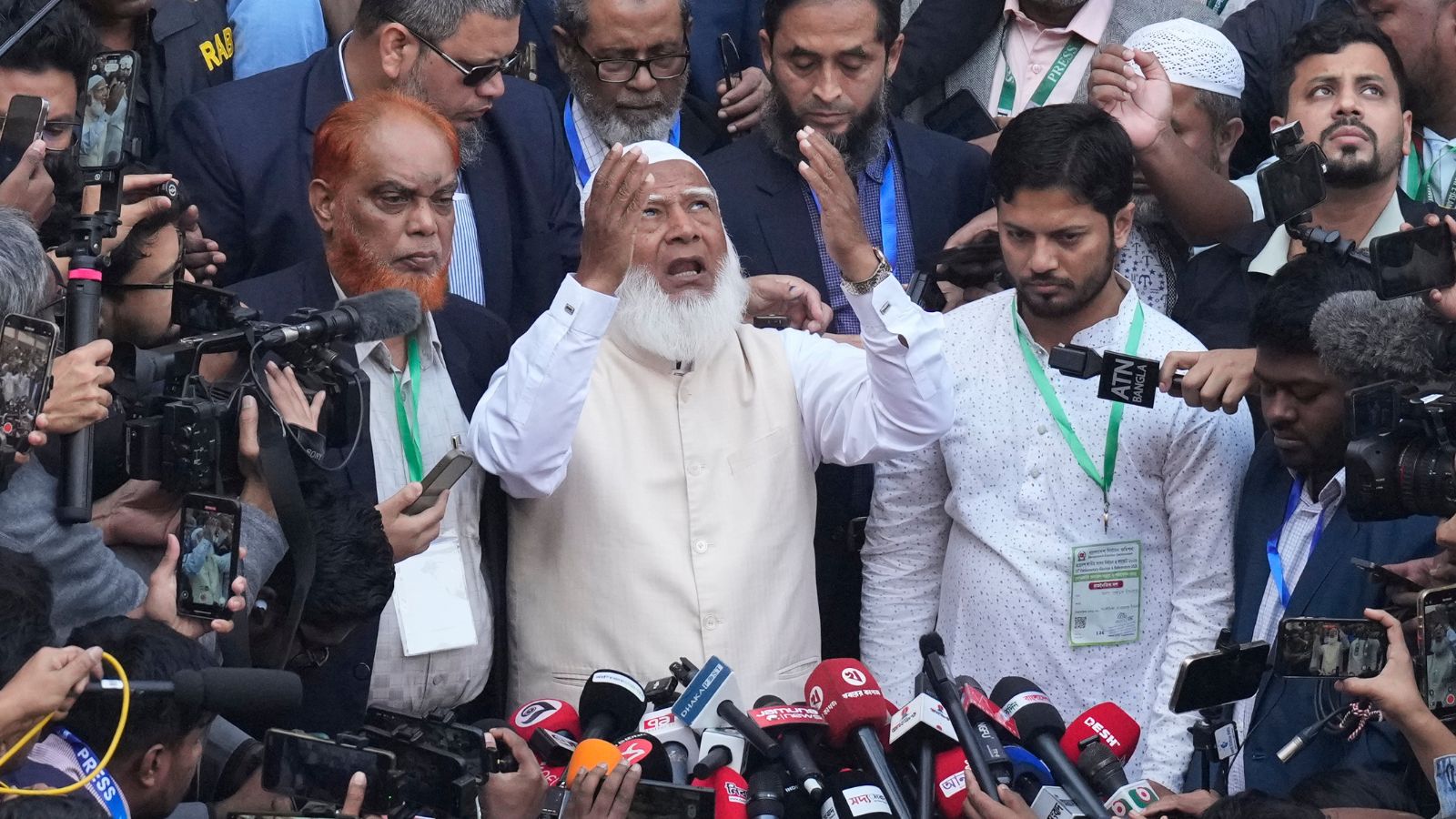
The student-led uprising forced Sheikh Hasina from power in August 2024. Now, the National Citizen Party formed an alliance with Jamaat-e-Islami ahead of the February 2026 elections. Jamaat chief Shafiqur Rahman said, "a woman could not become the party's supreme leader." This shift raises concerns about future women's rights there.
Neha Bora can celebrate Bangladesh's youth uprising. But its alliance with Jamaat-e-Islami raises an uncomfortable question: what happens to women's rights when revolution empowers religious conservatism?
There is something wonderfully convenient about being a revolutionary in India. You can denounce the government, ridicule the Prime Minister, question institutions, organise protests and announce the imminent collapse of democracy, all while enjoying the constitutional freedoms that make such performances possible. Neha Bora seems to have discovered this delightful arrangement. Her enthusiasm for Bangladesh's Gen Z revolution is particularly touching. She appears captivated by the romance of young people overthrowing a government. What seems to have escaped her attention is what happened afterwards.
Revolutions, unfortunately, do not come with a guarantee of liberal democracy. They can begin with demands for justice and end by empowering forces considerably less enthusiastic about individual freedoms.
The student-led uprising that forced Sheikh Hasina from power in August 2024 emerged from grievances over what was perceived as political repression and a deeply resented quota system. But removing a government is one thing. Understanding what replaces it requires considerably more effort.
The National Citizen Party (NCP) -- comprising the Bangladesh Gen Z that Bora is so admiring of -- discovered that commanding the streets was easier than commanding the ballot box. Ahead of the February 2026 elections, it entered an electoral alliance with Jamaat-e-Islami.
Yes, Jamaat-e-Islami.
The Islamist party whose leadership has defended religiously prescribed distinctions between men and women, opposed equal inheritance rights and explicitly ruled out a woman occupying its highest leadership position. Jamaat chief Shafiqur Rahman made it clear that a woman could not become the party's supreme leader. His explanations of women's roles have invoked childbirth, motherhood and breastfeeding.
Breastfeeding! Apparently, biology has become a convenient excuse for denying women political authority. One wonders whether the inability to breastfeed has suddenly become a constitutional qualification for leadership.
Would Bora accept being told that motherhood disqualifies her from leading a political organisation? Or does feminism become negotiable when the revolution happens to be fashionable?
The historical parallel with Egypt is instructive. In 2011, young Egyptians filled Cairo's Tahrir Square demanding freedom and democracy. Hosni Mubarak fell, but the Muslim Brotherhood subsequently came to power through elections. Its Islamist political agenda provoked fierce disputes over women's rights, civil liberties and religious authority.
The revolutionaries supplied the crowds. The Brotherhood collected the electoral dividends.
Bangladesh raises a similar concern. What happens when a movement promising freedom helps empower religious fundamentalists whose ideology places restrictions on women's autonomy?
And here is the delicious irony.
Rahul Gandhi seems quite happy to let Bora call the shots. A woman leader from AISA, who is exercising considerable influence over the leadership of the Congress party -- whose political vocabulary has included the stirring slogan "Smash the Patriarchy" -- now appears enamoured of a youth revolution whose political offspring have joined hands with a party that will not permit a woman to lead it.
Good for her. Women should exercise political authority without apology. But surely there is something absurd about celebrating a political movement whose allies would deny women precisely the authority she enjoys.
Bora enjoys the freedom to lead, challenge authority and influence national politics. Surely the Muslim girls of Bangladesh deserve the same freedom to aspire, question and lead. Or are their ambitions to be sacrificed at the altar of revolutionary solidarity?
One cannot smash patriarchy with one hand and applaud its political allies with the other.
France has witnessed fierce debates over this phenomenon, often described as Islamo-leftism, with critics accusing sections of the Left of overlooking Islamist religious conservatism in their eagerness to oppose the political establishment. The term is contested, but the contradiction is difficult to ignore. I prefer to call it the Mullah-Marxist alliance. The Marxists provide the revolutionary rhetoric, the mullahs bring their religious agenda, and women's rights become an inconvenient detail. For liberal and moderate Muslims, particularly women, religious fundamentalism is not liberation. It is precisely what they have every reason to fear. The Left imagines it is liberating society. Its Islamist allies may have very different plans for that liberation.
The irony is particularly cruel for liberal and moderate Muslims, especially women, who have the most to fear from religious fundamentalism. The Left imagines it is liberating society. Its Islamist allies may have very different plans for that liberation.
The problem is not admiration for Bangladesh's young protesters. Their grievances were real. The problem is confusing the spectacle of revolution with the substance of democracy.
you may like
Gen Z is a generation, not a political philosophy. Young people can be liberal, conservative, secular, religious or authoritarian. Smartphones do not guarantee enlightened politics, viral slogans are not constitutional safeguards, and youthful enthusiasm is certainly no substitute for political understanding.
Bora is perfectly entitled to admire Bangladesh's Gen Z. But perhaps she should ask one simple question before celebrating its political legacy. Would Jamaat-e-Islami ever allow a woman like her to lead it?
Its leadership has already supplied the answer.
Perhaps the next revolution should begin with reading. Especially the part about women.